-
E-mail
qdrbxgm@163.com
-
Phone
15192665941
-
Address
China (Shandong) Pilot Free Trade Zone Qingdao Free Trade Building
Product Categories
Qingdao Ruibaixin International Trade Co., Ltd
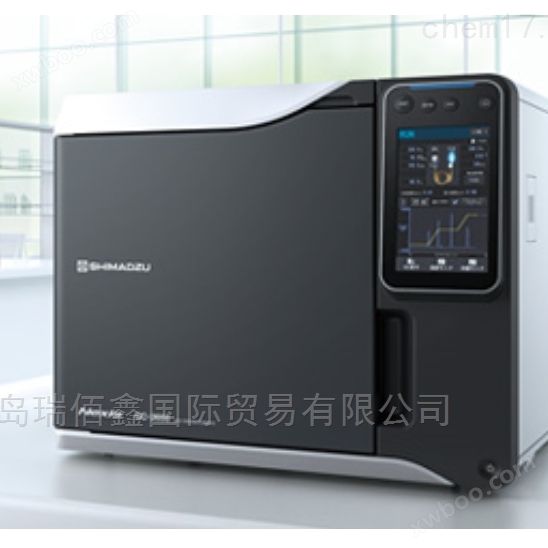


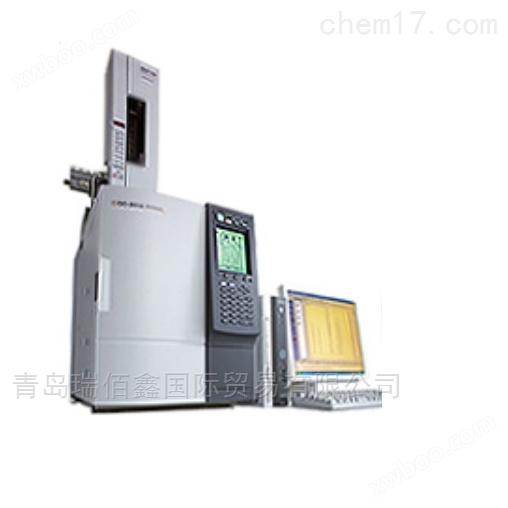
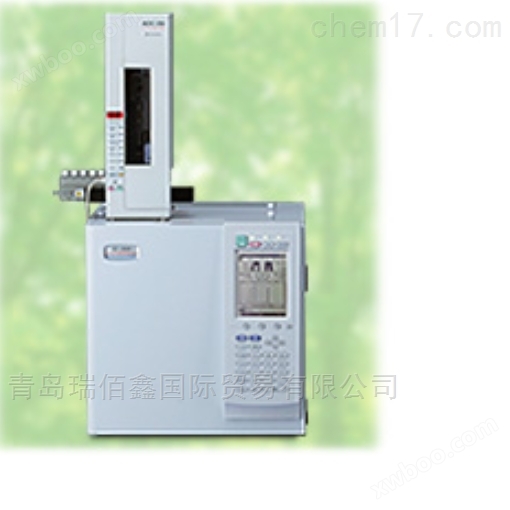
Shimadzu SHIMADZU gas chromatograph Nexis GC-2030 from Japan
NegotiableUpdate on 01/22
- Model
- Nature of the Manufacturer
- Producers
- Product Category
- Place of Origin
Overview
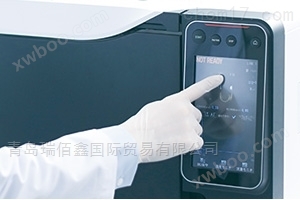
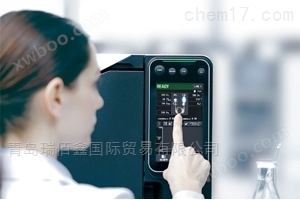
Japan Shimadzu SHIMADZU gas chromatograph Nexis GC-2030 $r $n $r $n Information can be viewed through simple touch operation $r $n Making daily analysis work more comfortable $r $n Software with improved operability
Product Details
High sensitivity detectors for various analyses

Dual BID system for sensitive analysis of inorganic gases and lower hydrocarbons simultaneously
The Barrier Discharge Ionization Detector (BID-2030) is a universal detector compatible with high-sensitivity analysis, which combines ionization methods using low-frequency dielectric barrier discharge plasma. Helium plasma is generated by applying high pressure on a quartz glass tube, and the measured component is ionized by receiving this light energy. It is then collected by a collection electrode and outputted as a peak. It can detect all compounds except Ne and He with high sensitivity, and can simultaneously detect ppm level inorganic gases and lower hydrocarbons with high sensitivity. Nexis GC-2030 can install 2 BID-2030s. By using chromatography columns with different separation characteristics, multiple components can be analyzed with higher resolution.

Example of analysis of inorganic gases/lower hydrocarbons (5 ppm per component)

Barrier discharge ionization detector (BID-2030)

Analysis of residual solvents in drugs
Compared with traditional products, the hydrogen flame ionization detector (FID-2030) has improved response by optimizing the structure of the nozzle and collector. In addition, the stability of the control unit and flow controller has been improved to reduce noise and achieve the desired level*Sensitivity. Even in the analysis of residual solvents in drugs that require high sensitivity, the target component can be reliably captured.

Analysis Example of Class 1 Standard Solution (Headspace GC Method)

Hydrogen flame ionization detector (FID-2030)

Analysis of Sulfur Compounds in Gasoline
Usually, SCD is a sensitive detector in GC detectors for measuring sulfur content. Among them, Nexis SCD-2030 adopts ultra short flow path and high-efficiency redox cell, achieving horizontal sensitivity and stability. Nexis SCD-2030 is suitable for analyzing sulfides in gasoline. It has good sensitivity, repeatability, and linearity, and achieves highly accurate analysis.
Chromatograms of 18 standard samples with sulfur concentration of 10 ppm (w/w) for each component

Sulfur chemiluminescence detector (SCD-2030)

Analysis of volatile organic compounds in wastewater
Compared with traditional models, the Electronic Capture Detector (ECD-2010 Exceed) has better durability, sensitivity, and dynamic range under high temperature conditions. By optimizing the ECD battery structure and purge flow rate and using highly durable materials, its durability, sensitivity, and dynamic range can be improved. We have reached the world levelofperformance Detect extremely small amounts of VOCs in wastewater with ultra-high sensitivity.

VOC analysis example (10 µ g/L for each component) (headspace GC method)

Electron Capture Detector (Exceeding ECD-2010)

Analysis of Organophosphorus Pesticides in Food
The flame photometric detector (FPD-2030) has achieved the world's highest performance by optimizing the nozzle shape and further developing a dual focusing system*Sensitivity. Detecting trace amounts of organophosphorus pesticides in food with high sensitivity.

Example analysis of organophosphorus pesticides (5 µ g/L for each component)

Flame photometric detector (FPD-2030)
Intelligent flow controller with excellent reproducibility
Developed a new flow controller (AFC) with CPU.
Corresponding to various control methods such as constant linear velocity control, constant flow control, and constant pressure control of the carrier gas, excellent reproducibility has been achieved through ultra-high speed and ultra precision control. Multi level programs can also be created in each mode.
The separation line filter can be replaced without tools. You can visually inspect the dirt inside and maintain a replacement time.
Grob Test Mix 10 consecutive analysis results
| peak area RSD% |
retention time RSD% |
|
|---|---|---|
| decane | 0.29 | 0.005 |
| 1-Octanol | 0.32 | 0.004 |
| undecane | 0.28 | 0.004 |
| 2,6-di | 0.29 | 0.003 |
| Nonanoic acid methyl | 0.24 | 0.003 |
| Decanoic acid methyl ester | 0.25 | 0.002 |
| Dicyclohexylamine | 0.23 | 0.003 |
| Methyl Laurate | 0.27 | 0.004 |

Flow Controller (AFC-2030)
*According to our research, as of May 2017.
Supporting many advanced features of world-class standards
Automatic notification of replacement time
- Monitoring function -
The Nexis GC-2030 has various monitoring functions. Notify consumables replacement time and maintain data quality. You can also monitor power consumption in real-time.
- Syringe counter
- Diaphragm use counter
- Insert usage counter
- Refrigerant consumption monitor
- Power consumption monitor
Equipment operating status
Diagnosis - Self diagnostic function -
Use the self diagnostic function (system check) to check the operating status of the equipment. Regular diagnosis can prevent equipment from unexpectedly shutting down.

automatic check
Carrier gas leakage - Carrier gas leakage inspection function -
Use one to check for gas leakage in the sample gasification chamber. Since the inspection is carried out with the chromatographic column connected, the working time can be shortened.

Protect the chromatographic column-
Oven cooling speed setting-
The cooling rate of the column temperature chamber can be set independently of the column temperature chamber temperature program. Protect chromatography columns that are sensitive to sudden temperature changes.

Reduce the usage of helium gas - solar term function-

In the method of introducing split/non split samples, the carrier gas saving function can be used to reduce the release of carrier gas from the split flow path to the outside of the system after transferring the sample to the chromatographic column for analysis.
In addition, by using an optional gas selector, the gas supplied to each unit can be automatically converted from He to alternative gases such as N2, except during the analysis period. Not only can it be combined with the carrier gas saving function to save gas, but it can also save gas in the total amount introduction method where the carrier gas saving function cannot be used. The control has been integrated into LabSolutions and can seamlessly execute gas switching settings.

Reduce operating costs - automatic start/stop function-
The automatic stop and start functions reduce operating costs. If the automatic stop function is used, the temperature control of GC will automatically stop after the analysis is completed to save electricity. After a set time, the control of the carrier gas and detector gas will be stopped. If the automatic start function is used, gas control will be activated after the set time, followed by temperature control.

Comparison chart with and without automatic stop function and automatic start function
Simplify your laboratory workstations
LabSolutions, *Integrated LC/GC software
The LabSolutions series is the next generation workstation that maintains compatibility with the old product GCsolution, integrates GC control and LC control, and has further improved functionality. In addition to inheriting GCsolution concepts such as operability and high functionality compatibility, highly scalable reporting capabilities, and custom support, we have also created a universal operating environment.
- LabSolutions LC / GC
LabSolutions CS allows you to access the analysis network for free
LabSolutions CS can read data from any PC on the network, as all analysis data is managed in the database of the server computer. Not only can you directly guide analysis instructions and monitor instruments from a personal computer (client PC) that is not connected to the instrument, but you can also directly control LC/GC instruments from other companies.
- LabSolutions CS
LabSolutions Direct supports remote control and monitoring of devices
LabSolutions Direct is a new LabSolutions series remote access tool that allows you to control and monitor GC from a commercially available smartphone or tablet using a simple user interface. You can perform analysis while checking device status in an environment far from the laboratory.
- LabSolutions Direct
Reference materials
- ``Technical Report TGGN-0007 "Automated Analysis Using Lab Solutions x Nexis GC-2030"

Application system based on analysis purpose
Headspace analysis system
The headspace sampler keeps the sample at a constant temperature, samples a certain amount of gas phase, and then injects it into GC. It is used for qualitative and quantitative determination of volatile components in solid and liquid samples.
Analysis purpose: Analyze residual solvents in drugs, analyze aroma components in food
Thermal decomposition analysis system
Introduce polymer samples into a high-temperature pyrolysis furnace to analyze the gases and decomposition products produced.
Analytical applications: characterization of various polymer materials, analysis of gases generated by inorganic materials such as ceramics
Distillation gas chromatography analysis system
Convert the elution time of straight chain hydrocarbons into boiling points and calculate the boiling point distribution from the elution time of each component. It supports various distillation GC standards, such as ASTM and JIS.
Analysis purpose: Calculate the distillation performance of various petroleum distillates
Refinery gas analysis system
You can build a system with multiple valves and chromatography columns in the Nexis standard installation space. Inorganic gases, hydrocarbons, hydrogen sulfide, etc. can be analyzed within 5.5 minutes. There is no need for development methods after system delivery, as pre testing is performed before leaving the factory.
Analysis purpose: Analyze the refinery gas generated during the refining process
System configuration example: Nexis GC-2030+optional valve box+LabSolutions


Shimadzu SHIMADZU gas chromatograph Nexis GC-2030 from Japan
Shimadzu SHIMADZU gas chromatograph Nexis GC-2030 from Japan
Similar Product Recommend