-
E-mail
15589666969@163.com
-
Phone
15589666969
-
Address
Chang'an Industrial Park
Product Categories
- Rural renovation of sewage treatment equipment
- Process of aquaculture wastewater treatment equipment
- Small scale sewage treatment equipment
- Integrated sewage treatment equipment
- Sewage treatment equipment
- New rural sewage project renovation
- Township sewage treatment equipment
- Integrated sewage treatment system
Shandong Miyang Environmental Engineering Co., Ltd


Shijiazhuang slaughterhouse sewage treatment equipment
NegotiableUpdate on 01/21
- Model
- Nature of the Manufacturer
- Producers
- Product Category
- Place of Origin
Overview
Shijiazhuang slaughterhouse sewage treatment equipment: The first level treatment of slaughterhouse sewage is to remove the hair, skin, various floating scum, and large suspended particles in the wastewater, and finally enter the oil separation tank. The main purpose of this step is to remove the oil and mud in the wastewater, and then enter the regulating tank. The function of the regulating tank is to ensure that the subsequent treatment can operate normally and obtain stable effluent water quality. In addition, it can also regulate the water volume and homogenize the water quality
Product Details
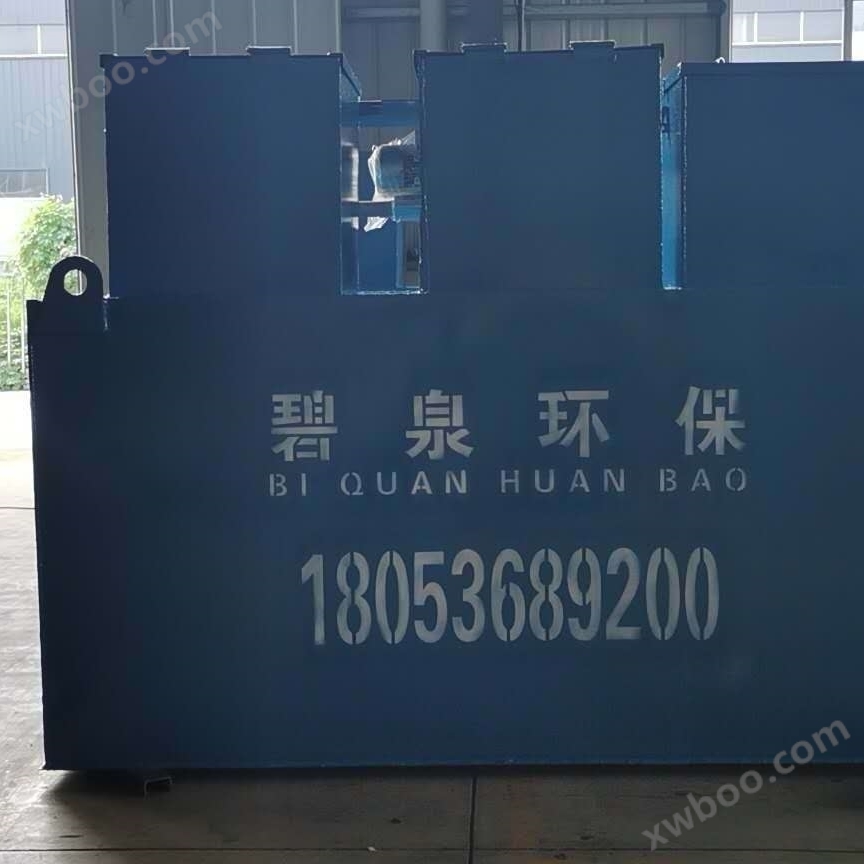
Shijiazhuang slaughterhouse sewage treatment equipment
Shijiazhuang slaughterhouse sewage treatment equipment
The primary treatment of slaughterhouse wastewater is to remove the hair, skin, various floating debris, and large suspended particles in the wastewater, and finally enter the oil separation tank. The main purpose of this step is to remove the oil and sand in the wastewater, and then enter the regulating tank. The function of the regulating tank is to ensure the normal operation of subsequent treatment and obtain stable effluent water quality. In addition, it can also regulate the water volume and homogenize the water quality.
The water passing through the regulating tank will be lifted by the pressure pump to the floating sedimentation integrated machine. The removal rate can reach 90%, and the obtained water quality will enter the wastewater treatment equipment. The integrated wastewater treatment equipment mainly consists of a hydrolysis acidification tank, a secondary contact oxidation tank, and a sedimentation tank. Slaughter wastewater is acidified in the hydrolysis acidification tank, and all large molecular organic compounds will be converted into low molecular organic compounds. The wastewater hydrolyzed by the new technology of wastewater biological treatment will be sent to the final sedimentation tank, and the effluent from the tank will be filtered and disinfected to meet the discharge standards. Handan Haojie Rong Environmental Protection treats slaughterhouse wastewater in this way. Their hardware facilities are good, you can consider it.
What are the benefits of using integrated slaughter wastewater treatment equipment for slaughter wastewater treatment
Slaughter sewage treatment equipment is made of glass fiber reinforced plastic, carbon steel and stainless steel, with anti-corrosion structure, corrosion resistance, aging resistance and other excellent characteristics, and its service life is more than 30 years; Placed below the surface, the surface above the equipment can be used for greening or other purposes, without the need for building houses, heating, or insulation. Maximized system integration and reduced footprint; No pollution, no noise, no odor, reducing secondary pollution; Not limited by the amount of slaughter wastewater, flexible and adaptable, can be used individually or in combination with multiple; Highly targeted, it can effectively remove organic matter and ammonia nitrogen from slaughter wastewater; The entire slaughter wastewater treatment equipment treatment system is equipped with a PLC fully automatic electrical control system and equipment fault alarm system, which operates safely and reliably. Generally, there is no need for dedicated personnel to manage it, and only timely maintenance and upkeep of the equipment are required, with low management costs.
Due to the presence of a certain amount of large floating debris (blood stains, fur, impurities, etc.) in the slaughter wastewater, a grid is first used to intercept it to ensure the normal operation of subsequent equipment. This is because the slaughter wastewater contains large organic molecules such as blood stains and oils, which are difficult to degrade when directly introduced into the aerobic system. Therefore, the effluent from the grid enters the septic tank. The existing septic tank in the slaughterhouse can achieve certain treatment effects, but the current effluent concentration is still high and carries some oil. In order to reduce the load on subsequent treatment facilities, it is considered to add an oil separation tank at the front end to remove oil. Due to working hours, the drainage cycle of slaughterhouses is different from other sewage discharge cycles. It mainly discharges at night, so a large regulating pool must be set up to regulate water quality and quantity to ensure the normal operation of the entire facility.
1. The biological contact oxidation treatment process used has a smaller volume than activated sludge tanks, stronger adaptability, good shock load resistance, stable effluent quality, and will not cause sludge expansion;
2. The filling material has a large specific surface area, and microorganisms are prone to biofilm formation and detachment. Under the same organic load conditions, it has a high removal rate of organic matter, is stable and reliable, and does not require the addition of chemicals, saving subsequent costs and reducing operating expenses;
3. Hydrolytic acidification can effectively turn wastewater red, decompose large molecular organic compounds, and reduce subsequent treatment loads;
4. The sedimentation effect is ideal, and good effluent quality can be obtained;
5. Disinfection treatment, with a removal rate of over 99.4%;
6. Properly handle residual sludge, ensure stable and reliable operation of the system, facilitate sludge discharge, and reduce manual operation
7. Adopting the * construction method to minimize odor diffusion to the greatest extent possible;
8. The operation management is simple, and the operation status can be adjusted according to the actual situation to achieve the best operation effect;
9. The purification efficiency is high, with a BOD removal rate of 85% to 90%, and all effluent indicators meet the second or first level discharge standards,
10. Capable of treating wastewater from the slaughter industry and similar industrial organic wastewater;
Similar Product Recommend