-
E-mail
15589666969@163.com
-
Phone
15589666969
-
Address
Chang'an Industrial Park
Product Categories
- Rural renovation of sewage treatment equipment
- Process of aquaculture wastewater treatment equipment
- Small scale sewage treatment equipment
- Integrated sewage treatment equipment
- Sewage treatment equipment
- New rural sewage project renovation
- Township sewage treatment equipment
- Integrated sewage treatment system
Shandong Miyang Environmental Engineering Co., Ltd


Large scale integrated domestic sewage treatment equipment
NegotiableUpdate on 01/21
- Model
- Nature of the Manufacturer
- Producers
- Product Category
- Place of Origin
Overview
After the large-scale integrated domestic sewage treatment equipment is in place, the level needs to be adjusted. The equipment needs to be equipped with a cleaning sewer, which can be dug into an open channel or directly connected to a regulating tank through pipelines, in order to flush the water from the air flotation tank and discharge it. The connecting pipeline between the sewage inlet and the reaction tank should be as short as possible to prevent the flocs from being damaged in the pipeline.
Product Details
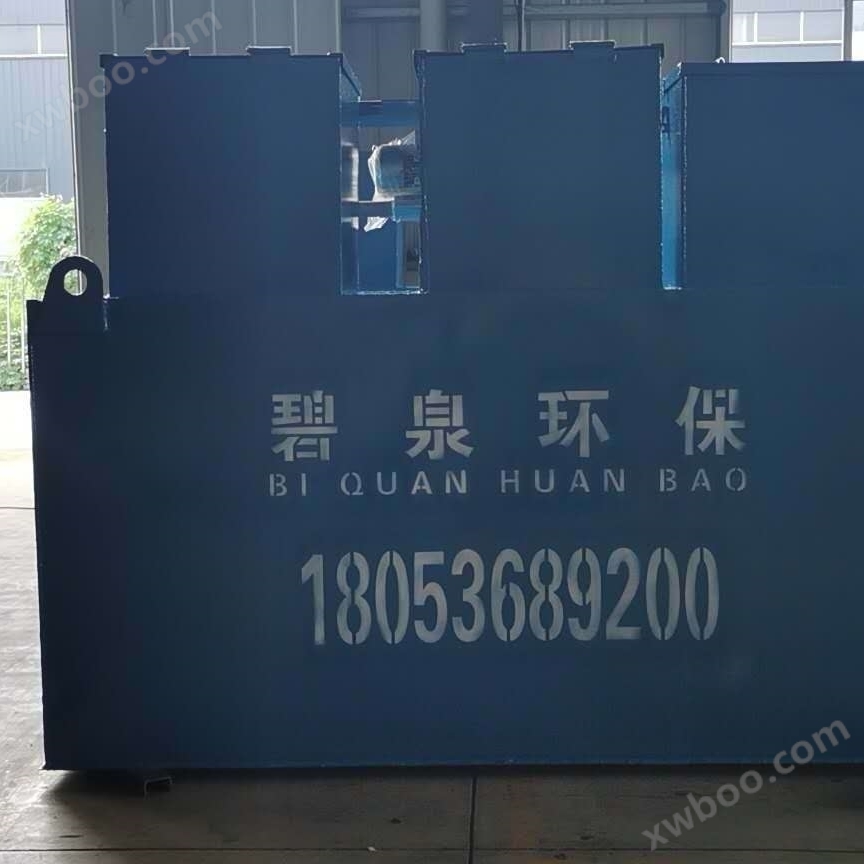
Large scale integrated domestic sewage treatment equipment
Large scale integrated domestic sewage treatment equipment
Before installing the equipment, the foundation must be compacted. And use concrete mortar to elevate 100-150mm. It can also be installed overhead, but the foundation must be able to bear the weight of the equipment during operation. After the equipment is in place, it needs to be adjusted horizontally. The equipment needs to be equipped with a cleaning sewer, which can be dug into an open channel or directly connected to a regulating tank through pipelines, in order to flush the water from the air flotation tank and discharge it. The connecting pipeline between the sewage inlet and the reaction tank should be as short as possible to prevent the flocs from being damaged in the pipeline.
Species are classified according to the chemical properties of the main pollutants contained in industrial wastewater. Inorganic wastewater mainly contains inorganic pollutants, while organic wastewater mainly contains organic pollutants. For example, electroplating wastewater and mineral processing wastewater are inorganic wastewater; Wastewater from food or petroleum processing is organic wastewater.
The second type is classified according to the products and processing objects of industrial enterprises, such as metallurgical wastewater, papermaking wastewater, coking gas wastewater, metal pickling wastewater, chemical fertilizer wastewater, textile printing and dyeing wastewater, dye wastewater, tannery wastewater, wastewater, power plant wastewater, etc
The third type is classified according to the main components of pollutants in wastewater, such as acidic wastewater, alkaline wastewater, cyanide containing wastewater, chromium containing wastewater, cadmium containing wastewater, mercury containing wastewater, phenol containing wastewater, aldehyde containing wastewater, oily wastewater, sulfur-containing wastewater, organic phosphorus containing wastewater, and radioactive wastewater
The industrial wastewater treatment process adopts modern self-control technology, sets up necessary monitoring instruments, realizes automated management, and improves management level;
The operation of the 5 treatment systems has a certain degree of flexibility and adjustment room, and the industrial wastewater treatment process adapts to changes in water quality and quantity;
The design of the industrial wastewater treatment process is aesthetically pleasing and the layout is reasonable. The sewage treatment company should take measures to minimize the impact on the surrounding environment and reasonably control odors and noise.
Technical characteristics of activated sand filter
(1) The quartz sand filter layer is thick, the filter tank is deep, and the civil engineering cost is high;
(2) High filtration efficiency, good filtration effect, no need to stop and backwash, low operating costs;
(3) The head loss is relatively high, usually requiring the installation of a secondary lift pump room, which increases operating costs;
(4) Activated sand filters can flexibly increase or decrease the number of filters according to changes in water volume, mainly suitable for small-scale sewage treatment plants.
MPPE technology is a great method for treating groundwater pollution:
1. Remediation of groundwater bodies contaminated by natural gas
The groundwater in Flensburg, Germany was once polluted by natural gas used by the city, and the water contained a large amount of aromatic hydrocarbons and polycyclic aromatic hydrocarbon pollutants. Before 1998, the city had used two treatment technologies, namely blow off method+gas-phase activated carbon and aqueous phase activated carbon, but the effect was not very obvious. At the same time, both technologies required pre-treatment to remove iron from groundwater. In 1998, the city introduced MPPE technology to treat groundwater, with a designed treatment capacity of 6m3/h. The mass concentration of aromatic and polycyclic aromatic hydrocarbon pollutants in the influent was 14mg/L, including 4mg/L polycyclic aromatic hydrocarbons (80% naphthalene) BTEX10mg/L。 After analysis, the mass concentration of pollutants in the effluent is less than 0.01mg/L, which meets the specified standard.
The historical development of the application of biological filtration technology
As early as 1923, the use of biological filtration to treat odorous gases was proposed in relevant literature. In the 1950s and 1960s, some developed Western countries began to apply this method in practice. POMerroy in the United States installed a mature soil bed device in California for the treatment of H2S gas and obtained it in 1957This is the prototype of the early biological filter. In 1959, a city sewage treatment plant in Nuremberg, West Germany, also installed soil beds to remove odors from sewage mains. Subsequently, the Japanese used soil deodorization to treat the odor from chemical plants, and the concentrations of NH3 and H2S in the original odor gas were 0. 04mmol/kg and 0. 00018mmol/kg, After processing, no two types of odorous substances were detected. In the following 20 years, many American scholars, such as Hinrich Bohn, further studied the principle of soil deodorization and promoted its application in production practice.
Similar Product Recommend