-
E-mail
15589666969@163.com
-
Phone
15589666969
-
Address
Chang'an Industrial Park
Product Categories
- Rural renovation of sewage treatment equipment
- Process of aquaculture wastewater treatment equipment
- Small scale sewage treatment equipment
- Integrated sewage treatment equipment
- Sewage treatment equipment
- New rural sewage project renovation
- Township sewage treatment equipment
- Integrated sewage treatment system
Shandong Miyang Environmental Engineering Co., Ltd


Micro power integrated sewage treatment plant
NegotiableUpdate on 01/21
- Model
- Nature of the Manufacturer
- Producers
- Product Category
- Place of Origin
Overview
Process flow of micro power integrated sewage treatment equipment: domestic sewage → grid well → regulating tank → anaerobic tank → anoxic tank → contact oxidation tank → sedimentation tank → disinfection tank → discharge tank. Working principle of integrated domestic sewage treatment equipment: Domestic sewage belongs to low concentration organic wastewater, which contains nitrogen, phosphorus, oil pollution, impurities, etc. Good biodegradability and a comprehensive range of nutrients. The possibility of being contaminated by heavy metal ions at the same time is relatively low.
Product Details
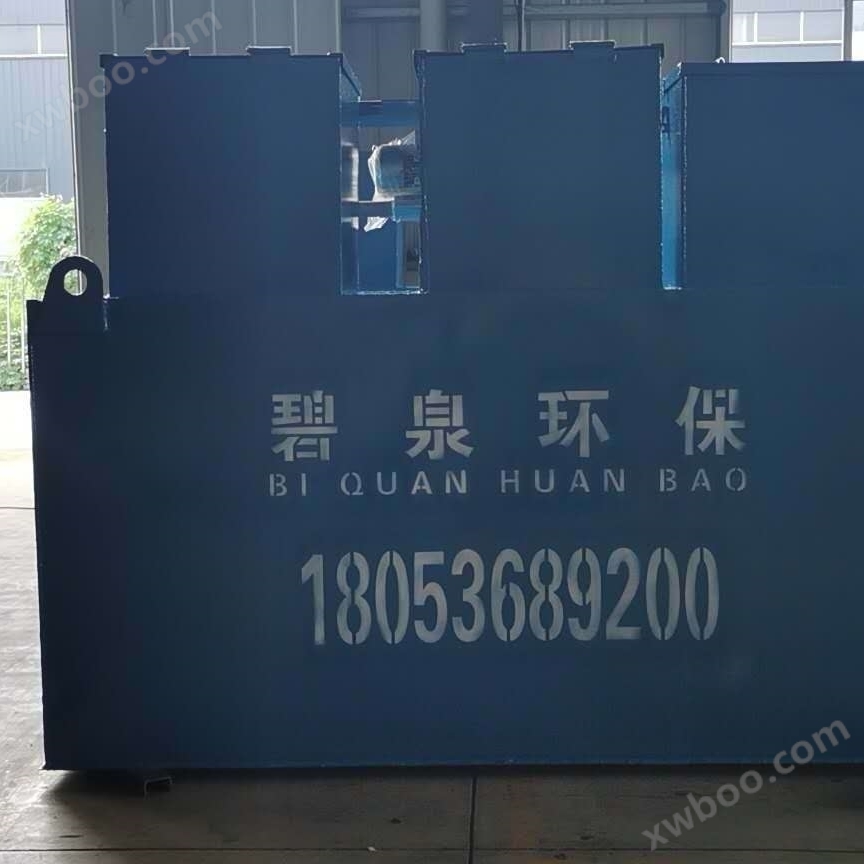
Micro power integrated sewage treatment plant
Micro power integrated sewage treatment plant——Device Introduction:
1In general, it refers to MBR membrane bioreactor.
It usually does not include a primary sedimentation tank or a regulating tank, because you do not know the size of the water volume and cannot calculate the tank body. It is difficult to meet the actual usage requirements by building it in. A membrane bioreactor alone is already very large! It's a problem to transport the pond inside.
2Underground integrated treatment equipment is generally used to treat sewage or domestic sewage in residential areas such as residential areas, office buildings, schools, etc. This is because the quality of domestic sewage is relatively stable, and the design of integrated equipment can be selected based on the water volume. If it is other types of sewage, then integrated equipment cannot be used!
The integrated domestic sewage treatment equipment adopts the world's most advanced biological technology The treatment process integrates the removal of BOD5, COD, and NH3-N, and is currently the most effective sewage treatment equipment. It is widely used in the treatment of domestic sewage and similar industrial organic sewage in high-end hotels, villa communities, and residential areas, replacing septic tanks with low removal rates and treated effluent that cannot meet comprehensive discharge standards. Field applications have shown that integrated domestic sewage treatment equipment is a highly effective and easy to manage domestic sewage treatment device. The process flow of integrated domestic sewage treatment equipment: domestic sewage → grid well → regulating tank → anaerobic tank → anoxic tank → contact oxidation tank → sedimentation tank → disinfection tank → discharge tank. The working principle of integrated domestic sewage treatment equipment is that domestic sewage belongs to low concentration organic wastewater, which contains nitrogen, phosphorus, oil pollution, impurities, etc. Good biodegradability and a comprehensive range of nutrients. The possibility of being contaminated by heavy metal ions at the same time is relatively low. A pH value of 6-9 is approximately aqueous. So the A/A/O process can simultaneously remove organic matter. The functions of reverse digestion denitrification and excessive phosphorus removal are combined with aerobic tanks to achieve phosphorus removal. The following is the working principle
1. The function of a barrier well is to isolate suspended solids and impurities in wastewater, so as not to affect the later treatment of equipment.
2. The function of regulating pool: According to the characteristics of domestic water use, the time period of water discharge is uneven. The discharge period is basically set at morning, middle, and evening, with three peak periods. The regulating pool can adjust the uneven water supply to ensure normal operation for later treatment. A water level controller is installed in this regulating pool to effectively implement automation control.
3. The function of anaerobic tank: Sewage flows into the anaerobic tank and is fully combined with anaerobic bacteria through the stirring effect of the mixer. Anaerobic tanks can decompose microorganisms and organic matter in wastewater, producing substances such as CO2 and methane.
4. The function of anaerobic tank: The water from the anaerobic tank flows into the anaerobic tank to further decompose organic matter and remove ammonia, nitrogen, and phosphorus from the sewage. The supernatant from the upper layer of the anaerobic tank flows into the contact oxidation tank, while the sludge enters the anaerobic tank through the reflux pipe, thereby increasing the concentration of the anaerobic tank and improving its treatment efficiency. When the concentration of the anaerobic tank is saturated, the reflux valve is closed and the valve flowing to the sludge concentration tank is opened, allowing the sludge to directly flow into the sludge concentration tank.
5. The function of the contact oxidation tank: When the water from the anaerobic tank flows into the sewage in the contact oxidation tank and comes into full contact with the oxidizing bacteria (three-dimensional elastic packing) in the contact oxidation tank, the sewage decomposes into CO2 and H2O, and the CO2 in the water is discharged through the action of a blower. The composition of sludge is the dead bodies of bacteria.
6. Secondary sedimentation tank: It allows the water in the contact oxidation tank to undergo secondary sedimentation. The settled water flows into the disinfection tank, while the sludge is pumped by a sludge pump to the sludge concentration tank. The water in the disinfection tank is treated by a chlorine dioxide generator to meet the standard before being discharged. After sedimentation in the sludge concentration tank, the supernatant is returned to the regulating tank through a reflux pipe, and the sludge is pumped to the plate and frame filter press for treatment. The filtered water flows through the reflux pipe to the regulating tank. For more information on the working principle and common problems of integrated domestic sewage treatment equipment, please visit our company website to purchase integrated domestic sewage treatment equipment. We guarantee the quality of our products.
What are the performance requirements for selecting fillers?
Filler is a biofilm carrier and a key component of the biological contact oxidation treatment process. It directly affects the treatment effect and its cost accounts for a large proportion of the infrastructure cost of the biological contact oxidation system. Therefore, selecting suitable fillers has economic and technical significance. The performance requirements for selecting fillers are generally as follows.
(1) The hydraulic characteristics require a large specific surface area, high porosity, smooth water flow, low resistance, and uniform flow velocity.
(2) The porosity and surface roughness of the carrier surface are conducive to the adhesion and growth of microbial membranes, and reduce the detachment of fixed microorganisms caused by friction and collision between carriers, which is beneficial for the operation of biofilters.
(3) Chemical and biological stability require durability, non leaching of harmful substances, and no secondary pollution. Biofilms produce various metabolic products during the metabolic process, some of which can corrode the carrier. Therefore, biofilm carriers must have certain chemical stability and corrosion resistance, and require biochemical reactions of the biofilm, which is itself non biodegradable.
Similar Product Recommend