-
E-mail
shineso@shineso.com
- Phone
-
Address
Room 405, Building B, No. 11 Xiyuan Eighth Road, Xihu Science and Technology Park, Hangzhou City
Product Categories
Hangzhou Xunshu Technology Co., Ltd
Bacterial colony counting/screening/inhibition zone measurement combined instrument
NegotiableUpdate on 02/18
- Model
- Nature of the Manufacturer
- Producers
- Product Category
- Place of Origin
Overview
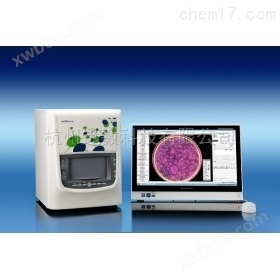
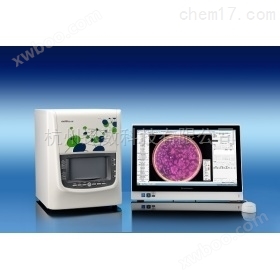
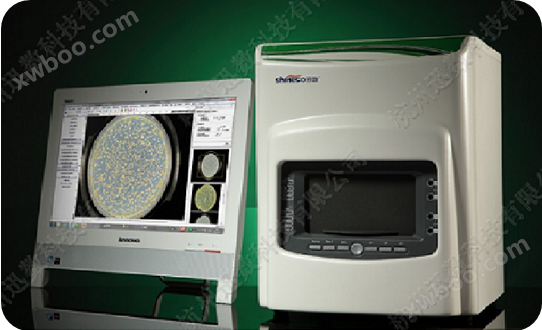
The SupcreG6R fully automatic colony counter, screening, and inhibition zone measurement combination device is a scientific research model designed for microbial research, meeting the needs of fully automatic colony counting and screening in scientific experiments.
Product Details

The Supcre series is a research grade model newly launched by Xunshu Technology in 2013, which integrates three major functions: live bacteria counting, inhibition zone measurement, and strain screening. Tri color LED surround lighting and adjustable color temperature make colony images closer to natural light imaging effects. The professionally designed strain screening module can achieve dual circle analysis, inhibition zone measurement, specific strain selection, and intelligent recognition of different strains. The entire series is equipped with dual wavelength ultraviolet to meet the needs of disinfection, mutagenesis, and fluorescence excitation. The Supcre G6R is equipped with higher quality lenses and industrial cameras, showcasing sharper details of bacterial colonies and inhibition zones.
Tri color LED hybrid light source, color temperature adjustment
Scientific research aims to accurately reflect the color of bacterial colonies, as traditional white LED lighting tends to produce bluish images. Long life, low power consumption, environmentally friendly three color LED mixed light, with a color temperature range of 3500K-8500k controlled by the ratio of warm and cool light, captures the most realistic color of bacterial colonies.
Auxiliary light source - dual wavelength ultraviolet
Built in 254nm ultraviolet lamp can solve the pollution problem caused by the use of colony analyzer * and also meet the needs of ultraviolet mutagenesis. The dual side 366nm ultraviolet illumination design can excite colony fluorescence, meeting the observation of Escherichia coli, green fluorescent protein, etc.
Fully enclosed darkroom shooting
Adopting fully enclosed, wide light strip lighting technology and ergonomic porthole door design, it isolates the interference of ambient light, eliminates the light spot and halo phenomenon formed by the refraction of stray light in glass culture dishes, and provides accurate light and shadow conditions for live bacterial counting.

Up and down light source scene lighting
Upper light source: 360 degree flexible mixed light illumination, highlighting the color and texture of the colony, making the wrinkles, depressions, and jagged edges of the colony surface more three-dimensional;
Lower light source: Crystal Sharp suspended dark field illumination, which not only clearly outlines the outline of bacterial colonies, but also distinguishes the basal hyphae and aerial hyphae of fungi or actinomycetes.

Sharp image details
The 5-megapixel F1.4 large aperture fixed focus lens, combined with suspended dark field illumination, can clearly display small bacterial colonies, bubbles, and scratches in the deep layers of the culture medium.

Solving Difficult Images - Advanced Statistical Algorithms
Xunshu - an image segmentation method based on the level set active contour model, combines the level set method and the active contour model. In the process of minimizing the energy functional, the active contour continuously approaches the segmentation target until the evolution of the active contour line stops (the energy functional is minimized), and the segmentation is completed. The basic principle is to embed curves or surfaces into high-dimensional level set functions, and use a high-dimensional function to express the evolution process of low dimensional curves or surfaces. Supcre G6R integrates 28 image processing algorithms to achieve accurate segmentation and statistics of various difficult colony images.
Virological research - plaque/bacteriophage counting
Due to the small contrast between the plaque on the tablet and the background, and the frequent occurrence of multiple plaque connections, general statistical equipment cannot accurately identify them. Currently, manual counting is still used. The use of optimized watershed method by Xunshu can achieve accurate segmentation and counting of adhesive plaques.

Immunological analysis - OPKA, SBA
In immunological detection methods, conditioning phagocytosis bactericidal test (OPKA) and serum bactericidal test (SBA) need to count the bacteria cultured in multiple areas of the same plate or in different holes of the microporous plate. Fast number multi area statistical algorithm can easily achieve synchronous one click counting of any number of areas.

Clone counting of porous plates
The cell clone counting in clone formation experiments is generally done manually, but the manual counting process carries significant uncertainty, especially when the size differences of the formed cell clones are large, making it difficult to obtain more effective and accurate data. Xunshu Technology provides a fast and convenient multi area statistical tool for cloning experiments, which can intelligently recognize the morphology and color of cell clones and achieve accurate counting.

Strain screening - analysis of morphological variation of bacterial cells
There is a certain correlation between the morphological variation of some bacterial strains and the variation in yield. In screening work, efforts should be made to capture and utilize these direct morphological characteristic changes as much as possible to screen out mutant strains. The colony morphology of high-yielding strains of Ashu yeast, such as those producing * 2, has the following characteristics: the colony diameter is medium-sized (8-10 millimeters), and the color is dark yellow; Any strain that is too large or too small, light yellow or white, belongs to low yield strains. Xunshu is based on the level set active contour model theory, which utilizes the small differences in colony size, contour, color, and other features to accurately identify target colonies.

Strain screening - multi strain classification and recognition
In microbial research, it is sometimes necessary to classify and count target bacteria in the presence of multiple bacterial mixtures. The example image shows a mixed probiotic preparation of Bacillus licheniformis and Bacillus subtilis, which utilizes the subtle differences in color, size, and contour between the two bacteria for accurate image recognition.

Genetic Engineering Recombination Screening - Blue White Spot Counting
Blue white spot screening is the process of selecting recombinant vectors based on their genetic characteristics. LacZ+bacteria generated by alpha complementarity produce blue colonies in the presence of the chromogenic substrate X-Gal under the action of the inducer IPTG. When exogenous DNA is inserted into the polyclonal site of the plasmid, it almost inevitably leads to amino terminal fragments without alpha complementarity ability, causing bacteria with recombinant plasmids to form white colonies.

Xunshu Intelligent Color Description System
The description of colony morphology in the basic research of microorganisms is *. Because everyone's language is different, the traditional description method is arbitrary. Xunshu has established a digital description system for colony morphology, which not only standardizes the characterization of bacteria, yeast, actinomycetes, and fungi, but also directly imports precise measurement data of colonies into the database. Especially for colony color, automatically generate color text descriptions based on the three-dimensional color data of the value points.

Double circle analysis
Xunshu provides specialized characteristic analysis tools for double circle problems such as antibacterial circle, transparent circle, color changing circle, and growth circle. By accurately measuring the outer circle diameter and colony diameter, the area ratio and diameter ratio of the two are automatically calculated. Automatically sort and locate corresponding colonies based on the size of the ratio, which can be used for screening antibiotics, enzyme preparations, organic acids, etc.

One click measurement of mold
The traditional fungal research experiments, such as mycelial growth rate, fungal growth amount, mycelial growth inhibition rate, and indoor toxicity determination, use the cross method to measure the colony growth diameter. Due to the spread, looseness, and irregular edge divergence of most fungal colonies, there is a large human error in measurement, resulting in low efficiency. The "one click mold measurement" module of Xunshu only requires clicking once on the edge of the colony with a "magic wand" to instantly measure the area, circumference, length, and length of the large mold.

Antibacterial zone measurement - Zone multimodal measurement technology
The Kirby Bauer paper diffusion method often uses cotton swabs to coat the sensitive bacteria on the bottom layer. After 48 hours of cultivation, most of the antibacterial zone edges are not smooth, have gaps, or form fuzzy antibacterial zones. The quasi circle approximation and three-point circle determination algorithm of Xunshu can achieve the measurement of such antibacterial zones.
The cup plate method is widely used for determining the potency of antibiotics. Due to precise control of the concentration of bottom bacteria and uniform mixing, the edge of the antibacterial zone formed is clear and circular. The automatic detection algorithm of Xunshu (based on precise edge detection of the outline of the antibacterial zone) is suitable for measuring such antibacterial zones.

Punching method is one of the biological quantitative methods for determining antibiotic potency. Due to the surface tension of the liquid, the liquid in the pores will not flow out at lower slopes, forming an ideal circular antibacterial zone. The automatic detection algorithm of Xunshu (based on precise edge detection of the antibacterial zone contour) can quickly extract the antibacterial zone contour and measure the diameter.

Agar one-way immune diffusion
Drill holes in agar plates containing specific antibodies and add a quantitative amount of antigen to the holes. When the antigen diffuses to the surrounding area and binds to the antibodies in the agar, a white precipitate ring is formed, whose diameter or area is positively correlated with the antigen concentration. Xunshu Technology provides multiple measurement methods for one-way immunodiffusion assays, which can quickly and accurately determine the diameter and area of the precipitation ring in antigen antibody reactions.

Main functions and technical indicators
1、 Lighting system
1.Light source
Visible light: High brightness tri color LED structured light
254nm UV: used for cavity disinfection and UV mutagenesis
366nm UV: excitation of Escherichia coli, coliform bacteria fluorescence, green fluorescent protein
2. Light path and lighting control
Fully enclosed dark box: eliminating environmental stray light interference
Upper light source: Scene style 360 ° flexible shadowless lighting
Lower light source: Crystal Sharp suspended dark field illumination
Up light, down light, dual light, UV, freely switch
Color temperature adjustable (3500K-8500K), light intensity adjustable
2、 Digital imaging
High definition industrial fixed focus lens
14 million pixel professional CMOS camera
3、 Colony analysis module
1.Basic colony counting function
Plate type: pouring, coating, membrane filtration, spiral plate, porous plate
One click intelligent counting (6 modes)
Whole dish colony count: Count the total number of colonies and display them classified by 25 sizes
Region selection statistics: You can choose circular, rectangular, or arbitrarily delineated regions for statistics
Diameter classification statistics: Set the diameter range and count specific sizes of colonies
Mouse click statistics: Quickly mark and add colonies, suitable for counting colonies at the edge of culture dishes
Colony adhesion segmentation: Automatically segment colonies that adhere to each other, and users can choose to segment or not segment chain colonies
2. Advanced colony counting function
Spiral colony statistics
Dynamic adjustment statistics
Deviation estimation statistics
Level Set Multi Model Algorithm
Specific colony statistics
Trans statistics
Statistics of high adhesion bacteria
3. Grid filter membrane and 3M test piece
Black solid line grid, one click statistics
4. Typical bacterial screening
Removal of miscellaneous bacteria
Monochrome classification statistics
Multi-color automatic clustering
Multi-color screening
Analysis of Transparent Ring Characteristics
Dual color circle automatic filtering
5. Description of colony characteristics
Digital description of bacterial, yeast, mold, actinomycetes, and colony characteristics
6. Special analysis
Serial statistics
Parallel statistics
7. Advanced Tools
Grid cleaning: eliminate background interference in the filter membrane grid
Manual counting correction: adding or deleting colonies
Exclude contaminated areas: Use the mouse to outline any contaminated area and automatically remove the bacterial count from the contaminated area
Background text elimination: automatically eliminates marker interference
Artificial adhesion segmentation: manually segmenting multiple adhesive colonies
Automatic parameter conversion: Input the diameter of the culture dish and sample dilution to achieve automatic conversion
Text and graphic annotation: various drawing tools and embedded Chinese and English text
8. Calibration and Measurement
Instrument calibration: The instrument comes with built-in calibration and manual correction calibration
One click rapid measurement: One click determination of large bacterial colonies, suitable for single colony analysis of fungi and actinomycetes
Automatic measurement of the entire dish: analysis of the equivalent diameter, area, length, circumference, and roundness of the entire dish colony
Manual precise measurement: length, angle, radian, area, arc, any curve
4、 Antibacterial zone analysis module
1.ZoneMulti mode measurement technology for antibacterial zone
Automatic detection: precise edge detection based on the contour of the antibacterial zone, suitable for clear edges and circular antibacterial zones
Quasi circular approximation: Based on the contour of the antibacterial zone, circular fitting approximation is suitable for edge rupture and non-standard circular antibacterial zones
Manual detection: Click on three points on the edge of the antibacterial zone with the mouse to form a circle, suitable for antibacterial zones with blurred edges
2. Determination of antibiotic potency
One dose method potency testing: suitable for the United States Pharmacopeia
Two dose method, three dose method, and combined calculation: suitable for the Chinese Pharmacopoeia 2010 edition
Repetitive self check: relative error ≤ 0.01%, repeated measurement accuracy ≤ 0.002mm
Uniformity self check: relative error ≤ 0.05%
Measurement difference between stations ≤ 0.2%
3. Shubatan sensitive β - lactase test
Pure water verification: Generate inhibition zones based on (A), (B), and (D), D-C≧3, B-A≦3 , The judgment system is established
Automatically detect the (A), (B), (C), and (D) inhibition zones of three parallel samples and import the data
Automatically calculate the average value of parallel experiments and intelligently distinguish the positive and negative results.
Invalid report automatic warning
5、 Database and image processing module
1.image processing
Image adjustment: grayscale image and negative phase diagram conversion; Brightness, contrast, and saturation adjustment; RGB adjustment
Image enhancement: sharpening, adaptive enhancement
Image filtering: median filtering, high pass filtering, Gaussian filtering, low-pass filtering, queue filtering, high pass Gaussian filtering
Edge detection: Sobel operator, Robert operator, Laplace operator, vertical detection, horizontal detection
Morphological operations: erosion, dilation, opening operation, closing operation
2. Database
Data storage and intelligent query
Data export: Export statistical results in an Excel spreadsheet
Data Security: Operator Access Permissions, Data Modification Permission Settings
6、 Instrument specifications and configuration
Supcre G6R1 host
Bacterial colony analysis software, automatic inhibition zone measurement software, antibiotic potency determination software, sulbactam sensitive β - lactase testing software
Brand Business LCD Computer
Similar Product Recommend