-
E-mail
jinglun.chen@jingyuan-china.com.cn
-
Phone
15107690200,15999857218
-
Address
No. 504, Zone C, Datang E-commerce Center, Taixin Road, Pailou Ji Community, Wanjiang Street, Dongguan City
Product Categories
Dongguan Jingyuan Experimental Technology Co., Ltd
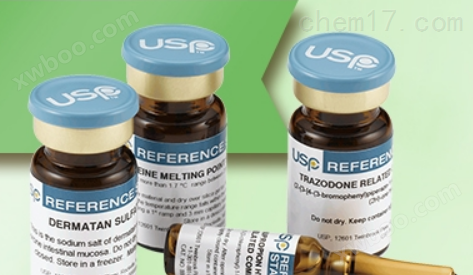
USP 1,4-benzoquinone standard CAS: 106-51-4
NegotiableUpdate on 01/21
- Model
- Nature of the Manufacturer
- Producers
- Product Category
- Place of Origin
Overview
The United States Pharmacopeia (USP) requires that TOC analyzers used to measure sterile water must meet a system suitability test with a carbon content of 8.0 mg/L and be able to detect TOC at a concentration of 0.1 mg/L. The USP 1,4-benzoquinone standard is used for TOC system suitability testing of sterile water. Our company specializes in providing spot US Pharmacopeia USP 1,4-benzoquinone standard CAS: 106-51-4, item number: 1056504. Welcome to inquire and place an order!
Product Details
Dongguan Jingyuan specializes in providing USP standard products for the United States Pharmacopeia. Please feel free to inquire and place an order at 158-128-17678, Manager Chen.
Product Details
Product Name: 1,4-Benzoquinone Standard
English name: 1,4-benzoquinone
CAS#: 106-51-4
Item number: 1056504
Specification: 200mg
Brand: United States Pharmacopeia USP
Usage: In the United States Pharmacopeia (USP), the total organic carbon (TOC) value is specified for organic impurities in Bulk Purified Water, Water for Injection, Sterile Purified Water, and Sterile Water for Injection. In addition, USP also requires that the TOC analyzer used to measure sterile water must meet the system suitability test with a carbon content of 8.0 mg/L and be able to detect TOC at a concentration of 0.1 mg/L.
The USP 1,4-benzoquinone standard is used for TOC system suitability testing of sterile water.

There are usually two methods to measure TOC. One method is to determine TOC by subtracting IC (measured organic carbon) from TC (measured total carbon, i.e. the sum of organic and non organic carbon):
TOC=TC-IC。
Another method is to remove the IC (organic carbon content) from the sample before starting to measure various carbons. However, the step of removing IC also removes some organic molecules, which are then collected and oxidized into CO2, quantified as easily removable organic carbon (POC). The residual organic substances in the sample are also oxidized to CO2, quantified as recalcitrant organic carbon (NPOC). In this method, TOC is the sum of POC and NPOC:
TOC=POC+NPOC。
In pharmaceutical water, the amount of POC can be ignored. So, in this method, NPOC is equivalent to TOC. Device requirements. Test with a calibrated instrument in an online or offline laboratory. Revise system adaptability regularly according to the following description. The device must have a specific detection limit, with a carbon content of 0.05mg/l (0.05ppm) or lower.
USP standard - USP sucrose standard; USP1, 4-Benzoquinone standard.
Reagent water. Use water with a total organic carbon TOC not exceeding 0.1mg/l.
[Note - Conductivity may be required to ensure the reliability of the method.]
Preparation of glassware. Organic pollution in glassware can lead to higher TOC values. So use glassware and sample containers that have been carefully removed of organic matter. Any method that can effectively remove organic substances can be used. Rinse the glassware with reagent water (water with TOC not exceeding 0.1mg/l).
Standard solution. Accurately weigh USP sucrose standard and dissolve it in reagent water (water with TOC not exceeding 0.1mg/l) to obtain a solution with a concentration of 1.2mg sucrose per liter (containing 0.50mg/l carbon).
Test solution. [Caution - Be extremely careful when sampling. Water samples are easily contaminated during collection and transfer to experimental equipment.] Collect the test water in a closed container with a small headspace. Check as soon as possible to reduce contamination from containers and sealing systems.
System adaptive solution. Dissolve the precisely weighed USP1,4-benzoquinone standard in reagent water (water with TOC not exceeding 0.1mg/l) to obtain a solution with a concentration of 0.75 mg/l (containing 0.50 mg/l carbon).
Reagent water control. Use a certain amount of TOC water when preparing standard solutions and system adaptation solutions.
Blank solution. In addition to TOC water, suitable blank solutions or other solutions should also be prepared to establish baselines or for calibration adjustments. Inject appropriate blank solution and zero the instrument.
System adaptability. Use a device to detect and record TOC water (r w) and standard solution (r s). Calculate the calibration standard solution value, also known as the limit value, by subtracting the TOC value from the standard solution value. Theoretical limit, which is a carbon content of 0.50 mg/l, is equal to the value of the calibrated standard solution, r s- r w。 System adaptive solution (r ss). Calculate the corrected system adaptive solution value by subtracting the TOC value from the system adaptive solution value, r ss- r w。 Calculate efficiency percentage:
r ss- r w
×100
r s- r w
If the efficiency is between 85% and 115% of the theoretical value, the system adapts.
steps Test the test solution and record r. If it is not greater than r s-r w, it meets the experimental requirements.
This method is also applicable to online instruments that have been calibrated and have acceptable system adaptability. The installation location and readings must reflect the quality of the water used.
Introduction to the United States Pharmacopeia (USP):
The United States Pharmacopeia Commission (USP) is a non-profit, scientific public standard setting body that establishes standards for the identification, efficacy, quality, and purity of drugs, food ingredients, and dietary supplements produced, distributed, and used. The drug standards of USP are widely used by multiple American food companies.
Since its establishment in 1820, USP has been committed to helping ensure the quality of American drugs. Following this tradition, USP today collaborates with many scientists, healthcare professionals, and regulatory agencies to develop and revise standards to help protect public health.
USP has multiple branches located in the United States, India, China, Brazil, Switzerland, Ghana, Ethiopia, etc. - collaborating with manufacturers, governments, medical institutions, and many other stakeholders in various regions.

Similar Product Recommend