-
E-mail
jszeyu@163.com
-
Phone
15094320000
-
Address
Maqiao High tech Industrial Zone, Jingjiang City, Jiangsu Province
Product Categories
- Underground sewage treatment equipment
- Chemical chlorine dioxide generator
- Denitrification device manufacturer
- Hospital integrated sewage treatment equipment
- Dual peripheral transmission scraper suction machine
- Air flotation equipment
- Organic waste gas treatment
- Sodium hypochlorite generator
- Reverse osmosis machine
Jiangsu Zeyu Environmental Engineering Co., Ltd
Sodium hypochlorite generator for swimming pool
NegotiableUpdate on 03/20
- Model
- Nature of the Manufacturer
- Producers
- Product Category
- Place of Origin
Overview
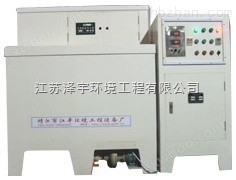
Precautions for operating the sodium hypochlorite generator in the swimming pool: During the production process, the operating procedures should be strictly followed. There is a 220VAC power supply inside the $r $n control cabinet, which cannot be touched directly by hand. $r $n should observe the power display of the control cabinet from time to time during the operation of the equipment. If the voltage or current meter display is abnormal, please stop the machine immediately and troubleshoot.
Product Details
Sodium hypochlorite generator for swimming pool
According to standards, the normal residual chlorine content in swimming pool water is 0.3-0.5mg/l. Without residual chlorine, disinfection cannot be achieved, and bacteria and pathogenic microorganisms in the pool water may proliferate excessively, leading to disease transmission; However, if it is too high, it may cause irritation to the human eye mucosa, skin mucosa, and oral mucosa, especially to sensitive populations such as children, women, and the elderly. The strong odor in the swimming pool can also irritate the eyes and respiratory system of the human body. The swimming pool disinfection equipment has a high degree of integration, including a salt dissolution tank, dilute salt water preparation device, electrode reaction, sodium hypochlorite solution addition, hydrogen emission, automatic acid washing, PLC automatic control system, external salt dissolution tank and sodium hypochlorite storage tank. The system has a high degree of integration, simple installation, and easy maintenance.
1. Economic sodium hypochlorite generator, pre designed salt dosage, timed manual start and stop, easy to operate, specially designed and customized for users with lower budgets.
2. Automatic sodium hypochlorite generator, reverse electrode, electrode does not require manual cleaning, automatic control setting, equipment automatically starts and stops according to the salt water addition situation, no manual operation required, safe and convenient.
3. Intelligent sodium hypochlorite generator, fully automatic control, no need to clean electrodes, no need for manual operation, remote monitoring.
4. Sodium hypochlorite dosing equipment is suitable for small water plants, and it is convenient to purchase sodium hypochlorite solution with appropriate concentration. It can be directly added through the sodium hypochlorite dosing equipment.
Sodium hypochlorite generator for swimming pool
Features of the equipment:
The sodium hypochlorite generator is a combination form, where the dissolution of salt, the preparation of dilute salt water, the metering and dosing of sodium hypochlorite, and the circulation of sodium hypochlorite occur in one tank, with low investment, low land occupation, and flexible settings.
The generator is a combination of tubular, internally cooled, unipolar, and series connected forms. The anode of the generator is made of titanium as the substrate, coated with ruthenium dioxide, with low potential and long lifespan. Under normal operating conditions, each batch lasts for 200-300 hours continuously. hypochlorous acid
The sodium generation process is in the form of diaphragm natural circulation, therefore, the salt utilization rate is high, the electrolysis process current efficiency is high, the sodium hypochlorite yield is high, the energy consumption is low, and the operating cost is low.
Considering user occupied space, safety management, convenient operation, and shortening installation time. The integrated series models adopt a highly integrated mode design, and the control system drives electric valves through detecting electrical signals to achieve automatic control of each unit.
Sodium hypochlorite is a strong oxidant and disinfectant, which is produced by electrolyzing dilute solutions of widely available and inexpensive industrial salts or seawater without membranes. To ensure the freshness and high activity of sodium hypochlorite texture. To ensure the disinfection effect, this device adds sodium hypochlorite while it is being used. It has the same oxidizing and disinfecting properties as chlorine and its compounds.
This device is mainly used for the treatment of bacterial containing wastewater and cyanide containing electroplating wastewater in hospitals. It can also be used for disinfection of swimming pools, drinking water, domestic wastewater, food processing plant environment and medical equipment, tableware and drinking utensils in restaurants and public canteens.
Similar Product Recommend