-
E-mail
jszeyu@163.com
-
Phone
15094320000
-
Address
Maqiao High tech Industrial Zone, Jingjiang City, Jiangsu Province
Product Categories
- Underground sewage treatment equipment
- Chemical chlorine dioxide generator
- Denitrification device manufacturer
- Hospital integrated sewage treatment equipment
- Dual peripheral transmission scraper suction machine
- Air flotation equipment
- Organic waste gas treatment
- Sodium hypochlorite generator
- Reverse osmosis machine
Jiangsu Zeyu Environmental Engineering Co., Ltd
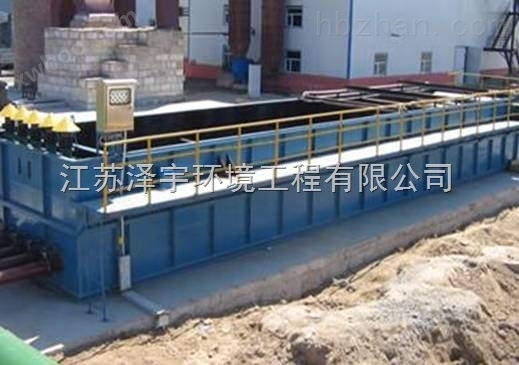
Large carbon steel buried integrated sewage treatment equipment
NegotiableUpdate on 03/20
- Model
- Nature of the Manufacturer
- Producers
- Product Category
- Place of Origin
Overview
The A2/O process characteristics of large-scale carbon steel buried integrated sewage treatment equipment include high pollutant removal efficiency, stable operation, and good resistance to impact loads. $r$n2、 Good sludge settling performance. $r$n3、 The organic combination of anaerobic, anaerobic, and aerobic environmental conditions and different types of microbial communities can simultaneously remove organic matter, nitrogen, and phosphorus. $r$n4、 The denitrification effect is affected by the reflux ratio of the mixed solution, while the phosphorus removal effect is affected by the presence of dissolved oxygen and dissolved oxygen in the refluxed sludge. Therefore, the denitrification and phosphorus removal efficiency cannot be very high.
Product Details
Large carbon steel buried integrated sewage treatment equipment
It can be buried underground, and the surface above the equipment can be used for greening or other purposes, without the need for building houses, heating and insulation. It is fully automatic controlled, does not require personnel management, has no sludge reflux operation, and is easy to maintain. The entire equipment processing system is equipped with a fully automatic electrical control system, which operates safely and reliably. Generally, there is no need for dedicated personnel to manage it, only timely maintenance and upkeep of the equipment is required. Low noise, no odor, long service life.
Scope of application:
1. Water treatment capacity: The standard type is 1.0-80.0 (m3/h), and if it exceeds 80.0 (m3/h), it needs to be designed separately.
2. Raw water concentration: BOD5: standard type ≤ 250mg/L, reinforced type ≤ 400mg/L. If it exceeds 400mg/L, it needs to be designed separately.
3. The equipment is mainly suitable for domestic sewage and similar industrial wastewater in residential areas, hotels, docks, airports, shopping malls, nursing homes, schools, factories, mines and other industries
Large carbon steel buried integrated sewage treatment equipment
Advantage:
1. This equipment process can be flexibly customized according to the user's water volume,
2. This equipment has a short production cycle and will not delay the construction period,
3. Compared to civil engineering, using integrated sewage treatment equipment saves costs and money
4. Low operating costs and cost savings in the later stage
5. This device has a long service life, which can last for several decades
Installation method and advantages:
This device can be installed in an underground manner, generally buried as a whole underground, to ensure the normal water temperature for the existence and reproduction of biological bacteria; The second is to isolate the external air of the equipment, which is beneficial for the anti-corrosion of the equipment; The third is to reduce the noise in the surrounding environment. And the upper part of the equipment is covered with soil, which can be used for greening vegetation or directly hardened into road facilities.
Underground integrated sewage treatment equipment basically does not occupy land resources, occupies less space, and is equipped with observation holes, which is conducive to equipment maintenance. The electronic control device operates automatically, saving labor costs and making operation convenient and easy.
Design scope:
1. From the sewage treatment grid to the discharge outlet of the treatment equipment.
2. The process flow of sewage engineering, selection of process equipment, structural layout of process equipment, electrical control and other design work.
3. The construction, installation, and commissioning of sewage treatment equipment do not include civil engineering.
4. The power wiring of the sewage project is led by the owner to the distribution control box of the sewage project.
5. Excluding the collection pipeline network for wastewater and the external drainage pipeline network for wastewater discharge from the boundary area.
Similar Product Recommend