-
E-mail
1037149724@qq.com
-
Phone
15221419697
-
Address
No. 8 Nanhong Road, Fengxian District, Shanghai
Product Categories
Shanghai Guiyong Electronics Co., Ltd
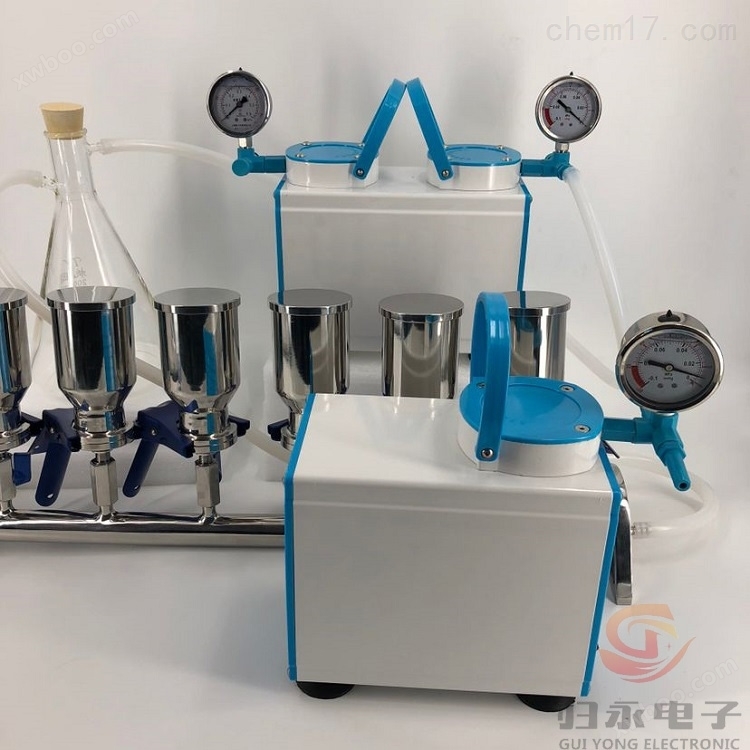
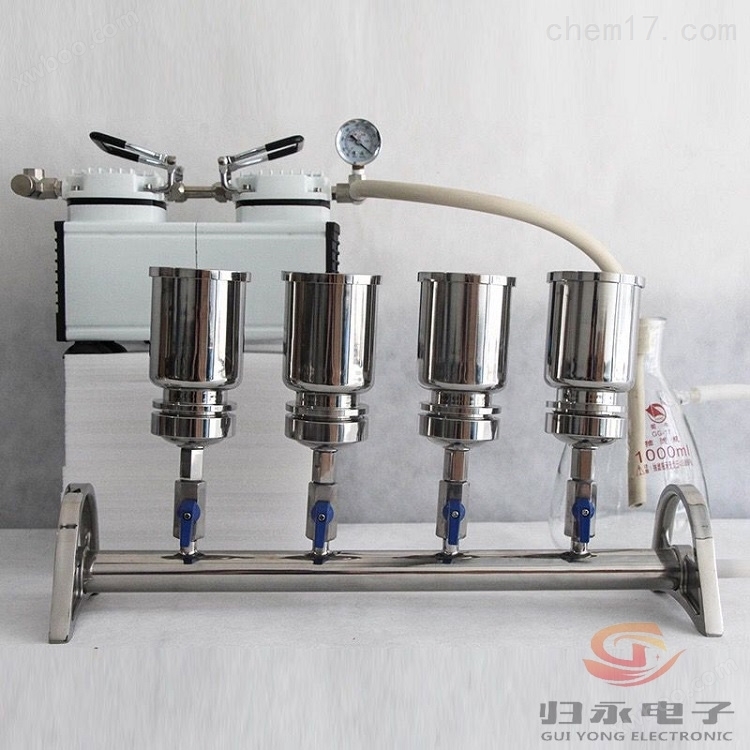


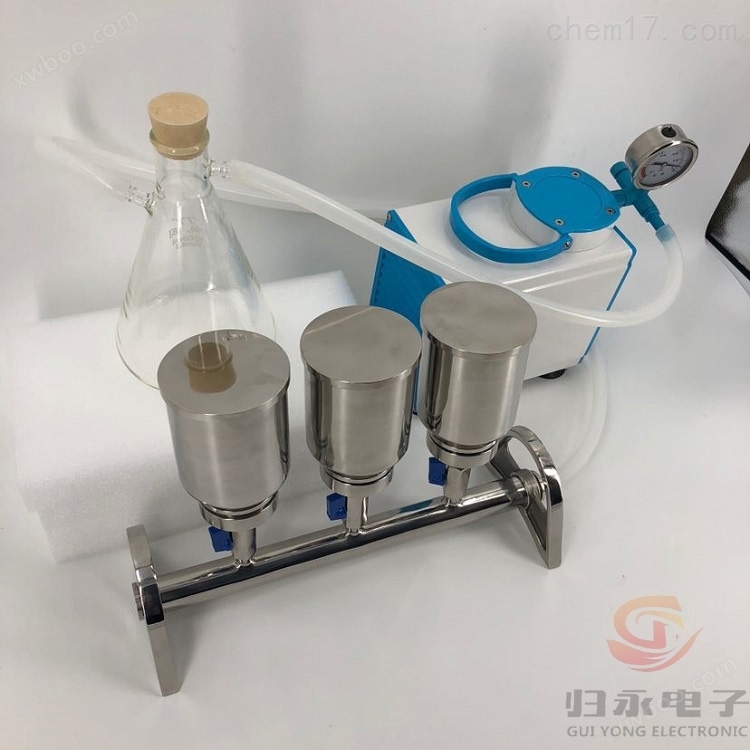
GY-JXDY Injection Water Microbial Identification Instrument Multi filter Head Brand
NegotiableUpdate on 01/23
- Model
- Nature of the Manufacturer
- Producers
- Product Category
- Place of Origin
Overview
The microbial limit analyzer filter bracket and filter cup form a microbial filtration system. Different pump heads can be used in conjunction with specialized filter cups or limit incubators to form a complete membrane filtration device. During testing, the supply liquid is filtered through a membrane to trap microorganisms on the filter membrane and rinse to remove the antibacterial properties of the test liquid. Then, visible bacterial colonies are cultured and counted to detect the bacterial content in the test sample. GY-JXDY Injection Water Microbial Identification Instrument Multi filter Head Brand $r $n
Product Details
Guangzhou 3-link microbiological testing equipment, rapid microbiological detector,Hangzhou Microbial Quantitative Detector
Product Introduction
The microbial limit system filter holder is a microbial limit inspection system designed and manufactured in accordance with the pharmacopoeia. This instrument can be used in one purchase, and one filter membrane is lost for each test. Other components are durable, reusable, and have no waste disposal, meeting environmental protection (GLP) requirements. Valuable medicinal liquids can be recycled. In antibiotic drug inspection, the required culture medium is only half the amount of a closed filter, saving experimental costs.Microbial limit testerThe microbial filtration system consists of a filter bracket and a filter cup. Different pump heads can be used in conjunction with specialized filter cups or limit incubators to form a complete membrane filtration device. During testing, the supply liquid is filtered through a membrane to trap microorganisms on the filter membrane and rinse to remove the antibacterial properties of the test liquid. Then, visible bacterial colonies are cultured and counted to detect the bacterial content in the test sample.GY-JXDY Injection Water Microbial Identification Instrument Multi filter Head Brand
Technical Specifications
Model: GY-JXDY-3L
Applicable filter membrane diameter: 47mm/50mm
Number of filter heads: 3
Testing method: membrane filtration method
Filtration method: Diaphragm pump negative pressure filtration
Extraction rate: 100ml/13s (with membrane)
Sterilization methods for filter heads: wet heat sterilization, flame gun rapid sterilization
Size: 36 * 15 * 21cm (length * width * height)
Weight: 10kg
Interface: G1/4
Material: SUS304
Filter nozzle: 6 * 7mm
Instrument features:
① Eliminating the need for filter bottles, it is lightweight and compact, making it suitable for operation inside purification stations.
② The filter is semi transparent for easy observation and quantitative control.
③ The filter is equipped with a base that can be replaced and is suitable for routine testing.
④ Each filter is equipped with a valve and can be used separately.GY-JXDY Injection Water Microbial Identification Instrument Multi filter Head Brand
⑤ Pressure resistant and temperature resistant, can be sterilized by hot pressing at 121 ℃ for 30 minutes.
Microbial limit testing device|Microbial limit testing operation | Microbial limit testing system | Shanghai microbial limit filtration system filter rack manufacturer


In all instances, ultrafiltration membranes will retain most of the molecules larger than the molecular weight defined by their molecular sieve. Reverse osmosis (RO) method is a method that can achieve a impurity removal rate of 90% to 99%. The pore structure of RO membrane is denser than that of UF membrane, and RO membrane can remove all particles, bacteria, and organic matter with a molecular weight greater than 300 (including heat source).
When a second solution of different concentration is separated by a semi permeable membrane, permeation occurs naturally. Osmotic pressure causes water to pass through a semi permeable membrane, diluting a solution with higher concentration and resulting in concentration equilibrium. In a water purification system, pressure is applied to a high concentration solution to counteract osmotic pressure. This forces pure water to pass through the RO membrane from a high concentration liquid and can be collected. Due to the density of the RO membrane, the produced water flow is very slow and requires a considerable amount of time before there is enough water in the storage tank. RO membrane can perform ion exclusion, allowing only water to pass through the RO membrane, while all other ions and dissolved molecules are intercepted and eliminated (including salts and sugars). RO membrane eliminates ions through charge reaction, and the larger the charge, the higher the exclusion ability. Therefore, RO membrane can almost eliminate all (>99%) high valence ions with strong ionization, but its effect on weak monovalent ions (such as sodium ions) is only 95%. Different types of RO membranes are required for different types of influent, including those made of cellulose acetate or thin layer polymers mixed with polysulfone matrix. If based on the quality of raw water and produced water, RO is an effective method for purifying tap water after appropriate design. RO is also a pretreatment method for reagent grade pure water systems. The ultraviolet irradiation method has been widely used in water treatment. The 254nm wavelength of ultraviolet radiation emitted by low-pressure mercury lamps is an effective sterilization method because DNA and proteins in bacteria absorb ultraviolet radiation, leading to death. Recent advances in UV lamp manufacturing technology have enabled the production of UV lamps that simultaneously produce wavelengths of 185nm and 254nm. This combination of light wavelengths can utilize photo oxidation of organic compounds, and with this special bulb, the total organic carbon concentration in pure water can be reduced to below 5ppb.
When the liquid overflows, install the pressure gauge to ensure sealing. Turn on the compressed air, open valve 1, slowly pressurize valve 2 to 0.035MPa, control for 30 seconds, and observe the bubbles in the filter. Install O-rings or rewet at the connections of the cylinder and O-ring seals. (1MPa=10kg/cm2)。 If no bubbles are generated, continue to apply pressure until continuous or stable bubbles are observed in the beaker. At this point, the displayed pressure is the small starting point pressure. Bubble point requirements: 10 inch mark ≤ 0.75ml/min, 5 inch mark ≤ 0.38ml/min, 2.5 inch mark ≤ 0.19ml/min (tested at 2500mbar). Steam sterilization of air filters or respirators: To ensure steam quality, regular testing is required. If the initial section of the steam sterilization pipeline is equipped with a drain valve, the condensate water in the steam pipeline can be discharged. The front and rear ends of the air filter or respirator are equipped with drain valves. During the exhaust and heating process, the drain valve is opened for drainage, and the sterilization process can be pulsed for drainage. While testing the integrity of the filter online, it is also necessary to determine the safety sealing of the filter. Precautions for online sterilization process of liquid preparation tank: When the temperature inside the tank drops to 100 degrees, the steam pressure inside the tank is equal to the external atmospheric pressure. At this time, the ventilation valve of the respirator should be opened in a timely manner.
The temperature inside the tank further decreased to around 60 degrees, and the pressure inside the tank was significantly lower than the external air pressure. If the ventilation valve of the respirator was not opened, the tank would collapse.
Reviewing the aseptic testing process, factors that may cause microbial contamination were identified. Microbial growth was observed in the negative control. After identification, it was confirmed that the microorganisms growing in the test sample tube were caused by improper use of items and/or aseptic operation techniques in the aseptic test. If the experiment is deemed invalid after evaluation, it should be retried. When trying again, take the same amount of test sample again and check according to the law. If there is no bacterial growth, the test sample is judged to meet the requirements; If there is bacterial growth, it is judged that the test sample does not meet the requirements.
Disadvantages: 1. Not suitable for concentrating large volume extraction liquids, existing nitrogen blowing tubes
Similar Product Recommend


