-
E-mail
1037149724@qq.com
-
Phone
15221419697
-
Address
No. 8 Nanhong Road, Fengxian District, Shanghai
Product Categories
Shanghai Guiyong Electronics Co., Ltd


6. Quotation for Microbial Limit Testing Device for Filter Head GY-JXDY
NegotiableUpdate on 01/23
- Model
- Nature of the Manufacturer
- Producers
- Product Category
- Place of Origin
Overview
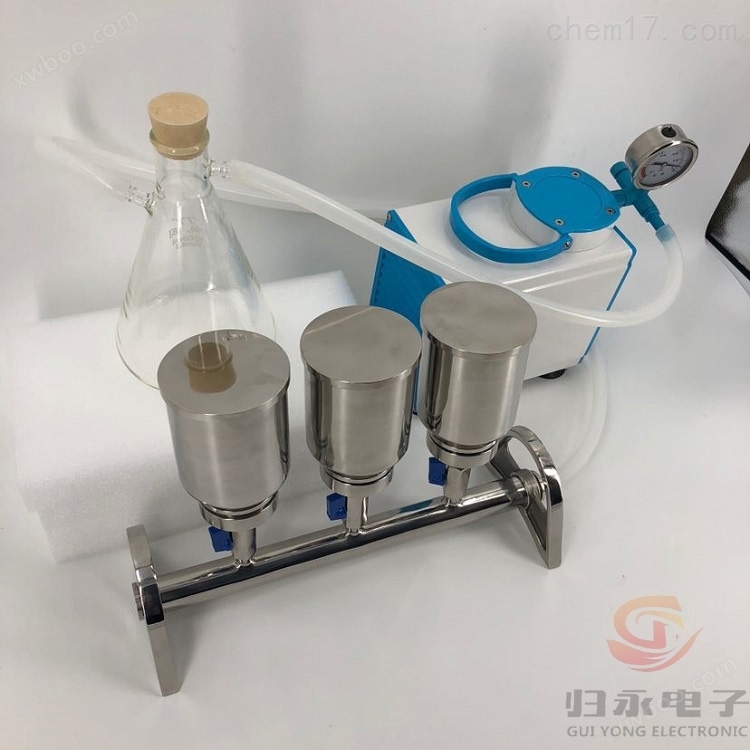
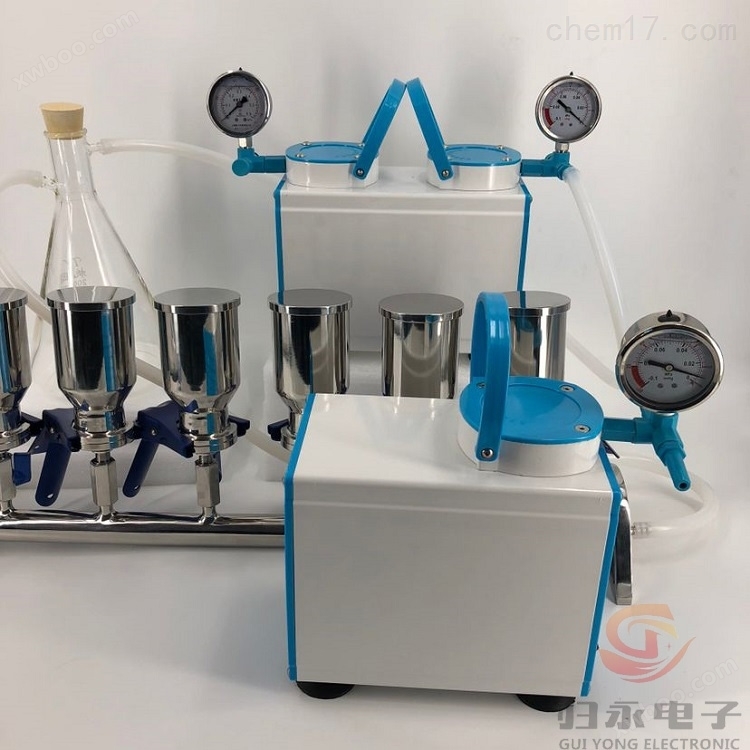
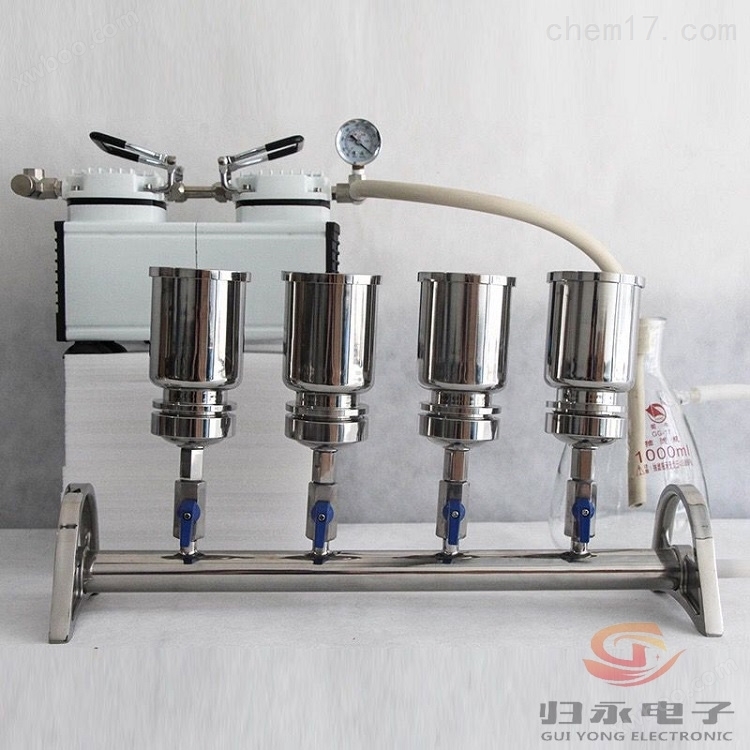
The microbial limit analyzer filter bracket and filter cup form a microbial filtration system. Different pump heads can be used in conjunction with specialized filter cups or limit incubators to form a complete membrane filtration device. During testing, the supply liquid is filtered through a membrane to trap microorganisms on the filter membrane and rinse to remove the antibacterial properties of the test liquid. Then, visible bacterial colonies are cultured and counted to detect the bacterial content in the test sample. 6. Quotation for Microbial Limit Testing Device for Filter Head GY-JXDY $r $n
Product Details
Guangzhou 3-link microbiological testing equipment, rapid microbiological detector,Hangzhou Microbial Quantitative Detector
Product Introduction
The microbial limit system filter holder is a microbial limit inspection system designed and manufactured in accordance with the pharmacopoeia. This instrument can be used in one purchase, and one filter membrane is lost for each test. Other components are durable, reusable, and have no waste disposal, meeting environmental protection (GLP) requirements. Valuable medicinal liquids can be recycled. In antibiotic drug inspection, the required culture medium is only half the amount of a closed filter, saving experimental costs.Microbial limit testerThe microbial filtration system consists of a filter bracket and a filter cup. Different pump heads can be used in conjunction with specialized filter cups or limit incubators to form a complete membrane filtration device. During testing, the supply liquid is filtered through a membrane to trap microorganisms on the filter membrane and rinse to remove the antibacterial properties of the test liquid. Then, visible bacterial colonies are cultured and counted to detect the bacterial content in the test sample.6. Quotation for Microbial Limit Testing Device for Filter Head GY-JXDY
Technical Specifications
Model: GY-JXDY-3L
Applicable filter membrane diameter: 47mm/50mm
Number of filter heads: 3
Testing method: membrane filtration method
Filtration method: Diaphragm pump negative pressure filtration
Extraction rate: 100ml/13s (with membrane)
Sterilization methods for filter heads: wet heat sterilization, flame gun rapid sterilization
Size: 36 * 15 * 21cm (length * width * height)
Weight: 10kg
Interface: G1/4
Material: SUS304
Filter nozzle: 6 * 7mm
Instrument features:
① Eliminating the need for filter bottles, it is lightweight and compact, making it suitable for operation inside purification stations.
② The filter is semi transparent for easy observation and quantitative control.
③ The filter is equipped with a base that can be replaced and is suitable for routine testing.
④ Each filter is equipped with a valve and can be used separately.6. Quotation for Microbial Limit Testing Device for Filter Head GY-JXDY
⑤ Pressure resistant and temperature resistant, can be sterilized by hot pressing at 121 ℃ for 30 minutes.
Microbial limit testing device|Microbial limit testing operation | Microbial limit testing system | Shanghai microbial limit filtration system filter rack manufacturer


Inoculate an equal amount of approximately 10mg or 1cm x 3cm of the test substance into a suitable amount of culture medium sufficient to immerse the test substance in each tube. )Test samples such as intestinal cords, sutures, and other disposable materials should be taken in small packages according to regulations, sterile unpacked, and evenly inoculated into appropriate amounts of culture medium sufficient to immerse the test samples in each tube Unless otherwise specified, the test sample for sterilization equipment should be taken in the specified amount. If necessary, it should be disassembled or cut into small pieces, and an equal amount should be inoculated into an appropriate amount of culture medium that is sufficient to immerse the test sample in each tube for cultivation and observation. The culture medium containers inoculated with the test sample should be cultured at the temperature specified for each culture medium for no less than 14 days.
The container of thioglycolate fluid culture medium for inoculating biological products should be divided into two equal parts, one part should be cultured at 30-35 ° C and the other part should be cultured at 20-25 ° C.
During the cultivation period, regular observation and recording of bacterial growth should be carried out. If the culture medium becomes turbid after adding the test substance or during the cultivation process, and after 14 days of cultivation, it cannot be judged from the appearance whether there is microbial growth, at least 1ml of the culture medium can be transferred to the same fresh culture medium, and the original culture and newly inoculated culture medium can be further cultured for no less than 4 days to observe whether the same fresh culture medium inoculated again appears turbid; Or take a culture medium smear, stain, and examine under a microscope to determine if there are bacteria present. If the test sample is clear in all tubes, or if it appears turbid but is confirmed to have sterile growth, it is judged that the test sample meets the requirements. If any tube in the test sample tube appears turbid and it is confirmed that there is bacterial growth, the test sample is judged to be non compliant, unless it can be fully proven that the test results are invalid, that is, the growing microorganisms are not contained in the test sample. The experiment can only be considered invalid if it meets at least one of the following conditions. The microbiological monitoring results of the equipment and environment used in the aseptic inspection test do not meet the requirements of the aseptic inspection method. Filter classification: Liquid medicine filter, respiratory filter, *, bacterial filter. Liquid medicine filter: It consists of an unfiltered liquid medicine chamber side shell with an exhaust channel, a filtered liquid medicine chamber side shell, an unfiltered liquid medicine chamber formed by combining a liquid medicine filtration membrane in the middle, a filtered liquid medicine chamber, and an exhaust channel closure. Its characteristic is that it is equipped with an exhaust channel closure. Respiratory filter: It is a type of filter that is suitable for installation on various types of liquid storage tanks, purified water storage tanks, and freeze-drying front box air exchange holes to prevent contamination from bacteria or dust in the air when the storage tank exhausts air due to changes in liquid level or when the freeze-drying front box exhausts gas. *By pumping blood through a filter in an extracorporeal circuit, a large amount of liquid and solute is filtered out under the action of filtration pressure; At the same time, an electrolyte solution with a similar composition to plasma liquid, namely a replacement fluid, is supplemented to achieve the goal of blood purification. Bacterial filter: a filter that does not allow bacteria to pass through and obtain sterile filtrate, typically with a filter element aperture of less than 0.22 μ m. Folding filter material PP film: polypropylene, waterproof. PTFE membrane: polytetrafluoroethylene, hydrophobic, air filter and respirator, filters air and organic solvents (such as ethanol).
PES membrane: Polyether sulfone, hydrophilic, used as a liquid filter and disinfectant filter. Nylon membrane: a thin film filter material synthesized from cellulose ester, hydrophilic. PVDF: Polyvinylidene fluoride film, hydrophobic and hydrophilic. Respiratory filters are hydrophobic filters suitable for gas filtration. Sterilization methods for tank respirators: one is online sterilization, and the other is offline sterilization. Respirator online sterilization: forward sterilization, pure steam is injected upstream of the filter element and discharged at the bottom to sterilize the filter element; Reverse sterilization, steam enters from the bottom of the filter element and flows out from the top. The reason why it is not recommended to clean and sterilize the respirator filter element is that it is difficult to dry completely after cleaning and sterilization, which may introduce new risks. The replacement time interval of the filter element has been verified
Respirator number → Water immersion test for bubble point → If it does not meet the requirements, replace the filter element → Regularly replace the filter element → The replaced filter element is directly scrapped. Integrity (bubble point) test of hydrophobic sterilization filter: Wet the filter element in a 40% isopropanol aqueous solution. Close valves 1 and 2.
Remove the pressure gauge and pour the isopropanol mixture into the filter. The ion exchange method uses a spherical resin (ion exchange resin) to filter raw water, and the ions in the water will exchange with the ions fixed on the resin. The two common ion exchange methods are hard water softening and deionization. Hard water softening is mainly used as a pre-treatment procedure to reduce the hardness of water before reverse osmosis (RO) treatment. The spherical resin inside the softening machine softens water by exchanging two sodium ions for one calcium ion or magnesium ion. Ion exchange resins use hydrogen ions to exchange cations and hydroxide ions to exchange anions; The cation exchange resin made from styrene and divinylbenzene containing sulfonic acid groups will exchange various cations (such as Na+, Ca2+, Al3+) encountered with hydrogen ions. Similarly, anion exchange resins made from styrene containing quaternary ammonium salts will exchange various anions (such as Cl -) encountered with hydroxide ions. Hydrogen ions released from cation exchange resin and those released from anion exchange resin
Similar Product Recommend


