-
E-mail
1037149724@qq.com
-
Phone
15221419697
-
Address
No. 8 Nanhong Road, Fengxian District, Shanghai
Product Categories
Shanghai Guiyong Electronics Co., Ltd
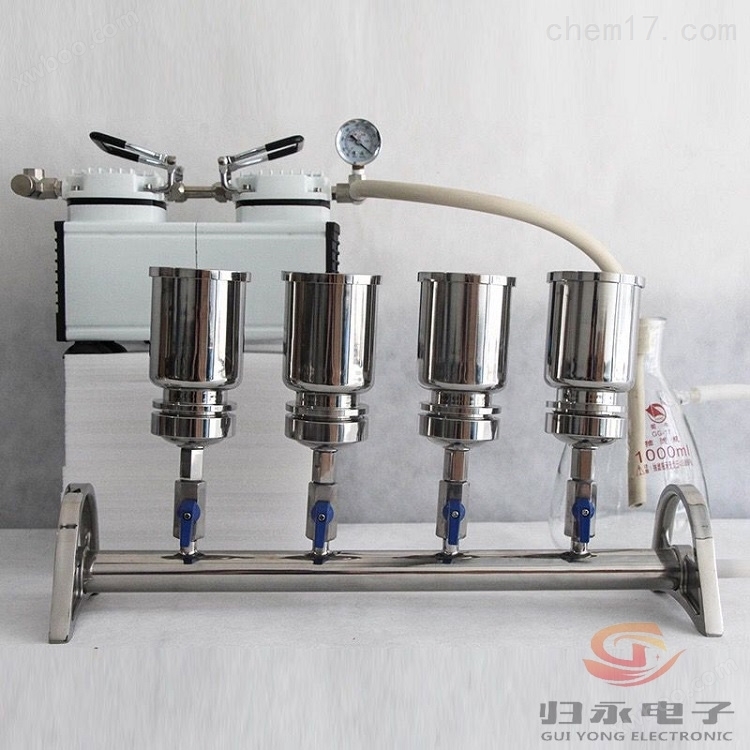
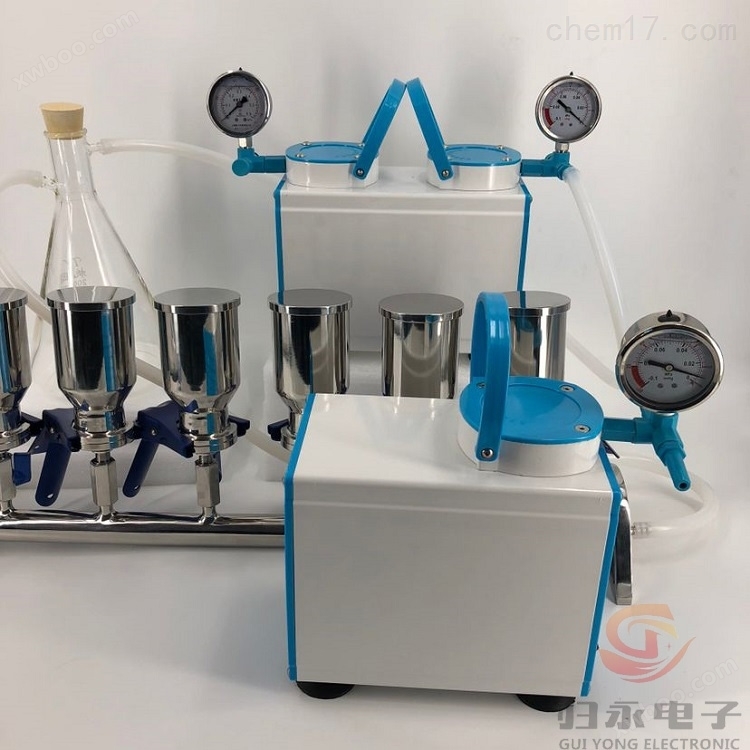


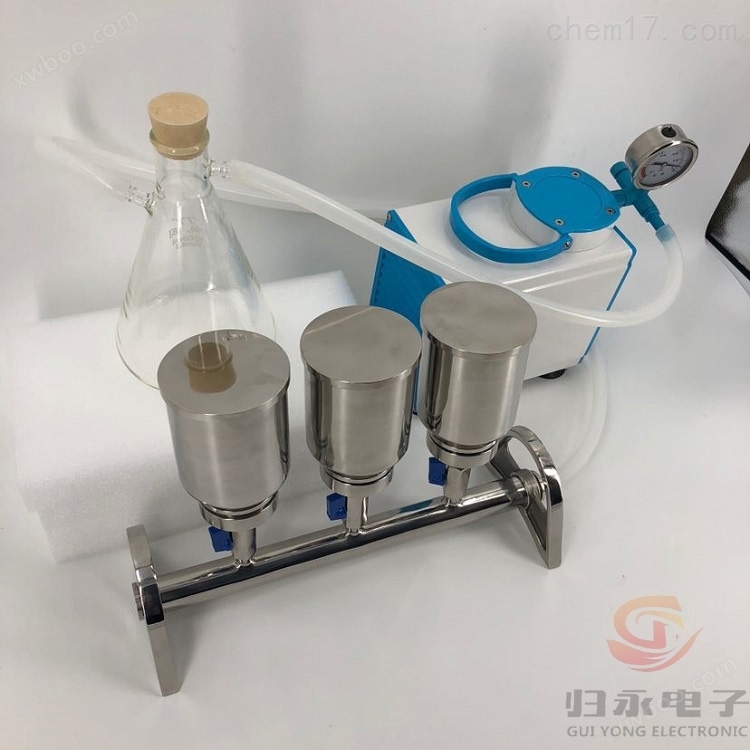
GY-JXDY Changsha Pure Water Microbial Rapid Analyzer Manufacturer
NegotiableUpdate on 01/23
- Model
- Nature of the Manufacturer
- Producers
- Product Category
- Place of Origin
Overview
The microbial limit analyzer filter bracket and filter cup form a microbial filtration system. Different pump heads can be used in conjunction with specialized filter cups or limit incubators to form a complete membrane filtration device. During testing, the supply liquid is filtered through a membrane to trap microorganisms on the filter membrane and rinse to remove the antibacterial properties of the test liquid. Then, visible bacterial colonies are cultured and counted to detect the bacterial content in the test sample. GY-JXDY Changsha Pure Water Microbial Rapid Analyzer Manufacturer $r $n
Product Details
Guangzhou 3-link microbiological testing equipment, rapid microbiological detector,Hangzhou Microbial Quantitative Detector
Product Introduction
The microbial limit system filter holder is a microbial limit inspection system designed and manufactured in accordance with the pharmacopoeia. This instrument can be used in one purchase, and one filter membrane is lost for each test. Other components are durable, reusable, and have no waste disposal, meeting environmental protection (GLP) requirements. Valuable medicinal liquids can be recycled. In antibiotic drug inspection, the required culture medium is only half the amount of a closed filter, saving experimental costs.Microbial limit testerThe microbial filtration system consists of a filter bracket and a filter cup. Different pump heads can be used in conjunction with specialized filter cups or limit incubators to form a complete membrane filtration device. During testing, the supply liquid is filtered through a membrane to trap microorganisms on the filter membrane and rinse to remove the antibacterial properties of the test liquid. Then, visible bacterial colonies are cultured and counted to detect the bacterial content in the test sample.GY-JXDY Changsha Pure Water Microbial Rapid Analyzer Manufacturer
Technical Specifications
Model: GY-JXDY-3L
Applicable filter membrane diameter: 47mm/50mm
Number of filter heads: 3
Testing method: membrane filtration method
Filtration method: Diaphragm pump negative pressure filtration
Extraction rate: 100ml/13s (with membrane)
Sterilization methods for filter heads: wet heat sterilization, flame gun rapid sterilization
Size: 36 * 15 * 21cm (length * width * height)
Weight: 10kg
Interface: G1/4
Material: SUS304
Filter nozzle: 6 * 7mm
Instrument features:
① Eliminating the need for filter bottles, it is lightweight and compact, making it suitable for operation inside purification stations.
② The filter is semi transparent for easy observation and quantitative control.
③ The filter is equipped with a base that can be replaced and is suitable for routine testing.
④ Each filter is equipped with a valve and can be used separately.GY-JXDY Changsha Pure Water Microbial Rapid Analyzer Manufacturer
⑤ Pressure resistant and temperature resistant, can be sterilized by hot pressing at 121 ℃ for 30 minutes.
Microbial limit testing device|Microbial limit testing operation | Microbial limit testing system | Shanghai microbial limit filtration system filter rack manufacturer


Most of them only have a few milliliters to tens of milliliters, and for hundreds of milliliters of extraction solution, they need to be divided and combined; 2. The loss is significant, and for compounds with low boiling points and instability, nitrogen blowing time, gas flow rate, and water bath temperature directly affect the final recovery rate. 3. Easy to enter water, such as concentrated dichloromethane, solvent evaporation absorbs heat, and water droplets form on the inner wall of the nitrogen blowing tube. Prepare to place the test sample, sterilized physiological saline, culture dish, syringe, pipette, 15ml sterilized centrifuge tube, alcohol lamp, test tube rack, marker pen and other experimental items (unopened) into the ultra clean workbench, and turn on the ultraviolet lamp for 30 minutes. Turn off the ultraviolet lamp, pull the ultra clean table up to 20cm, enter the ultra clean table with your hand, wipe your entire palm with an alcohol cotton ball, ignite the alcohol lamp, and place the centrifuge tube on the test tube rack next to the alcohol lamp. Use a syringe to draw 9ml of sterile physiological saline and add it to the centrifuge tubes in sequence (the number of centrifuge tubes is: sample number x 2). Dilute the sample thoroughly by pipetting 1ml of the water sample to be tested and adding it to a centrifuge tube containing 9ml of sterile physiological saline. Repeat blowing and suctioning at least 5 times to make a 1:10 dilution solution; Take 1ml of the 1:10 dilution solution and add it to a centrifuge tube containing 9ml of sterile physiological saline. Repeat blowing and suctioning at least 5 times and mix well to make a 1:100 dilution solution. (Dilute this sample to 1:100. If the sample is heavily contaminated or there is significant bacterial growth after testing, further dilution testing can be performed.) The pouring method is used to label the farm name, water intake location, culture medium name, and dilution factor on the plate. (Generally, dilutions with a dilution ratio of 1:10 are represented by -1; dilutions with a dilution ratio of 1:100 are represented by -2, and so on.) Take 1ml of undiluted sample, 1:10 diluent, and 1:100 diluent into the culture dish using a pipette. Blank control: Dilute 1ml with sterile physiological saline and add it to the culture dish, then mark it properly. Take the prepared culture medium and quickly pour it into a culture dish labeled with the same name as the culture medium until the temperature drops to around 45 ℃ (preferably without scalding the back of the hand and without clumping). Each culture dish should be 15ml-20ml, not too thin or too thick. Pour the corresponding culture medium into the blank control culture dish. After pouring the agar, each culture dish should be rotated three times clockwise and counterclockwise on the table to ensure that the sample is thoroughly mixed with the culture medium.
After the agar * solidifies, it is placed in a 37 ℃ constant temperature incubator and incubated upside down for 24-48 hours. Observe the results and record the number of bacterial colonies. The coating method marks the culture dish with the name of the breeding farm, the water intake location, the dilution gradient, and the name of the culture medium using a marker pen. Add 100 μ L of each culture medium to the corresponding culture dish according to the marked gradient using a pipette, evenly spread it with a sterilized coating rod, and place it on a super clean table to fully absorb the sample to be tested. Draw 100 μ L of sterile physiological saline from the blank control and evenly spread it with a sterilized coating rod. After the liquid * is absorbed, place the culture dish in a 37 ℃ constant temperature incubator and invert it for 24-48 hours. Observe the results and record the number of bacterial colonies. Colony counting method
Select a dilution gradient plate count of colonies between 30CFU and 300CFU; If the dilution factor is still below 30CFU, record the specific bacterial count on the plate; If the dilution ratio of the colony count is still greater than 300 CFU, it can be recorded as' too many to count ', or the colony count can be counted clearly; If the bacterial count of two consecutive dilution gradients is between 30CFU and 300CFU, count these two dilution gradients separately. When one of the plates has a large area of spreading colonies, it is not suitable to use it. Instead, the plate without spreading colonies should be used as the number of colonies for this dilution; If the number of patchy colonies is less than half of the plate and the remaining half are evenly distributed, the number of colonies on half of the plate can be calculated and multiplied by 2 to represent one plate colony. When there is a chain like growth of colonies on the plate without clear boundaries, count each single chain as a colony
Similar Product Recommend


