-
E-mail
1806173489@qq.com
-
Phone
17077414028
-
Address
Mingcheng Building, Yuhua District, Changsha City, Hunan Province
Product Categories
Hunan Zhongke Hongsheng Biotechnology Co., Ltd
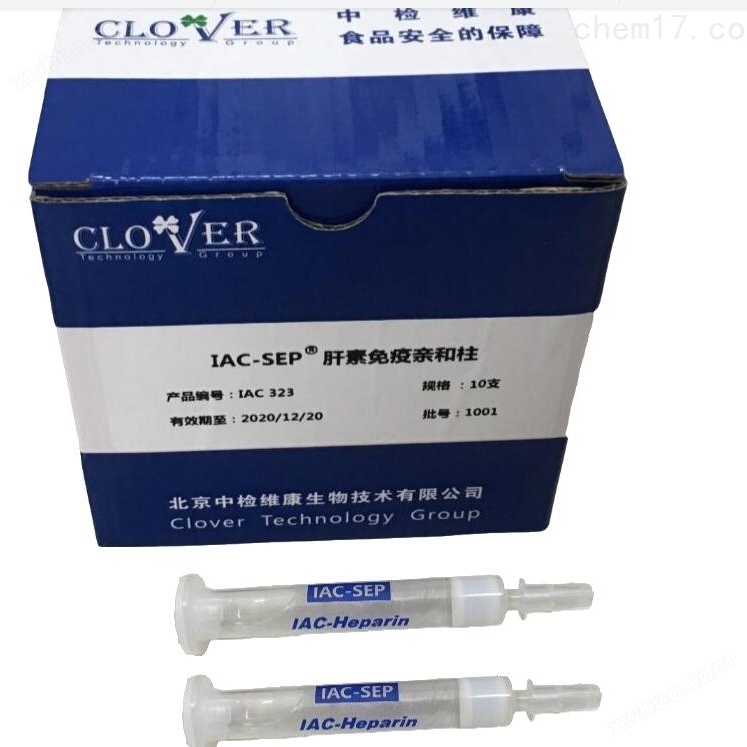
Folic acid * immunoaffinity column IAC-SEP in food
NegotiableUpdate on 01/22
- Model
- Nature of the Manufacturer
- Producers
- Product Category
- Place of Origin
Overview
Folic acid in food * immune affinity column IAC-SEP $r $n Target users $r $n $r $n IAC-SEP #174; *The affinity column can specifically purify the * in the sample. It uses the column shaped agarose gel as the solid carrier, and the agarose gel is coupled with the * antibody to form an immunoadsorbent, which is loaded into the column to make an immunoaffinity column. It can specifically purify * in the sample. *Affinity columns are widely used for the extraction of samples such as beverages, milk, and grains. This method is fast, easy to operate, and highly accurate, playing a crucial role in improving the quality and safety of food.
Product Details
Folic acid * immunoaffinity column IAC-SEP in food
IAC-SEP®*Immune affinity column
(Product Code: IAC322)
Target audience
IAC-SEP®*Affinity columnCapable of purifying samples with specificity*,It uses columnar agarose gel as solid carrier, and agarose gel is coupled with * antibody to form an immunosorbent, which is packed into column to make an immunoaffinity column. It can specifically purify * in the sample. *Affinity columns are widely used for the extraction of samples such as beverages, milk, and grains. This method is fast, easy to operate, and highly accurate, playing a crucial role in improving the quality and safety of food.
principle
*Immunoaffinity columns can specifically purify samples*,Mix the sample with the extraction solution, extract, filter, and then pass the filtrate through an immunoaffinity column. At this moment*substanceThe antibody is bound to the affinity column. Use distilled water to remove impurities from the immunoaffinity column. Separate * from the antibody using eluent through a separation column. Afterwards, inject the eluent into HPLC or LC-MS for measurement.
Storage conditions
The affinity column is stored at 2-8 ° C and cannot be frozen, with a shelf life of 18 months. Recommended for use at room temperature (18-30 ° C).
Preparation of experimental solution
pH7.4 PBSsolution:8.0 Dissolve 1 gram of NaCl+2.90 grams of Na2HPO4 12H2O+0.24 grams of KH2PO4+0.2 grams of KCl in 990mL of pure water, and add pure water to 1 liter.
10%Sodium ascorbate:Weigh 10g of L-ascorbic acid sodium into a 100mL volumetric flask, dissolve and mix well with water.
Eluent (30% acetonitrile+0.2% tris)Fluoroacetic acid)Accurately measure 30mL of acetonitrile and add it to a 100mL volumetric flask, then add 0.2mL of acetonitrileFluoroacetic acidThen dilute to 100mL with pure water.
Other reagents required:*(sigma P1750)
Liquid chromatography conditions
Column: Agilent C18, 4.6 × 150mm (5um)
Mobile phase:0.1% threeFluoroacetic acidAcetonitrile=85:15 (v/v)
Flow rate: 0.5 mL/min
Detector: UV detector, 280nm
Injection volume: 50uL
analysis steps
1)Sample extraction and dilution:
Operation steps for samples of infant formula, ready to eat infant food, milk, formula, grains, energy bars, etc.:Weighing1-10gSample (to be weighed according to the required detection range), placed in250 mLCone shaped bottle. Will50mL pH7.4 PBSsolutionJoin inErlenmeyer flaskMix well. join4g*Shake the shaker for 10 minutes.join6mL 10%Sodium ascorbate, shake on a shaker for 5 minutes.Place the conical flask in a 37 ℃ water bath shaker and shake for 2 hours. Then place the conical flask in a 100 ℃ water bath and let it stand for 20 minutes. Remove the conical flask and cool it to room temperature; usepH7.4 PBSsolutionconstant volume to100mLShake well. Extract the liquid4000 RPMCentrifuge for 10 minutes. Accurately transfer and aspirate 10 mL of the upper layer liquid,backup.
2)Purification of samples
*The column capacity (adsorption *) of the immune affinity column is450ngWhen the * in the sample exceeds the measurement range, please reduce the volume of the upper column appropriately to make it within the detection range, and calculate the accurate content.
Folic acid * immunoaffinity column IAC-SEP in food
Similar Product Recommend