-
E-mail
1806173489@qq.com
-
Phone
17077414028
-
Address
Mingcheng Building, Yuhua District, Changsha City, Hunan Province
Product Categories
Hunan Zhongke Hongsheng Biotechnology Co., Ltd
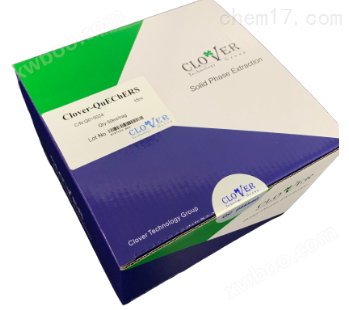
CLOVER veterinary drug residue quinoxaline affinity column
NegotiableUpdate on 01/22
- Model
- Nature of the Manufacturer
- Producers
- Product Category
- Place of Origin
Overview
CLOVER veterinary drug residue quinoxaline affinity column $r $n bulk customization Contact customer service $r $n $r $n The immunoaffinity column can selectively adsorb quinoxaline metabolites in the sample solution, thereby achieving highly targeted purification of the sample. The purified sample solution can be directly used for HPLC analysis.
Product Details
CLOVER veterinary drug residue quinoxaline affinity column
CLOVER veterinary drug residue quinoxaline affinity column
1Purpose:
The immunoaffinity column can selectively adsorb quinoxaline metabolites in the sample solution, thereby achieving highly targeted purification of the sample. The purified sample solution can be directly used for HPLC analysis.
The combination of affinity column and HPLC can achieve rapid determination, improve signal-to-noise ratio, and enhance the accuracy of the detection method.
2Overview:
Quinoline belongs to the class of quinoxaline drugs and is a broad-spectrum antibiotic synthesized artificially. Existing research has shown that quinoxaline and its deoxymetabolites are carcinogenic, teratogenic, and photosensitive toxic. The Chinese Veterinary Pharmacopoeia has long specified that quinoxaline has been banned from use in poultry and aquaculture. Due to the rapid metabolism of animals after feeding on quinoxaline, there are more than ten metabolites in the animal body, among which 3-methyl-quinoxaline-2-carboxylic acid (MQCA) is the main metabolite, relatively stable in the body, and is recognized as a labeled residue by the Codex Alimentarius Commission. Therefore, quinoxaline residue is usually monitored by analyzing the content of the metabolite MQCA in the sample.
3Principle:
The basis of the assay is antigen antibody reaction, where the antibody is attached to the column. The sample is extracted, diluted, and slowly passed through the quinoxaline metabolite immunoaffinity column. Within the immunoaffinity column, the quinoxaline metabolite binds to the antibody, and then the immunoaffinity column is washed to remove any unrelated substances that have not been bound. Wash the metabolites of quinoxaline with eluent, and then inject them into the analytical instrument for detection.
Similar Product Recommend