-
E-mail
jszeyu@163.com
-
Phone
15094320000
-
Address
Maqiao High tech Industrial Zone, Jingjiang City, Jiangsu Province
Product Categories
- Underground sewage treatment equipment
- Chemical chlorine dioxide generator
- Denitrification device manufacturer
- Hospital integrated sewage treatment equipment
- Dual peripheral transmission scraper suction machine
- Air flotation equipment
- Organic waste gas treatment
- Sodium hypochlorite generator
- Reverse osmosis machine
Jiangsu Zeyu Environmental Engineering Co., Ltd
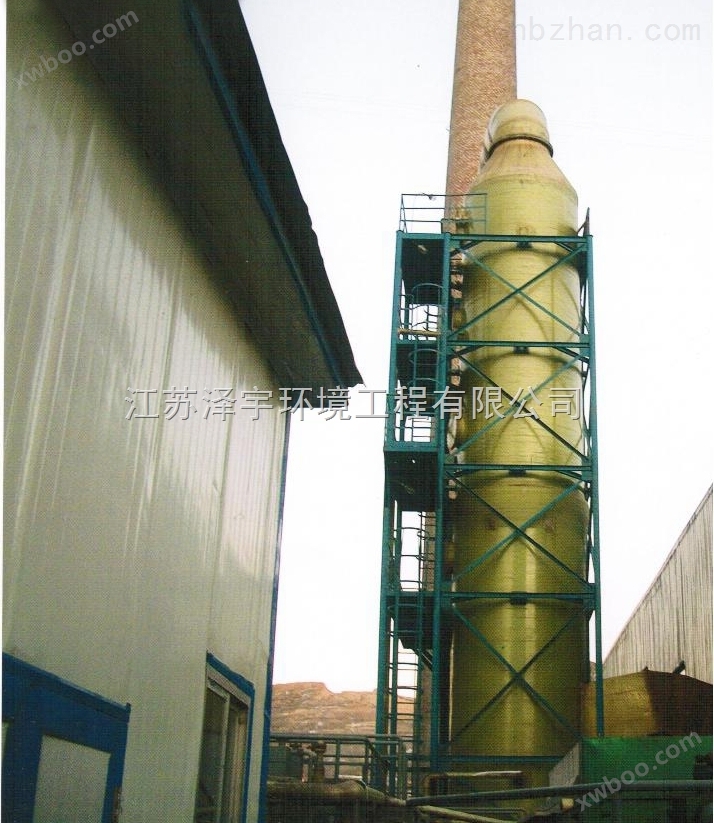
Fiberglass flue gas denitrification purification device
NegotiableUpdate on 03/20
- Model
- Nature of the Manufacturer
- Producers
- Product Category
- Place of Origin
Overview
When using liquid ammonia as a reducing agent in the fiberglass flue gas denitrification purification device, the unit should prepare an emergency response plan for accidents in accordance with the provisions of the Regulations on the Safety Management of Hazardous Chemicals, equip emergency rescue personnel and necessary emergency rescue equipment, and regularly organize drills. The $r $n power plant should strictly manage the ineffective and * catalysts in accordance with the relevant regulations for hazardous waste treatment and disposal.
Product Details
Fiberglass flue gas denitrification purification device
The equipment inside the desulfurization tower mainly includes agitators, oxidation ducts, spray pipes, defoggers, and some designs also include guide plates or uniform distribution plates. The agitator is located at the bottom of the desulfurization tower mainly to disturb the slurry and prevent the precipitation of gypsum and other particles; The oxidation duct mainly injects air into the slurry pool inside the tower to oxidize sulfite into sulfate, and the supporting equipment is an oxidation fan; The spray pipe is a system in which the slurry is pumped by a circulating pump to the surface of the desulfurization tower slurry pool, where it is atomized and distributed through nozzles to absorb SO2 gas from the flue gas; The main function of a defogger is to remove liquid droplets carried in the flue gas, that is, to remove water.
Fiberglass flue gas denitrification purification device
1. Fiberglass desulfurization tower is a new type of composite material made of synthetic resin and glass fiber, which is manufactured using a surround process. Due to its resistance to chemical corrosion and lower cost compared to nickel alloy, fiberglass has been widely used in many wet flue gas desulfurization system equipment by our company. The entire process from flue gas inlet to flue gas emission has been successfully manufactured using FRP materials.
2. The FRP sulfur tower and its internal components have excellent physical and mechanical properties, with a density of 1.8-2.1g/cm3, tensile strength of 160-320Mpa, axial tortuosity of 140 Mpa, layer shear strength of 50 Mpa, tensile modulus of 25Gpa, shear modulus of 7 Gpa, tortuosity modulus of 9.3 Gpa, bus hardness of 40, Poisson's ratio of 0.3, cracking elongation rate of 0.8-1.2%, expansion coefficient of 11.2 * 10-6/℃, and internal and external surface roughness of 0.0084
3. The FRP pipes and fittings of the internal spraying system of the absorption tower shall have at least 2.5mm thick wear-resistant pads. When selecting resin rich lining for standardized glass pipelines, it is acceptable to accept the wear of slurry with solid particles below 150 μ m and flow velocity below 2m/s. The wear resistance of FRP can be improved by adding wear-resistant fillers such as SiO2 and SiC ceramic powders. The turning radius of FRP should be at least 3 times the diameter or the inner and outer surfaces should have a minimum bending radius of 25mm.
4. FRP coated tellurium tower has physical properties such as chemical corrosion resistance and dry wet replacement, so its service life can reach 20 years.
Similar Product Recommend