-
E-mail
jszeyu@163.com
-
Phone
15094320000
-
Address
Maqiao High tech Industrial Zone, Jingjiang City, Jiangsu Province
Product Categories
- Underground sewage treatment equipment
- Chemical chlorine dioxide generator
- Denitrification device manufacturer
- Hospital integrated sewage treatment equipment
- Dual peripheral transmission scraper suction machine
- Air flotation equipment
- Organic waste gas treatment
- Sodium hypochlorite generator
- Reverse osmosis machine
Jiangsu Zeyu Environmental Engineering Co., Ltd
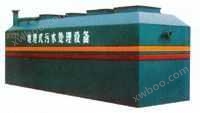
Carbon steel buried integrated sewage treatment equipment
NegotiableUpdate on 03/20
- Model
- Nature of the Manufacturer
- Producers
- Product Category
- Place of Origin
Overview
Carbon steel buried integrated sewage treatment equipment made of fiberglass material, corroded. Unlike underground sewage treatment equipment made of carbon steel with anti-corrosion treatment, which may experience rusting and leakage within two to three years, fiberglass tanks have a service life of over 30 years and can be used continuously while ensuring timely replacement of components. The operating cost of $r $n is low. The energy consumption of the equipment mainly comes from the submersible sewage pump and aerator in the regulating tank. The treatment process does not require the addition of any flocculation agents, and due to intermittent aeration operation, the power consumption is extremely low, significantly saving users' operating costs.
Product Details
Carbon steel buried integrated sewage treatment equipment
The entire equipment disposal system is equipped with a fully automatic electrical control system and an equipment failure and damage alarm system, which operates safely and reliably. Ordinary people do not need dedicated personnel to manage it, but only need to maintain and upkeep the equipment in a timely manner. In hospital sewage treatment, there are various viruses, bacteria, parasite eggs, and some toxic and harmful substances at different levels. If not disinfected, these viruses, pathogens, and parasite eggs will become a concentrated source of pollution in the environment, causing the occurrence and spread of various diseases and seriously threatening human health. Related to epidemiological investigation and bacteriological testing. The content of pathogens in hospital sewage is high, and it has strong resistance to environmental physical and chemical factors, so its survival rate in the environment is relatively high. There is literature evidence that pathogens of intestinal pollution diseases can survive in various external environments. Therefore, disinfection of hospital sewage is a key step in hospital sewage treatment.
Carbon steel buried integrated sewage treatment equipment
Debugging process and operating procedures for aeration biochemical system:
The aeration biochemical system mainly purifies wastewater by utilizing the adsorption, oxidation, and reduction processes of microorganisms in activated sludge to oxidize and decompose complex macromolecular organic matter into simple inorganic substances under aerobic conditions.
1. Adjust the aeration rate according to the specific situation, and adjust the intake volume by controlling each valve.
2. The aeration tank should be controlled by adjusting the sludge load, sludge age, or sludge concentration.
3. The dissolved oxygen at the outlet of the aeration tank should be 2mg/L.
4. It is necessary to regularly observe the biological phase of activated sludge, the transparency of the supernatant, the color, state, and odor of the sludge, and regularly test and calculate relevant items that reflect the characteristics of the sludge.
5. Abnormal phenomena such as sludge expansion and sludge flotation caused by changes in water temperature, water quality, or the operation mode of the aeration tank in the sedimentation tank should be analyzed for the reasons, and the system operating conditions should be adjusted according to the specific situation, and appropriate measures should be taken to restore normal operation.
6. When the water temperature in the aeration tank is low, appropriate measures should be taken to extend the aeration time, increase the sludge concentration, increase the sludge age, or other methods to ensure the treatment effect of sewage. The water temperature in the aeration tank cannot exceed 38 ℃. If it is too high, cooling measures should be taken before continuing to inlet water!
7. When foam and scum are produced in the aeration tank, the reason shall be analyzed according to the color of foam, and corresponding measures shall be taken to restore to normal. Turn on the defoaming water pump according to the situation and sprinkle defoaming agent.
8. Add nutrients to the biochemical tank according to the sludge situation, generally in a ratio of BOD5: N: P=100:5:1. The N source is urea, and the P source is sodium phosphate or *.
The primary sedimentation tank can remove sediment and floating debris from wastewater. After the initial sedimentation of wastewater, about 50% of the sediment, oil and floating matter, and 20% of the BOD can be removed. Calculated based on the removal of unit mass of BOD or solid matter, the initial sedimentation tank is an economical purification step. For domestic sewage and industrial sewage with high suspended solids, it is easy to use the initial sedimentation tank for pre-treatment. The main functions of the primary sedimentation tank are as follows:
(1) Remove sediment and floating debris to reduce the load on subsequent treatment facilities.
(2) The coagulation of small solids into larger particles enhances the solid-liquid separation effect.
(3) Has a certain adsorption and removal effect on colloidal substances.
(4) To a certain extent, the primary sedimentation tank can serve as a regulating tank, achieving a certain degree of homogenization effect on water quality. Reduce the impact of water quality changes on subsequent biochemical systems.
(5) Some wastewater treatment systems reflux some of the sludge from the secondary sedimentation tank to the primary sedimentation tank, utilizing the biological flocculation effect of the secondary sedimentation tank sludge to adsorb more soluble and gelatinous organic matter, thereby improving the removal efficiency of the primary sedimentation tank.
Similar Product Recommend