-
E-mail
1119594485@qq.com
-
Phone
15152325661
-
Address
95-6 Tongtai Avenue, Jinhu County
Product Categories
Jinhu Tianxiang Instrument Co., Ltd
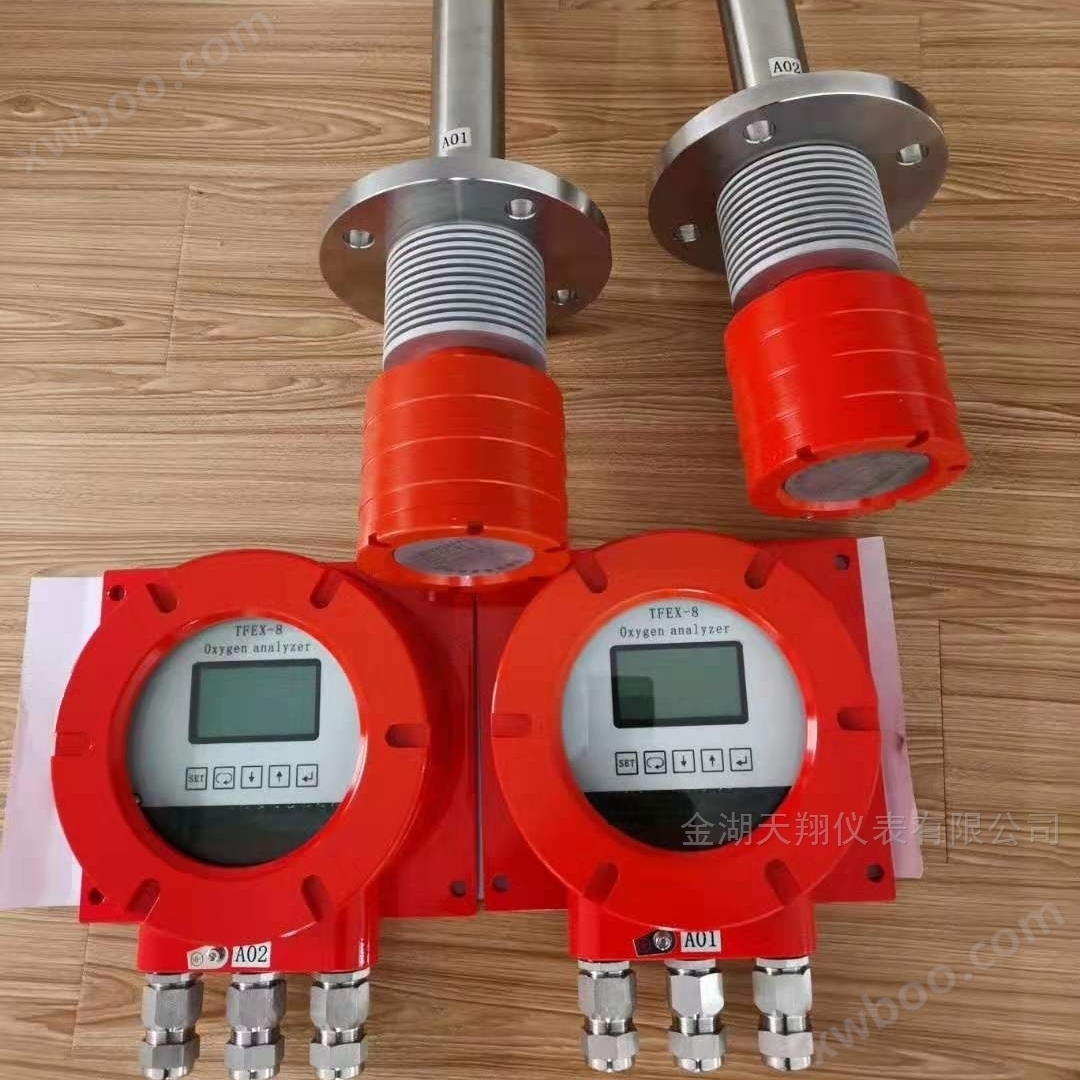


Zirconia probe
NegotiableUpdate on 01/22
- Model
- Nature of the Manufacturer
- Producers
- Product Category
- Place of Origin
Overview
The zirconia probe is provided by Jinhu Tianxiang Instrument Co., Ltd. This product can quickly and accurately detect and analyze the flue gas content generated by combustion equipment such as boilers, kilns, and heating furnaces during the combustion process, in order to achieve low oxygen combustion control, energy conservation, and reduce environmental pollution.
Product Details
Zirconia Probe - Jinhu Tianxiang Instrument Co., Ltd. Quality is the life of the enterprise, and every product is a masterpiece of craftsmanship!
1. Working principle of zirconia analyzer
Fully stable zirconia ceramic is a solid dielectric material that exhibits ion conductivity at a certain temperature. It is a key component in measuring devices that converts flue gas oxygen concentration into electrical signals. At a certain temperature, when the oxygen concentration on both sides of the zirconia tube is different, an oxygen concentration difference potential will be generated on both sides of the zirconia tube. The two leads on the zirconia tube will send the oxygen concentration difference potential to the secondary instrument for processing and calculation, and display the oxygen content.
2. Main components of zirconia analyzer
The main components include dust filters, zirconia tube components (zirconia solid electrolyte), protective tubes, thermocouples, heating furnaces, standard gas to gas pipes, junction boxes, etc.
3. Basic conditions for normal work
1. Zirconia components need to be heated to 700 ℃ and maintained at a constant temperature of 700 ℃.
2. The flue gas temperature at the installation point of the zirconia analyzer should be below 700 ℃.
3. The output voltage of the analyzer should match the resistance value of the heating furnace wire. (Can heat the electric furnace to 700 ℃)

1、 Application of zirconia oxygen analyzer
The TXZO series zirconia oxygen analyzer can quickly and accurately detect and analyze the flue gas content generated by combustion equipment such as boilers, kilns, and heating furnaces during the combustion process, in order to achieve low oxygen combustion control, energy conservation, and reduce environmental pollution.
The TXZO series zirconia oxygen analyzer consists of two parts: a zirconia head (primary instrument) and an oxygen transmitter (secondary instrument).
TXZO typeZirconia probeThe shell is made of high temperature resistant and corrosion-resistant stainless steel material. No need for external refueling, the reference gas can self circulate. And it is equipped with a standard gas interface, which can be calibrated and verified with standard gas during on-site operation. The probe zirconium tube can be easily disassembled and replaced.
The TXZO oxygen transmitter has a simple structure, standardized installation dimensions, reasonable circuit design, excellent process quality, stable and reliable instrument performance, and easy debugging.
The TXZO series zirconia oxygen analyzer has been widely used in large and medium-sized power plants in China for several years due to its cost-effectiveness.

2、 Technical specifications for zirconia oxygen analyzer
Measurement object: various industrial furnace flue gas, mixed gas concentration measurement element: zirconia tube
1. Oxygen measurement range: 0-20.6% O2 or 0-10%
2. Instrument accuracy: System oxygen measurement basic error ≤± 2% full-scale value
3. Transmitter accuracy: 1.0 level (≤ 1.0% full-scale value)
4. Temperature control accuracy: 700 ± 1 ℃ of the constant temperature point
5. Response time: ≤ 3 seconds (reaching 90% response)
6. Alarm output: upper and lower limit node output, optional "normally open" or "normally closed" points
7. Analog output signal: 4-20 mA ADC (load 0 Ω -750 Ω) corresponding to oxygen content of 0-10% O2 or 0-20.6% O2
8. Background correction range: -20 mV -+20 mV
9. Digital display format: LED four digit digital tube display
10. Power supply: AC220V ± 15%
11. Power consumption: ‹ 6W (excluding heating power)
12. Heating power: about 50W (average) can provide 150W output power
13. Environmental conditions: temperature -20 ℃ -60 ℃; Relative humidity ‹ 90%
14. Detector weighs about 10Kg, converter weighs about 5kg
15. Calibration method: Three parameter calibration. Air point, standard air point, and operating point.
How to select a model
The main considerations for selection are as follows:
1. Converter
Converter with disk mounting (HD-2D): hole size 75+2mm × 150+2mm
Wall mounted (HD-2C): Installation dimensions: 260mm × 205mm × 90mm
The display range of the converter is 0-20.6% or 0-10%.
Output: 4-20mA
The upper and lower limits are normally open nodes, and users can set their own alarm points.
2. Detector
(1) Insertion depth selection: Furnace wall thickness+300mm (detector length specifications include 400mm, 600mm, 800mm, 1000mm, 1200mm to choose from)
(2) Selection of smoke temperature for installation point: smoke temperature ‹ 700 ℃, choose SK standard detector; Smoke temperature ≥ 700 ℃, choose TX high-temperature detector
3、 The zirconia oxygen analyzer has the following main characteristics:
1. The sensor uses Japanese ion coating technology, which greatly improves its service life.
2Zirconia probeAdopting a full 321 stainless steel (1Cr18Ni9Ti) sheath, it has excellent wear resistance and corrosion resistance.
3. Direct insertion: No sampling system required, fast response, effectively reducing ash blockage in flue gas.
4. Thermal diffusion reference: No specialized reference air pump required, easy to use and maintain.
5. Dual parameter design: Overcoming the discreteness of domestic zirconia performance, accurate measurement, and extending service life.
6. Online calibration of operating conditions: Accurate and reliable, convenient online calibration of single standard gas, direct calibration of operating points, and precise measurement.
7. Thermal Inert Protection: Easy to install, can be hot installed, and has strong adaptability to shutdown and start-up of the furnace.
8. Detachable components: easy replacement of components, convenient maintenance, and reduced usage costs.
9. Multi functional display: Oxygen content (%); Oxygen potential; Temperature and background potential parameters are displayed intuitively and conveniently through digital display
10. Dual range: It has both 0-10% and 0-20.6% dual ranges, with a wide measurement range.
11. Dual output: It has both switch node output and 4-20mA dual output.
12. Large load: 750 ohms/4-20mA, easy to install remotely.
13. The background potential can be adjusted, with a wide range of adjustment, and parameters such as component aging can be checked at any time.
14. Fully floating design: common mode input, strong resistance to electric field interference, no need for grounding wire, easy installation.
15. Strong adaptability: Suitable for various furnace types such as gas, oil, and coal. Suitable models can be selected for measuring temperatures from room temperature to 1400 degrees Celsius.

4. Ordering Notice
Before placing an order, it is necessary to inquire with the customer about the industry, purpose, and any special requirements for zirconia. Industries of use: 1. Conventional power plants 2. Sulfuric acid plants 3. Urban waste incineration power plants (burning waste, straw, etc.).
2. Due to their high corrosiveness and harsh environment, these two industries have high requirements for the quality of instruments. Conventional zirconia cannot meet the requirements, so they have withdrawn from sulfuric acid plant zirconia and waste power plant zirconia based on their characteristics. The price of zirconia is much higher than that of ordinary zirconia.
4.1 Complete set ordering:
1. The smoke temperature decorated with oxygen probes.
2. Insertion depth of oxygen probe
3. Diagonal hole spacing for installing flange screw holes
3. Flange installation methods (as shown in the two methods in the figure).
4. The installation method or size of the analyzer.
5. The range of the analyzer.
4.2 Use in conjunction with other manufacturers
4.2.1 Provide probes with analyzers from other manufacturers
1. Need to know the output voltage of the other manufacturer's analyzer (or know the resistance value of their electric furnace)
2. The installation method or size of the analyzer.
3. The flue gas temperature at the installation point of the oxygen probe.
4. Insertion depth of oxygen probe.
5. The diagonal hole spacing for installing flange screw holes.
6. Flange installation method.
4.2.2 Provide analyzer with probes from other manufacturers
1. Need to know the resistance value of its probe electric furnace wire.
2. Installation method or size of analyzer.
3. Analyzer range.
5. Installation precautions
If it is a newly built furnace, it is necessary to install and debug the zirconia analyzer after the furnace is dried, otherwise it will seriously reduce the service life of zirconia.
1. Unpack and check if the accessories are complete, and if the standard gas inlet sealing screw of the probe is securely fastened.
2. The oxygen probe flange should be sealed with a gasket between the furnace wall flanges, and both sides of the gasket must be coated with silicone.
3. The filter port of the oxygen probe should face away from the direction of smoke flushing.
4. When inserting the oxygen probe into the furnace, it should be slowly inserted (or the probe should be powered on and kept at a constant temperature of 700 ℃ before installation)
6. Precautions during furnace maintenance
1. Short term maintenance:
During short-term maintenance of the furnace, the zirconia analyzer should not be disconnected and removed as much as possible. The power supply should be maintained to allow it to work normally.
2. * Maintenance:
Turn off the power and remove the oxygen probe. Allow it to cool to room temperature. Wrap the oxygen probe tightly with plastic film to prevent air from coming into contact with it. Then carefully place it in the warehouse. Because during work, sulfides in the flue gas adhere to the oxygen probe. If they come into contact with water vapor in the air, they can corrode the oxygen probe and reduce its service life.
7. Quality Acceptance Standards for Zirconia
1. Local potential of zirconia components. Measurement method: After the oxygen probe is kept at a constant temperature of 700 ℃, use a multimeter with mV range to measure the zirconium head terminal in the junction box. The local potential of the oxygen probe is controlled below ± 0.5mV.
2. Zirconia component DC internal resistance
After the oxygen probe is kept at a constant temperature of 700 ℃, use a multimeter Ω to measure the zirconium head terminal in the junction box. The DC internal resistance of the oxygen probe is controlled between 10-20 Ω.
3. The accuracy requirement for the analyzer is 1%
Zirconia oxygen analyzerofModel:
model |
Application scenarios |
Insertion length/mm |
||
standard configuration |
optional |
|||
detector |
ZO-12A |
Suitable for occasions with high dust content in flue gas |
1000 |
400mm 600mm 800mm 1000mm 1200mm (Customizable according to user needs)
|
ZO-12B |
A universal analytical instrument for general comprehensive working conditions |
|||
ZO-12C |
Used in situations where the percentage of sulfides in flue gas is relatively high |
|||
ZO-12D |
Used in situations where on-site environmental erosion is severe |
|||
ZO-12E |
Used in high temperature situations where the working measuring point temperature is higher than 600 ℃. |
|||
transmitter |
ZO-12(Q) |
on-site installation |
|
|
ZO-12(P) |
Installation of instrument control panel |
|||