-
E-mail
ouyangchao@qh-ndt.com
-
Phone
15275259479
-
Address
No. 12, Lane 555 Tianzhu Road, Jiading District, Shanghai, 2004
Product Categories
Qianhu Testing (Shanghai) Co., Ltd
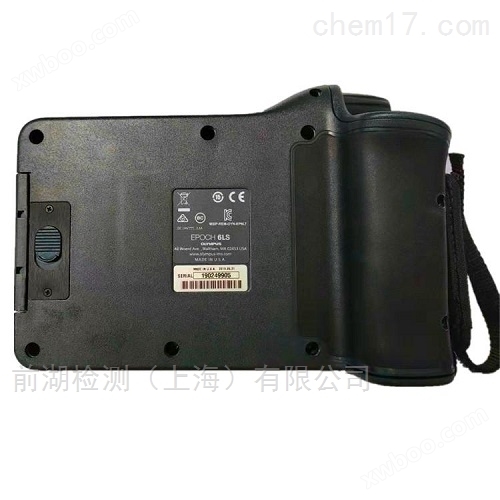
Ultrasonic flaw detector
NegotiableUpdate on 01/23
- Model
- Nature of the Manufacturer
- Producers
- Product Category
- Place of Origin
Overview
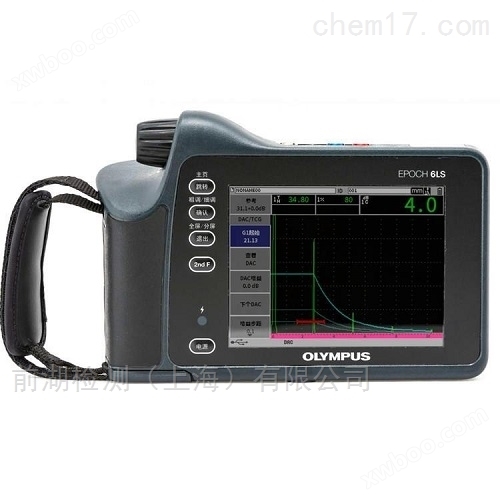
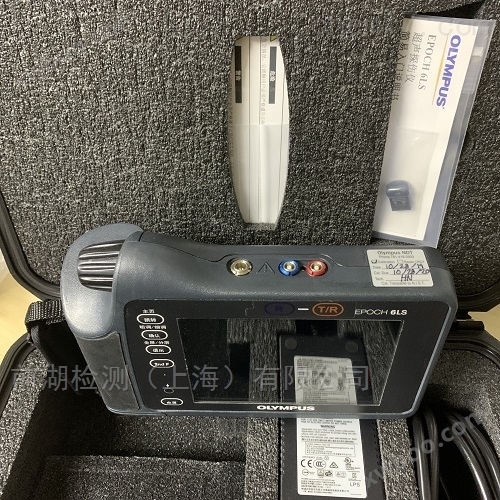
Olympus EPOCH6LS ultrasonic flaw detector is used to detect defects such as cracks, slag inclusions, porosity, and looseness in welds, pipes, bars, plates, forgings, and castings
Product Details
OlympusUltrasonic flaw detectorEPOCH6LSUsed for detecting defects such as cracks, slag inclusions, porosity, and looseness in welds, pipes, bars, plates, forgings, and castings
Optimized power supply and portable performance meet the testing needs of Chinese customers
The EPOCH 6LS ultrasonic flaw detector is simple, lightweight, portable, fully functional, and reliable in performance. The EPOCH 6LS flaw detector is specifically designed for the field maintenance and repair market in China. Based on the powerful EPOCH 650 series platform, it can be controlled between the hands of inspectors and can perform excellently in detection.
The entire detection application is completed in the palm of your hand
- The EPOCH 6LS flaw detector, which meets ergonomic design requirements, allows inspectors to operate with one hand and quickly complete the entire testing application.
- The simplified menu structure and AUTO80 gain adjustment function help to quickly complete material and angle calibration operations, and create DAC curves that comply with the N/BT 47013.3-2015 standard to identify potential defects.
- You can directly save the detection data or record the detection video in the instrument.
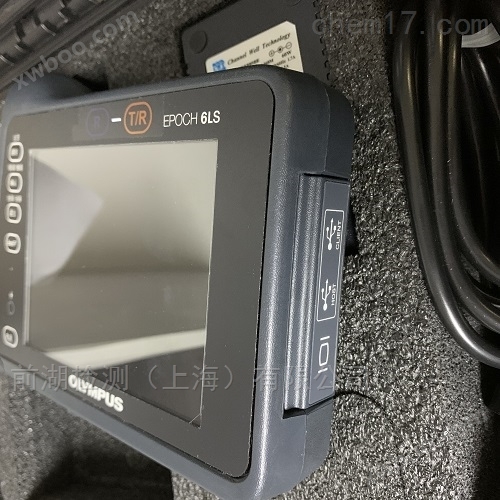
- Data can be exported to a USB drive in bitmap, PDF, and CSV formats.
Easily use more features
|
 |
|---|
OlympusUltrasonic flaw detectorEPOCH6LS
General specifications
parameter |
value |
|---|---|
| Dimensions (width x height x thickness) | 209 mm × 128 mm × 36 mm |
| weight | 890 grams, including lithium-ion battery |
| Keypad | Chinese |
| language | English and Chinese |
| Probe interface | LEMO 00 |
| data storage | Onboard up to 100000 ID codes with waveform |
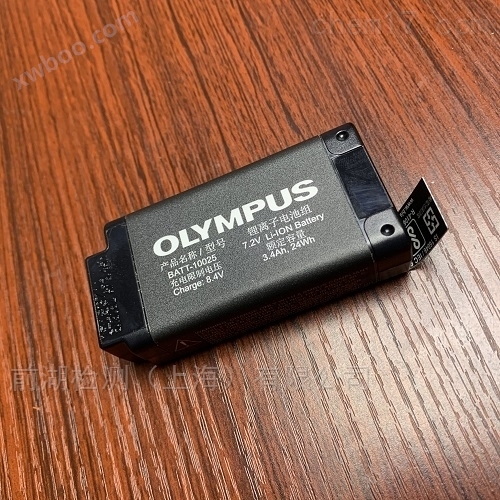
| Battery Type | Single lithium-ion battery, rechargeable, standard type |
| Battery power supply time | 6 hours |
| Power requirements | AC transmission main line: 100 VAC~120 VAC, 200 VAC~240 VAC, 50 Hz~60 Hz |
| panel type | Full VGA (640 × 480 pixels) transparent color LCD, 60 Hz update rate |
| Display screen size (width x height, diagonal) | 117 mm × 89 mm,146 mm |
| warranty | 1-year limited warranty. |
Technical specifications of pulse generator
| parameter | value |
|---|---|
| pulse generator | Voltage spike pulse |
| Pulse repetition frequency (PRF) | 10 Hz ~ 2000 Hz, The increment is 10 Hz. |
| Energy setting | 100 V、200 V、300 V、400 V |
| damping | 50 Ω, 400 Ω |
Receiver Technical Specifications
| parameter | value |
|---|---|
| gain | 0 dB ~ 110 dB |
| Large input signal | 20 V p-p |
| Receiver input impedance | 400 Ω ±5% |
| Receiver bandwidth | DC ~ 26.5 MHz, At -3 dB (standard configuration) |
| Digital filter setting | 8 digital filter settings |
| detection | Full wave, positive half wave, negative half wave, radio frequency wave |
| System linearity | Horizontal: ± 0.5% FSW, vertical: 0.25% FSH, amplifier accuracy is ± 1 dB. |
| inhibit | 0% ~ 85% FSH, The increment is 1%. |
| Wave amplitude measurement | 1.25% to 110% full screen height, with a resolution of 0.25%. |
| Measurement rate | In all modes, it is equivalent to PRF (single pulse emission). |
Calibration technical specifications
| parameter | value |
|---|---|
| auto-calibration | Sound velocity, zero offset, angle (K value) Vertical sound beam (bottom echo, or echo to echo) Angle sound beam (sound path or depth) |
| Detection Mode | Pulse echo, one transmission, one reception or penetration |
| unit | Millimeters, inches, or microseconds |
| scope | 4.31 mm ~ 6700 mm,5900 m/s |
| speed of sound | 635 m/s ~ 15240 m/s |
| Zero offset | 0 to 750 μsec |
| Display delay | -10 μsec to 2203 μsec |
| Refraction angle | From 0 ° to 85 °, increment by 0.1 °, then jump to 90 °. |
Gate technical specifications
| parameter | value |
|---|---|
| Measure the gate | Two independent gates for measuring wave amplitude and transit time (TOF). |
| Gate starting point | Variable throughout the entire display range. |
| Gate width | Variable within the area between 0.040 µ sec and the end of the display range. |
| Gate height | Variable within the range of 2% to 95% FSH. |
| call the police | Positive and negative thresholds, small depth (gate 1 and gate 2) |
Measurement technical specifications
| parameter | value |
|---|---|
| Measurement display position | 5 positions (manual or automatic selection) |
| Gate 1/Gate 2 | Thickness, sound path, projection, depth, wave amplitude, transit time, small/large depth, small/large wave amplitude |
| Echo to echo | Standard Gate 2- Gate 1 |
| other measurements | Suppression value, echo to reference dB value |
| DAC/TCG | Compliant with NB/T 47013.3-2015 standard |
| DAC point | Up to 50 points, 110 dB dynamic range |
| Special DAC mode | Custom DAC (up to 6 curves) |
| Surface correction | Standard outer diameter or bar calibration for angle beam measurement. |
environmental rating
| parameter | value |
|---|---|
| IP rating | According to the IEC 60529-2004 standard (enclosure protection level - IP specification), the instrument design complies with the intrusion protection rating standards: IP67 (dustproof and capable of short-term immersion in water) and IP65 (dustproof and capable of withstanding water spray). |
| Explosive atmosphere | Passed the tests specified in MIL-STD-810F Method 511.4 Procedure I of the US military standard. |
| crash test | Passed the test specified in MIL-STD-810F method 516.5 procedure I of the US military standard, with 6 cycles per axis, 15 g, and 11 ms half sine wave. |
| Vibration Test | Passed the test in Appendix C, Figure 6 of MIL-STD-810F Method 514.5 Procedure I, with a general exposure of 1 hour per axis. |
| Operating Temperature | -10 °C ~ 50 °C |
| Battery storage temperature | 0 °C ~ 50 °C |
Input/output of the instrument
| parameter | value |
|---|---|
| USB port | (1) USB 1.1 Full Speed Host Port (Type A) (1) USB 2.0 full speed customer port (pocket B-type) |
| video output | 1 digital video output |