-
E-mail
zhx@photons.com.cn
-
Phone
18560499169
-
Address
501, Building 57, Optics Valley Software Park, 396 Emeishan Road, Huangdao District, Qingdao City, Shandong Province
Product Categories
Qingdao Senquan Optoelectronics Co., Ltd
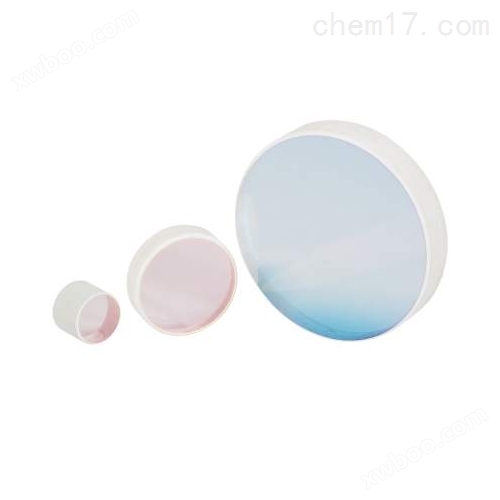
Ultrafast mirrors with low group velocity dispersion
NegotiableUpdate on 01/22
- Model
- Nature of the Manufacturer
- Producers
- Product Category
- Place of Origin
Overview
Ultrafast mirrors with low group velocity dispersion and ultra-low phase distortion, with GDD minimized between 730-870 nm Rs gt;99% , 700-930 nm, Rp Gt; 99% $r $n optimization 45 #176; AOI is used to control the ultra fast laser beam. The uncoated surface can be polished and transmitted at other wavelengths. At 800 nm and a frequency of 5 kHz, the measured 100 femtosecond pulses can withstand 1 TW/cm2; #194; Peak power $r $n offers a discounted bundle of 10 lenses and lens holders
Product Details
Ultrafast mirrors with low group velocity dispersion
Ultrafast mirrors are used for focusing and redirecting with the smallest group delay dispersion (GDD). This ensures that the light pulse maintains peak power without being affected by the broadening effect associated with standard mirrors.
- Ultra low phase distortion, minimal GDD
- 730-870 nm Rs>99% , 700-930 nm, Rp>99%
- Optimizing 45 ° AOI for controlling ultrafast laser beams
- The uncoated surface can be polished and transmitted at other wavelengths
- At 800 nm and a frequency of 5 kHz, the measured 100 femtosecond pulses can withstand a peak power of 1 TW/cm2
- Provide a bundle of 10 lenses and lens holders with discounts
Ultrafast mirrors with low group velocity dispersionFeature:
High reflectivity of UF.25 ultrafast reflector coating
The coating design of UF.25 ultrafast reflector aims to provide the highest reflectivity and bandwidth, with minimal impact on pulse dispersion. The meticulous thin film design and coating process endow broadband mirrors with performance characteristics. This coating is optimized for a 45 ° incident angle and can be used for optical path steering of ultrafast pulsed lasers, while providing reflection for both s-polarized and p-polarized light. The reflectivity of p-polarized light in the wavelength range of 730-870 nm and s-polarized light in the wavelength range of 700-930 nm should exceed 99%.

Low group delay dispersion and cubic term
The third-order terms of group delay dispersion (GDD) and phase unwrapping are shown below for reference. The actual performance of the reflector may be affected by manufacturing tolerances and repeatability accuracy. Newport minimizes these impacts as much as possible through the use of thin film production equipment and computer-controlled processes. These mirrors have been successfully tested on-site in multiple universities and industrial laboratories engaged in ultrafast research, and it has been found that they have high performance and match these computational curves very well.

Transmission of mirrors
The back surface of the ultrafast mirror with low group delay dispersion is uncoated and polished, allowing for distortion free transmission of leaked ultrafast laser beams. A small amount of incident ultrafast laser beam can be transmitted through a mirror and measured to characterize the performance of ultrafast pulses.
High laser damage threshold
Our company's ultrafast laser reflector has undergone laser damage testing in the laboratory. The test results show that for a laser wavelength of 800 nm, they can withstand the impact of 100 fs pulses with a repetition rate of 5 kHz at a peak power of 1 TW/cm2.
N-BK7 substrate
N-BK7 is a relatively hard borosilicate glass with good scratch resistance and extremely low inclusion content.
Fused silica substrate
Fused silica is a kind of synthetic amorphous silica with high purity. This amorphous, colorless quartz glass has an extremely low coefficient of thermal expansion, good optical properties, and a high damage threshold. As the substrate of our ultrafast mirrors, they have * surface flatness (λ/10) and surface quality (10-5 scratches pitting).
Slight wedge suppression interference effect
Our ultrafast reflector can be used as a dual color mirror in pump probe laser applications. The reflector has a wedge angle of 30 arc minutes to suppress interference fringes of the transmitted light beam. Please note that performance outside the wavelength range cannot be guaranteed.