-
E-mail
zhx@photons.com.cn
-
Phone
18560499169
-
Address
501, Building 57, Optics Valley Software Park, 396 Emeishan Road, Huangdao District, Qingdao City, Shandong Province
Product Categories
Qingdao Senquan Optoelectronics Co., Ltd
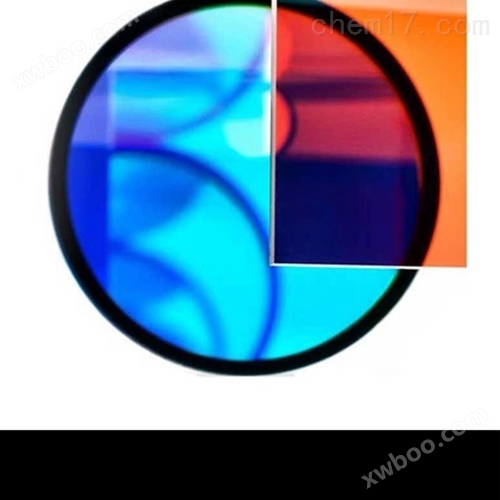
Ultra narrow bandpass filter
NegotiableUpdate on 01/22
- Model
- Nature of the Manufacturer
- Producers
- Product Category
- Place of Origin
Overview
The ultra narrow bandpass filter $r $n has the industry's * transmittance, * cut-off depth, and wavelength precision, among which SIRRUS The ion beam deposition hard coating technology enables Alluxa filters to have characteristics such as long service life, high damage threshold, and batch stability.
Product Details
Ultra narrow bandpass filter
Has the industry's * transmittance, * cut-off depth, and wavelength precision, among which SIRRUS ™ The ion beam deposition hard coating technology enables Alluxa filters to have characteristics such as long service life, high damage threshold, and batch stability.

Ultra narrow bandpass filterAlluxa narrowband interference filters can be customized to meet one or more of the following challenging specifications:
• Peak transmittance up to 98%
• The optical density can reach OD10
From ultraviolet to near-infrared (~250 nm to 1800 nm), any center wavelength can be selected
CWL tolerance as low as 0.05 nm
• FWHM bandwidth narrow to 0.1 nm
Application of LiDAR - Alluxa Ultra Narrow Band Interference Filter
Background: LIDAR is an active remote sensing technology with high flexibility, which is widely used in earth and atmospheric science research, autonomous vehicle, urban planning and many other applications. An important component of LIDAR sensors is the ability to filter target signals while preventing sunlight and other external light sources from entering the detector. From laser altimeters to Raman LIDAR systems, there are multiple types of sensors used for various applications, each with different intensities of return signals and filtering requirements. Alluxa can provide ultra narrow filters with multiple bandwidths and different wavelengths, with bandwidths as low as 0.15nm.
LiDAR
Radar equipment emits a single pulse and will return a single signal when only encountering one object, such as exposed ground. However, due to the fact that light often diverges when emitted, it may encounter multiple objects (such as branches and shrubs) before reaching the ground, resulting in multiple reflected signals. At this point, a suitable filter is needed to filter the signal.

Figure 1 Comparison between a single return signal and multiple return signals
Although there are various techniques to isolate redundant signals, most LIDAR systems choose to use thin film interference filters, which require the filter itself to have good durability and no maintenance or calibration, to achieve high transmittance transmission on ultra narrow bandwidth, and to block redundant signals over a larger wavelength range, such as sunlight and other external light (Figure 2).

Figure 2 Narrowband radar interference filter
In addition, LIDAR systems also require the surface coating of the filter to be as uniform as possible and to have stable performance in different environments (Figure 3).

In response to the above requirements, Alluxa can provide a comprehensive range of laser radar filters and has access to the worldling xianThe ultra narrow bandpass has been widely used in precision optical systems such as biological fluorescence systems, Raman systems, quantum, radar communication, etc.