-
E-mail
1658123488@qq.com
-
Phone
18328702053
-
Address
Room 1, 4th Floor, Unit 1, Building 4, No. 166 Wuxing Fourth Road, Wuhou District, Chengdu City
Product Categories
Jiuyin Technology Chengdu Co., Ltd
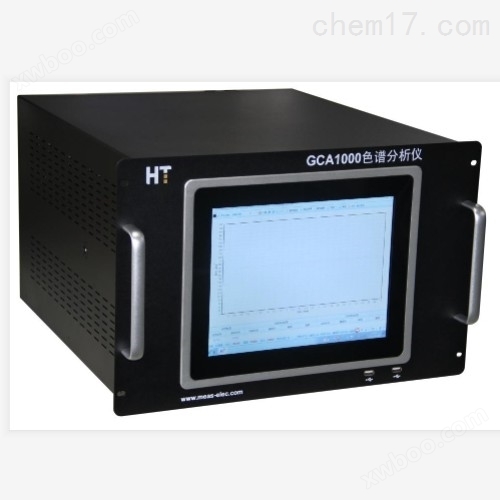
Online chromatographic analyzer
NegotiableUpdate on 01/22
- Model
- Nature of the Manufacturer
- Producers
- Product Category
- Place of Origin
Overview
The GCA1000 online chromatographic analyzer is widely used in fields such as petrochemicals, biochemistry, medicine and health, health quarantine, food inspection, environmental protection, food industry, and medical clinical practice. Gas chromatography has solved problems such as quality inspection, scientific research, pollution detection, and production control of intermediates and industrial products in these fields.
Product Details
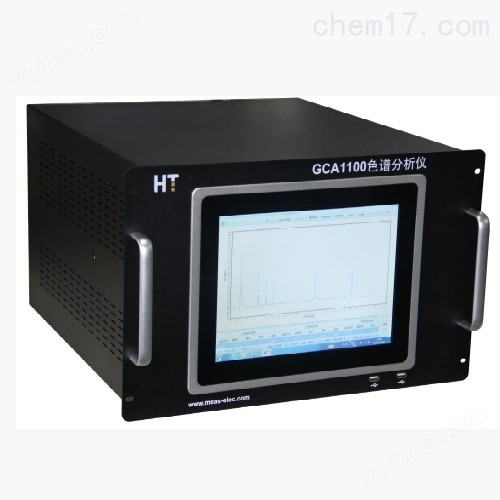
GCA1000Online chromatographic analyzer

Instrument Overview
The GCA series chromatographic analyzer consists of a gas path system, an injection system, a separation system, a temperature control system, a detection system, and a data processing system. Equipped with a large volume column box, it is easy to operate when installing chromatography columns.
GCA serieschromatographThe pneumatic control system is equipped with high-precision stabilizing valves、Needle valve ensures the accuracy and repeatability of flow rate, thereby ensuring the qualitative and quantitative repeatability of the instrument. It is also easy to use and can be selecteduseEPC/EFCelectricitySub flow control system to achieve pressure control/The purpose of automatic flow control.
Technical Specifications:
- Measuring principle:Principles of Chromatography
- measurement range:C2H2:0~10ppm
CXHX:0~100ppm
(Customizable non methane total hydrocarbons)
- measurement accuracy:C2H2:≤3%FS
CXHX:≤3%FS
- outputinterface:2road4-20mA. DC(Non isolated output, load resistance less than)500Ohm)
acetylene:2Programmable dry contact type passive alarm output,Contact large capacity AC220V/2A
Total hydrocarbons:2Programmable dry contact type passive alarm output,Contact large capacity AC220V/2A
4 spare ports
lother interfaces:RS485serial interfaceThe10/100MetherEthernet portTheUSB HOSTinterface
- power supply:AC88~ 264V 50/60Hz
- environmenttemperature5℃~35℃
- Environmental humidity:<85%RH, non condensing
- Sample gas conditionsDew point temperature is less than-30 ℃ and dust-free
- Overall dimensions:310mm×483mm×591mm(H×W×D)
- cutout size:305mm×442mm(H×W)
- pipe路接口:φ3mmPolyethylene pipe, polytetrafluoroethylene pipe, stainless steel pipe, copper pipe
- instrument weight:Net weight28Kg
- Installation method:embedded/Taiwanese style
Instrument features:
GCA1000Online chromatographic analyzerIt is an analyzer designed for measuring and analyzing non methane total hydrocarbons below 100PPm and acetylene concentrations below 10PPm, providing7U chassis configuration, other configurations can be made according to actual needs. This instrument has a separation and measurement system based on conventional chromatography, providing flexible operating software, automatic calibration, and measurement functions. In addition, it also has the following characteristics:
- Configure ETC temperature control unit, * using electronic closed-loop control, responsible for constant temperature control of column box, sampler, detector, etc., with temperature control accuracy ofsuperior to±0.1℃;
- Configure EPC pressure control unit, * using electronic closed-loop control, responsible for constant pressure control of gas paths such as carrier gas 1 (acetylene column), carrier gas 2 (pre column+acetylene column), carrier gas 3 (total hydrocarbons), hydrogen and air, etc., with pressure control accuracy ofsuperior to±0.1kPa;
- Before leaving the factory, the soap film flowmeter was used to calibrate the flow rate in each gas path. The flow rate in each gas path can be set, and the EPC unit will automatically calculate and control the pressure in the gas path to maintain a constant flow rate;
- Using quantitative methodspipePerform volumetric sampling,jing queHigh degree, low maintenance, long service life;
- The use of imported fourteen way automatic switching pneumatic valve for sample injection enables automated control of injection, sampling, and blowback without the need for manual intervention;
- The stainless steel pipes and quantitative pipes inside the instrument are treated with high-temperature passivation to prevent sample adsorption and improve the repeatability and accuracy of detection;
- Gas injection adopts a three-way solenoid valve balance connection. At the moment of injection, the quantitative tube is connected to the atmosphere, so that the pressure of the sample gas in the quantitative tube is the same as that of the atmosphere, to ensure the accuracy and stability of the injection volume;
- Using a hydrogen flame ionization FID detector to detect total hydrocarbons and acetylene has the characteristics of low detection limit, high detection accuracy, and stable performance;
- When the analyzer is turned on and the analysis software is started,Equipped with automatic pressure control, temperature control, automatic ignition and other functions.Before shutting down, analyze the software when it is closed,It has functions such as automatic shutdown and automatic heating stop, and these functions can be flexibly configured in the analysis software;
- The instrument can customize the configuration system according to the user's analysis needs, including temperature, chromatographic column, detector, etc;
- Automatic calibration function, capable of flexible automatic calibration and quality control points;
- Built in industrial computer, capable of WIFI wireless networking, and equipped with a 12.1-inch large capacitive touch screen design, the screen is beautiful, simple, and easy to operate;
- Supports network and serial communication, based on standard protocols such as MODBUS RTU/UDP/TCP, facilitating user integration;
- Equipped with relay alarm output and 4-20mA signal remote transmission function, it is easy to interface with the user's DCS system.
Application scenarios:
Due to its high separation efficiency, fast analysis speed, and low sample usage, this analysis method has been widely used in fields such as petrochemicals, biochemistry, medicine and health, health quarantine, food inspection, environmental protection, food industry, and medical clinical practice. Gas chromatography has solved problems such as quality inspection, scientific research, pollution detection, and production control of intermediates and industrial products in these fields.