-
E-mail
214260023@qq.com
-
Phone
18012485756
-
Address
Huaigu Haoting 8-1303-2, Liangxi District, Wuxi City
Product Categories
Wuxi Xigong Testing Instrument Co., Ltd
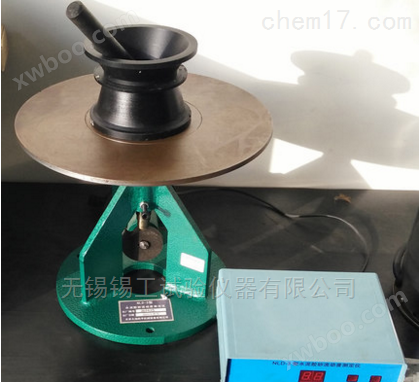
Mortar flowability tester/jumping table
NegotiableUpdate on 01/22
- Model
- Nature of the Manufacturer
- Producers
- Product Category
- Place of Origin
Overview
The flowability tester/jumping table for cement mortar is designed and manufactured according to the requirements of the new standard GB/T2419-2004 "Determination of flowability for cement mortar". It is mainly used to measure the flowability value of cement mortar and determine the water consumption for the standard consistency of cement mortar
Product Details
1Mortar flowability tester/jumping tablesummary:
The NLD-3 cement mortar flowability tester (also known as the jumping table) is used for the flowability test of the new standard GB/T2419-2005 "Method for Determining the Fluidity of Cement Mortar" released in 2005. It is an instrument used in this standard.
IIMortar flowability tester/jumping tableMain parameters:
1. The total weight of the vibrating part is 4.35Kg ± 0.15Kg
2. The vibration part has a drop of 10mm ± 0.2mm
3. Vibration frequency 1Hz
4. Vibration frequency 25 times
5. The diameter of the circular desktop is 300 ± 1 mm
6. Packaging size 440 × 410 × 450mm
7. Gross weight/net weight 26kg
8. The surface hardness of the cam shall not be less than 55HRC
9. The length of the tamping rod shall not be less than 200
10. Hammer diameter Φ 20
11. Material: cast steel, hard chrome plated working surface
III Instructions for using the cement mortar flowability tester:
1. Connect the plug to the corresponding hole of the counter and turn on the power to the counter. If the jumping table is not used within 24 hours, jump empty for 25 cycles first.
2. The materials and quantities to be weighed in one experiment are: 300 grams of cement, 750 grams of standard sand, and water calculated according to the predetermined water cement ratio. The production of adhesive sand shall be carried out in accordance with the relevant provisions of GB/G17671.
3. Quickly load the mixed cement mortar into the mold in two layers. The first layer is loaded to about two-thirds of the height of the truncated cone, and a small knife is used to compact it 5 times in two perpendicular directions. Then, a tamping rod is used to evenly compact it 15 times from the edge to the middle. Next, install the second layer of adhesive sand, which is about 20mm higher than the truncated cone circular mold. Use a small knife to compact it 5 times in two perpendicular directions, and then use a pestle to evenly compact it 10 times from the edge to the middle. The first layer is compacted to half the height of the mortar, and the second layer is compacted to a depth not exceeding the compacted surface of the bottom layer. The compaction sequence of the tamping rod shall follow the provisions of Article 6.3 of GB/T2419-2005 "Method for Determining the Fluidity of Cement Mortar".
4. After compacting, remove the mold sleeve, tilt the small knife, and wipe off the adhesive sand that is higher than the truncated cone circular mold in two approximately horizontal angles from the middle to the edge, and also wipe off the adhesive sand that falls on the table. Gently lift and remove the truncated cone mold vertically upwards. Immediately press the 'Start' button on the counter to complete 25 jumps per cycle. Professional manufacturer of NLD-3 cement mortar flowability tester
5. After jumping, use a vernier caliper with a range of 300mm to measure the extended diameter of the bottom surface of the adhesive sand in two directions perpendicular to each other, calculate the average value, take an integer, and express it in millimeters. The average value is the flowability value of cement mortar.
6. The test should be completed within 6 minutes from the start of adding water to the mortar to the end of diameter measurement.