-
E-mail
15046113@qq.com
-
Phone
13303065213,13315772373
-
Address
Wuxi City, Jiangsu Province
Product Categories
Wuxi Simjie Instrument Equipment Co., Ltd
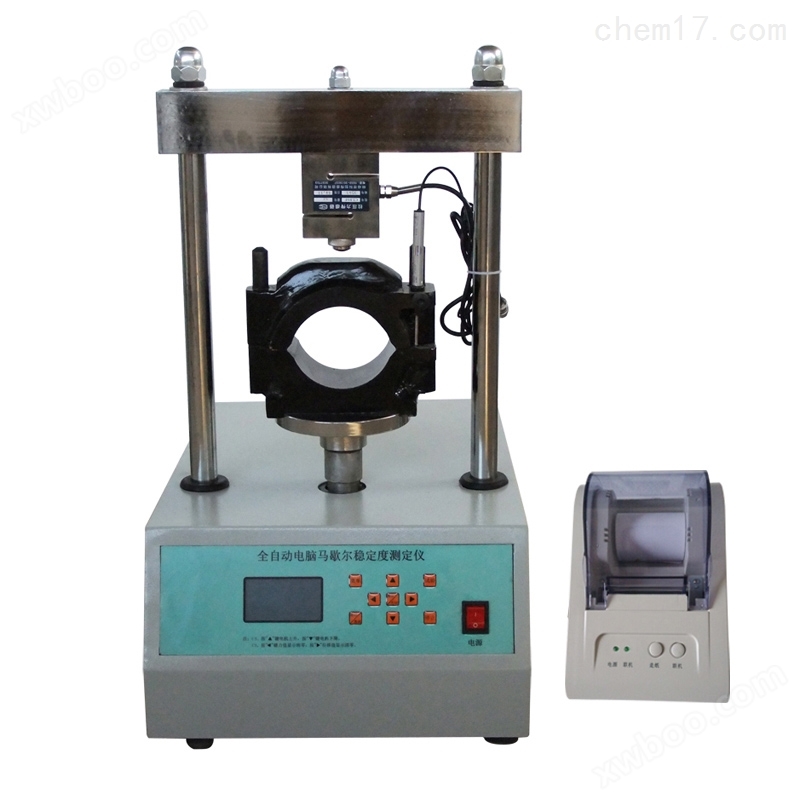
Marshall Stability Tester
NegotiableUpdate on 01/22
- Model
- Nature of the Manufacturer
- Producers
- Product Category
- Place of Origin
Overview
The Marshall Stability Tester is suitable for determining the thermal stability and resistance to plastic deformation of asphalt mixtures - stability and flow value. Provide accurate basis for the composition and proportioning design of asphalt mixtures.
Product Details
Marshall Stability TesterSuitable for determining the thermal stability and resistance to plastic deformation of asphalt mixtures - stability and flow value. Provide accurate basis for the composition and proportioning design of asphalt mixtures.
Precautions for using Marshall Stability Tester
1. The grounding wire of the instrument power supply must be separately grounded.
2. The pressure and flow sensor plug cannot be plugged in incorrectly; If it cannot be inserted, it can be inserted in one direction.
3. If there is significant interference in the power grid or voltage fluctuations, eligible users should be equipped with AC purification power supplies, while unconditional users should be equipped with AC voltage stabilizers.
5. The control line and printer cable of the loading part should not be subjected to force.
7. Do not share the same power socket with a high-power electrical appliance.
8. The instrument should be placed in a dry place and connectors should not be frequently unplugged to prevent poor contact of the plug.
9. In areas with humid air, sensors should be stored in a dry oven for preservation.
10. When the instrument is not in use, please cover it with a cloth to prevent dust from entering.
11. Please do not open or disassemble the instrument without authorization.
12. Before use, the instrument must be powered on for at least 10 minutes.
The Marshall stability tester includes a main unit, a force measuring device, a flow value measuring device, a printing device, and related accessories, used for measuring stability and flow values in Marshall tests. At the same time, the main unit of this testing instrument only needs to be modified slightly and equipped with relevant accessories to complete various tests that require the application of vertical loads. The host parts of different models of instruments are the same, but the control systems equipped are different.