-
E-mail
taili668@vip.163.com
-
Phone
13662293686
-
Address
13D, Building A2, the Pearl River River Plaza, No. 9009, Longxiang Avenue, Longgang District, Shenzhen
Product Categories
Shenzhen Taili Instrument Co., Ltd
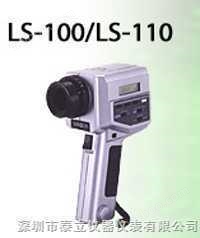
Konica Minolta LS-100/LS-110 Single Mirror Reflective Brightness Meter
NegotiableUpdate on 02/23
- Model
- Nature of the Manufacturer
- Producers
- Product Category
- Place of Origin
Overview
Taili Instrument provides you with the Konica Minolta LS-100/LS-110 single mirror reflective brightness meter, which is lightweight, compact, and easy to carry, and can meet various brightness conditions for measurement.
Product Details
Konica Minolta LS-100/LS-110 Single Mirror Reflective Brightness Meter
Lightweight handheld high-precision brightness meter
High precision small measurement angle brightness meter
The LS-100 and LS-110 illuminance meters are * in DIN quality class B products, and they are the most popular handheld instruments on the market. SLR (single lens reflection) optical system can accurately aim at the target. Even in a very short distance, it can ensure that the area displayed by the viewfinder is exactly the same as the area to be measured, so that accurate focusing can be easily achieved. In addition to the measurement field and measurement environment, the viewfinder also displays the measured brightness value. The hand grip allows users to firmly grip the device. We place special emphasis on maximizing the suppression of streamer phenomena and providing precise V (λ) correlation (CIE relative visual brightness curve). With the help of close-up shots, even areas as small as 0.4mm in diameter can be measured.
Application Fields
All types of light sources can be measured using LS series instruments, such as signal lights, traffic lights, airport lighting, lights, etc LED、 Any luminous object such as a cathode ray tube. For example, now you can ensure low brightness, replace dim lights early, establish quality assurance during light production, or inspect illuminated objects such as movie screens.
Background knowledge (LS-100)
The unit of illuminance L is equal to candlelight per square meter (cd/m2)The principle of illuminance measurement can also be derived from it. The light intensity is named I, the unit area of the illuminated surface is A, and the illumination angle is ε:
L= I/(A cos(ε))
Fundamentally, brightness refers to the brightness of the emitting surface and/or light source. The brightness of the sun is approximately 1000000000 cd/m2The fluorescent lamp has a capacity of approximately 10000 cd/m2In some regions, the foot Lambertian (ftl) is also used as a unit to represent illumination, and the LS series can be displayed as needed. 1 ftl = (1/π cd/ft2= 3,426 cd/m2
The measurement angle of LS-100 is 1 °, so it can be used as a standard illuminance meter. The starting point of its measurement range is 0.001 cd/m2Thus, it is possible to measure very dark surfaces. By applying a large angle field of view of 9 ° and displaying the measurement values on the viewfinder LCD, the LS-100 allows you to control the measured object at any time without interrupting the measurement process. The brightness meter also has an external LCD display screen, coupled with a tripod screw plug, allowing users to measure without looking through the viewfinder. The built-in neutral density eyepiece filter allows users to measure strong light sources through the viewfinder.
In addition to measuring brightness, the LS series can also display the percentage value of brightness relative to a defined standard (target). With this function, the brightness distribution on larger surfaces such as displays can be quickly determined. It can also display the peak brightness as needed, which is very useful when measuring flickering light sources such as fluorescent lamps.
To further improve the existing slight deviation of specific light sources from the CIE relative visual brightness curve target, LS-100 provides a user calibration option.
Background knowledge (LS-110)
The unit of illuminance L is equal to candlelight per square meter (cd/m2)The principle of illuminance measurement can also be derived from it. The light intensity is named I, the unit area of the illuminated surface is A, and the illumination angle is ε:
L= I/(A cos(ε))
Fundamentally, brightness refers to the brightness of the emitting surface and/or light source. The brightness of the sun is approximately 1000000000 cd/m2The fluorescent lamp has a capacity of approximately 10000 cd/m2In some regions, the foot Lambertian (ftl) is also used as a unit to represent illumination, and the LS series can be displayed as needed. 1 ftl = (1/π cd/ft2= 3,426 cd/m2
Due to the narrow angle measurement being only 1/3 ° in size, LS-110 performs well in very small luminescent surfaces and/or small ball flatness measurement applications. With the close-up lens VA-110, even areas as small as 0.4mm in diameter can be measured. The ultra large measurement range is 0.01 to 999900 cd/m2It covers almost all types of applications. All other features and technical specifications correspond to the content of LS-100 *.
Konica Minolta LS-100/LS-110 Single Mirror Reflective Brightness Meter
Product Overview
- Relative spectral sensitivity
For brightness measurement, ideally the relative spectral sensitivity of this instrument should be comparable to the daylight visual sensitivity of the human eye, as shown by the CIE spectral luminous efficiency V (λ).
main purpose
- Measure the brightness of CRT, LED, and EL.
- Measure the brightness of highways and tunnels
- Measure railway system signals
- Measure road and airport signals
- Measure illuminance and outdoor markings
- Measuring lighting equipment and devices
- Research and Measurement Testing
- Measuring device brightness
Main features
- SLR (Single Lens Reflective) optical system
The single lens reflex design of LS-100 ensures that there is no deviation between the actual measured area and the area shown in the viewfinder. By eliminating the influence of illumination outside the measurement range, this non flowing optical system ensures accurate measurement only of the target area. - Point measurement for extremely small target areas
The measurement angle of LS-100 is 1 °, while LS-110 is 1/3 °, making them ideal choices for measuring the brightness of small-sized samples. In addition, by using a close-up lens (sold separately), the measured diameters of LS-100 and LS-110 can reach 1.3mm and 0.4mm, respectively. - User calibration and color correction function, supporting a large measurement range
The user calibration function can recalibrate any selected brightness as a standard, and the color correction input function can be used to correct the reading difference of specific light sources. The above two functions enable the application of multiple brightness meters and precise brightness management. - Luminance ratio and peak measurement
According to specific applications, the measured values can be set as instantaneous brightness value, peak brightness value, and brightness ratio. - Bidirectional RS-232C communication
Equipped with RS-232C interface as standard, it can be connected to a PC to send measurement data and receive control signals. - Lightweight and compact, powered by a 9V battery
(Power can also be provided through the DP-10 data printer.)
LS-110
feature
The high portability and handheld design enable measurement under various brightness conditions. The non flowing SLR (single lens reflex) optical system can achieve high-precision measurement. The opening angle is 1/3 °, supporting measurement of extremely small target areas.
purpose
Measure the brightness of CRT, LED, and EL.
Measure the brightness of highways and tunnels
Measure railway system signals
Measure road and airport signals
Measure illuminance and outdoor markings
Specifications
| model | Luminance meter LS-100 | Luminance meter LS-110 |
|---|---|---|
| Specifications | Single lens reflex point measuring brightness meter, used to measure the brightness of light sources and surfaces | |
| Measurement angle | 1° | 1/3° |
| optical system | 85mm f/2.8 lens; DSLR observation system; The suppression of stray light is less than 1.5% | |
| perspective | 9° | |
| focusing distance | 1014mm~infinity | |
| Zui small measurement area | Φ14.4mm | Φ4.8mm |
| sensor | Silicon optical component | |
| Related spectral sensitivity | Within 8% (f1 ') error of the CIE spectral visual efficiency curve | |
| reaction time | FAST: Sampling time: 0.1s, display time: 0.8-1.0s; SLOW: Sampling time: 0.4s, display time: 1.4-1.6s | |
| luminance unit: | cd/m2Or fL (adjustable) | |
| measurement range | FAST:0.001~299,900cd/m2(0.001~87,530fL) SLOW:0.001~49,990cd/m2(0.001~14,590fL) |
FAST:0.01~999,900cd/m2(0.01~291,800fL) SLOW:0.01~499,900cd/m2(0.01~145,900fL) |
| precision | 0.001~0.999cd/m2(or fL): Within ± 2% ± 2 values relative to the displayed value 1.000cd/m2(or fL) or higher: within ± 2% ± 1 value relative to the displayed value |
0.01~9.99cd/m2(or fL): Within ± 2% ± 2 values relative to the displayed value 10.00cd/m2(or fL) or higher: within ± 2% ± 1 value relative to the displayed value |
| (A light source, measured at an ambient temperature of 20-30 ° C/68-86 ° F) | ||
| repetitiveness | 0.001~0.999cd/m2(or fL): Within ± 0.2% ± 2 values relative to the displayed value 1.000cd/m2(or fL) or higher: within ± 0.2% ± 1 value relative to the displayed value |
0.01~9.99cd/m2(or fL): Within ± 0.2% ± 2 values relative to the displayed value 10.00cd/m2(or fL) or higher: within ± 0.2% ± 1 value relative to the displayed value |
| (Measuring object: A light source) | ||
| Temperature/humidity error | Within the range of working temperature and humidity, within ± 3% ± 1 of the displayed value | |
| calibration mode | Konica Minolta Standard/User Selection Standard (Adjustable) | |
| Color correction parameters | Numerical input settings; Range: 0.001 to 9.999 | |
| Reference brightness | Set based on measurement results or numerical input | |
| Measurement Mode | Brightness; Brightness ratio; Zui high brightness or brightness ratio | |
| display | External: 4-digit value, LCD display, with instructions attached | |
| Observation window: 4-digit value, LCD display, with LED backlight | ||
| data transmission | RS-232C; Baud rate: 4800bps | |
| external control | The measurement process can be controlled by external devices | |
| power supply | One 9V battery | |
| power consumption | When the measurement button is pressed, the observation window displays an average of 16mA When the power is turned on and the observation window does not display: an average of 6mA |
|
| Operating environment conditions | Temperature: 0-40 ° C (32-104 ° F): Relative humidity of 85% or lower (at 35 ° C/95 ° F) No condensation, Installation Category: II, Pollution Level: 2 | |
| Storage temperature range | -20-55 ° C (-4-131 ° F): 85% or lower relative humidity (at 35 ° C/95 ° F) without condensation | |
| size | 79×208×150mm | |
| weight | 850g without battery | |
| Standard Accessories | Lens cap; Eyepiece cover; ND eyepiece filter; 9V battery; box | |
Specifications are subject to change without prior notice.
Similar Product Recommend