-
E-mail
119174902@qq.com
-
Phone
13365507292
-
Address
Jing'er Road, Economic Development Zone, Tianchang City, Anhui Province
Product Categories
Anhui Bairuite Automation Instrument Technology Co., Ltd
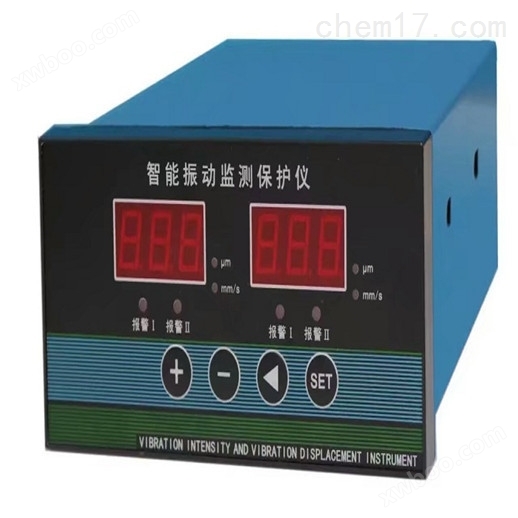
Intelligent vibration monitoring device
NegotiableUpdate on 03/08
- Model
- Nature of the Manufacturer
- Producers
- Product Category
- Place of Origin
Overview
The sensors used in modern vibration measurement by intelligent vibration monitoring devices are no longer independent mechanical measuring devices in traditional concepts. They are only a part of the entire measurement system and closely related to the subsequent electronic circuits. Due to the different principles of electromechanical transformation inside the sensor, the output power also varies.
Product Details
The intelligent vibration monitor can measure the vibration of the casing or structure relative to free space, that is, vibration. It is particularly suitable for machines with ball bearings. In such machines, the vibration of the shaft can be transmitted more to the casing. Therefore, the monitor can be equipped with a magnetic electric speed sensor for continuous measurement and protection of rotating machinery. Special attention should be paid to the installation of the sensor, which will not cause the amplitude of the sensor to decrease, and the frequency effect to be changed or the generated signal cannot represent the true vibration of the machine. This monitor is particularly suitable for situations where a large number of vibration points need to be measured, such as motors, compressors, fans, etc. Mainly suitable for power generation, steel, metallurgy, chemical and other fields, it continuously monitors and measures the bearing vibration (vibration), shaft vibration (relative vibration) and bearing temperature of various rotating machinery, making it easy for users to analyze and maintain the machine working conditions. It is a precision measurement and control instrument, equipped with YH-DO eddy current sensors, which can measure and monitor the radial vibration of the main shaft or rotor of rotating machinery such as steam turbines and fans.
The intelligent vibration monitoring instrument adopts an integrated instrument chip, and the measurement input and transmission output adopt digital calibration and self calibration technology, which ensures accurate and stable measurement and eliminates measurement errors caused by temperature drift and time drift. The instrument adopts surface mount technology and is designed with multiple protection and isolation measures. It has passed EMC electromagnetic compatibility testing and has strong resistance, high reliability, and high cost-effectiveness.
Function Description of Intelligent Vibration Monitoring Instrument:
The measured value and alarm set value can be displayed separately on the LED digital tube.
When the alarm setting value is exceeded, the alarm indicator light will turn on, and at the same time, a switch signal will be output on the rear panel to protect the monitored equipment. The alarm setting delay can be adjusted within the range of 1-60 seconds to prevent false alarms caused by on-site interference..
Equipped with a current output interface, it can be connected to devices such as computers, DCS, PLC systems, and paperless recorders.
It has power up and power down detection functions, sensor disconnection detection functions, and cuts off alarm and shutdown output circuits, effectively suppressing instrument false alarms.
The sensors used in modern vibration measurement by intelligent vibration monitoring devices are no longer independent mechanical measuring devices in traditional concepts. They are only a part of the entire measurement system and closely related to the subsequent electronic circuits. Due to the different principles of electromechanical transformation inside the sensor, the output power also varies. Some transform changes in mechanical quantities into changes in electromotive force and charge, while others transform changes in mechanical vibration quantities into changes in electrical parameters such as resistance and inductance.
Similar Product Recommend