-
E-mail
jingjia17@sina.com
-
Phone
13656262369
-
Address
14-15, Building 3, Henglong Electromechanical City, 567 Xinnan Middle Road, Kunshan City, Jiangsu Province (opposite the New Bus Station on National Highway 312)
Product Categories
Jingjia Science and Trade (Kunshan) Co., Ltd. (formerly known as Kunshan Jingjia Instrument Equipment Co., Ltd.)
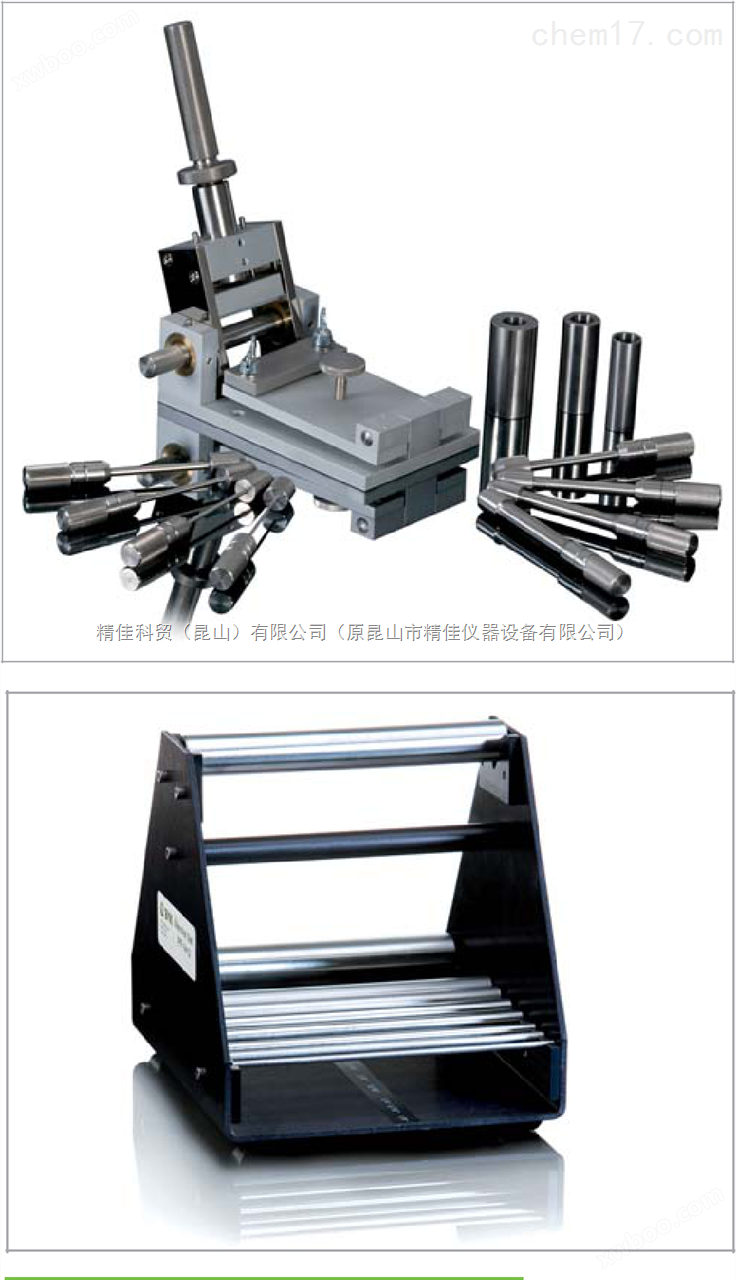


Cylindrical bending tester
NegotiableUpdate on 02/21
- Model
- Nature of the Manufacturer
- Producers
- Product Category
- Place of Origin
Overview
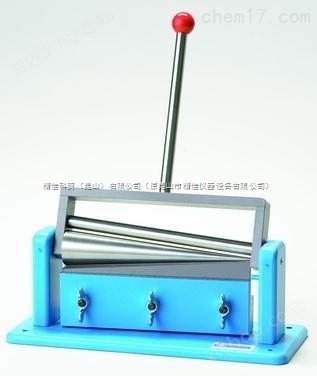
The cylindrical bending tester is used to bend a coated metal sheet at a set radius to obtain indicators of the ductility and adhesion of the paint film under bending stress. Can be divided into: ISO version and ASTM version
Product Details
Cylindrical bending tester
Bending the coated metal sheet at a set radius can obtain indicators of the paint film's ductility and adhesion under bending stress.
Cylindrical bending tester ISO version

This is a simple and fast method for determining the elasticity of coatings. Simply place the coating test plate on a circular axis of known diameter and bend it, then inspect for cracking, peeling, or other damage to the coating.
Made of anodized aluminum
There are 12 stainless steel bent rods
■ Can measure test panels up to a maximum width of 65 mm (2.56 in)
Bending rod diameter: 2,3,4,5,6,7,8,10,12,16,20,25,32mm
ASTM version

The V-shaped incision is used to secure the bent rod during the testing process
The slot on the frame base is used to place unused circular shafts
■ Can measure test plates up to 14 mm (5.5 in) x 22 mm (9 in) in size
Bending rod diameter: 1/8, 3/16, 1/4, 5/16, 3/8, 7/16, 1/2, 3/4, 1.0 in
standard:
ASTM D 522 DIN 53150 ISO 1519
DTMS 141a Method 2012 Method 6051
Method 6221 Method 6223
operating steps:
-Apply paint onto the metal plate
-Carefully coat and dry it to ensure good reproducibility
-During the experiment, apply even force within 1-2 seconds to bend the coated sample to 180 degrees
-Starting from the largest radius cylindrical axis, gradually decrease the radius test until the paint can be seen to break
Order Information
model name size Net weight Shipping weight
5710 ISO version 38×14×15cm 4.4kg 5.0kg
1412 Combination ASTM Version 30×18×18cm 2.3kg 3.6kg
Basic configuration:
ISO version:
12 stainless steel bending rods, ranging from 2mm to 32mm;
Framework; Operation Manual;
Combination US version:
9 stainless steel bent rods, ranging from 1/8in to 1.0in;
Framework; Operation Manual;