-
E-mail
690147242@qq.com
-
Phone
15222906608
-
Address
Jingyi Co., Ltd., Tianchang Economic Development Zone, Chuzhou City
Product Categories
Jingyi Corporation
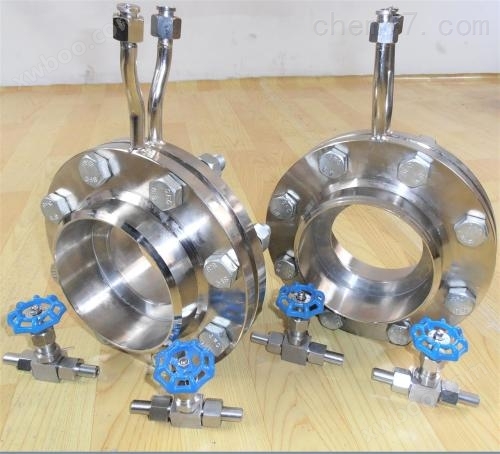
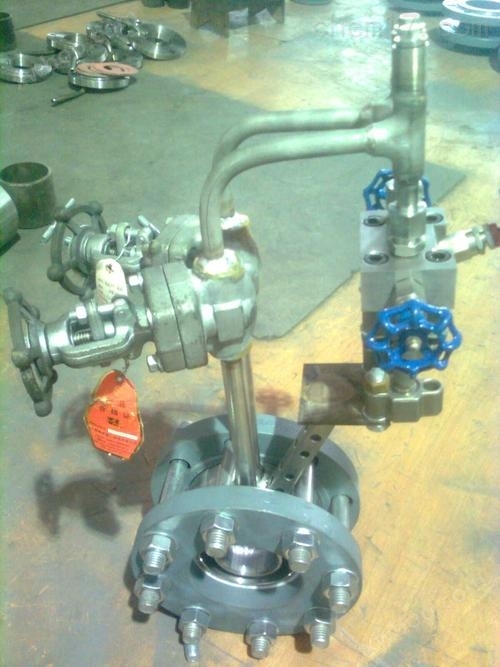
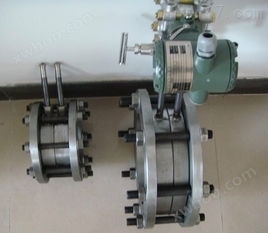
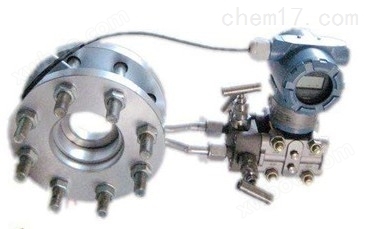
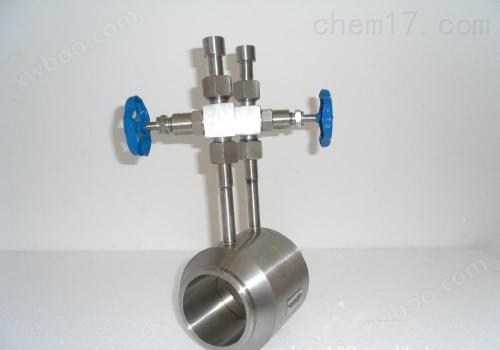
Welded orifice flowmeter
NegotiableUpdate on 01/22
- Model
- Nature of the Manufacturer
- Producers
- Product Category
- Place of Origin
Overview
Welded Orifice Flow Meter - A high-quality manufacturer of welded orifice flow measurement devices provides you with detailed information on welded flow meters. Welded orifice flow measurement devices are widely used in various industries. It can measure gas, steam, liquid, and induced flow rates, and is widely used for process control and measurement in fields such as petroleum, chemical, metallurgical, power, heating, and water supply.
Product Details
Welded orifice flowmeterWidely used for process control and measurement in fields such as petroleum, chemical, metallurgical, power, heating, and water supply. Orifice flow meters are widely used in various fields of the national economy, such as coal, chemical, transportation, construction, textile, food, medicine, agriculture, environmental protection, and people's daily lives. It is an important tool for developing industrial and agricultural production, saving energy, improving product quality, enhancing economic efficiency, and improving management level. It holds an important position in the national economy. In process automation instruments and equipment, flow meters have two main functions: serving as detection instruments for process automation control systems and measuring the total quantity of materials
Flow meters have a wide range of applications. All single-phase flow rates can be measured, and some mixed phase flow rates can also be measured using this product. Due to two-phase flow, precise measurement cannot be carried out, and even water hammer phenomenon may occur, damaging the pipe fittings. If a circular orifice plate is used, condensed water can flow out from the edge of the annular orifice plate. The small flow surface is a circular ring near the inner wall of the pipeline. The small flow surface of a standard orifice plate is a concentric circle at the center of the pipeline. Impurities in the fluid have relatively low flow velocity and usually flow near the pipe wall. New varieties of throttling devices are constantly emerging and being promoted for application. Differential pressure transmitters and display instruments that are compatible with throttling devices have developed rapidly in terms of performance and quality.
The inlet edge of the orifice flowmeter should be a sharp right angle, which has turned into a horn mouth, changing the outflow coefficient and causing a significant error, and must be replaced. It can be seen that this product is the preferred choice for measuring the flow rate of high-temperature fluids.
The fluid flows through the throttling device in the pipeline, causing local contraction near the throttling element, increasing the flow velocity, and creating a static pressure difference between the upstream and downstream sides. The orifice flowmeter has a simple, sturdy structure, stable and reliable performance, long service life, and low price. It is a commonly used flow measurement instrument in industry. The entire processing process adopts standards and undergoes strict verification and inspection.
The flow rate of the orifice flowmeter increases, and the static pressure decreases, resulting in a pressure drop before and after the throttling element, that is, a pressure difference. The higher the flow rate of the medium, the greater the pressure difference before and after the throttling element. Therefore, orifice flow meters can measure the flow velocity of fluids by measuring the pressure difference. This measurement method is based on the laws of energy conservation and flow continuity.
Orifice flow meters can measure the flow velocity of various fluids in pipelines. Measurable media include liquids, gases, and vapors, which are widely used in petroleum, chemical, metallurgical, light industry, coal mining, and other industrial sectors. The orifice flow meter generates a static pressure difference. There is a certain functional relationship between pressure difference and flow velocity. The higher the flow rate, the greater the pressure difference. The differential pressure signal is transmitted to the differential pressure transmitter, converted to 4-20mA. The DC analog signal is output and transmitted to the flow integrator to measure the fluid flow rate. The mass flow meter adopts an intelligent differential pressure transmitter to automatically compensate for the temperature/pressure under working conditions, achieving the measurement of fluid mass flow rate.
Orifice flow meters should transport hot air. Hot blast stoves are usually located near blast furnaces and have many bends. In the past, standard orifice plates were used due to insufficient length of straight pipe sections, resulting in significant errors. Due to the presence of a balance ring and multiple pressure gauges, a straight pipe segment with a length of 2 days is required for the instrument. After installation on the air supply duct of the hot blast stove, the application effect is very satisfactory. More than 30 hot blast stoves have been installed with annular orifice flow meters and have been running for over 3 years without any malfunctions.
1. The standard throttle valve is universal and has been approved by the standard organization. It can be put into use without actual flow calibration and is unparalleled in flow sensors.
2. This structure is easy to replicate, simple and sturdy, with stable and reliable performance, and low cost.
3. Widely applicable, including all single-phase fluids (liquids, gases, vapors) and partially mixed phase flows. It can measure the pipe diameter and working conditions (temperature, pressure) during the general production process.
4. The test piece and differential pressure display instrument can be manufactured separately by different manufacturers, facilitating specialized scale production.

1. InWelded orifice flowmeterIn sensors, the repeatability and accuracy of measurements are at a moderate level. Due to the complex influence of many factors, it is difficult to improve accuracy.
2. The scope is very narrow. Due to the correlation between flow coefficient and Reynolds number, the general range is only 3:1 to 4:1.
3. It is usually difficult to meet the requirements for long straight pipe lengths. Especially for larger pipe diameters, this issue is more prominent.
4. High pressure loss;
5. The sharp angle lines of the holes in the orifice plate ensure accuracy. Therefore, sensors are sensitive to corrosion, wear, scaling, and dirt, and the accuracy of their use is difficult to guarantee. It needs to be removed once a year for strict inspection.