-
E-mail
lwlihui888@163.com
-
Phone
13810278121
-
Address
No. 27 Binhe Street, Daxing District, Beijing
Product Categories
Beijing North Lihui Experimental Instrument Equipment Co., Ltd


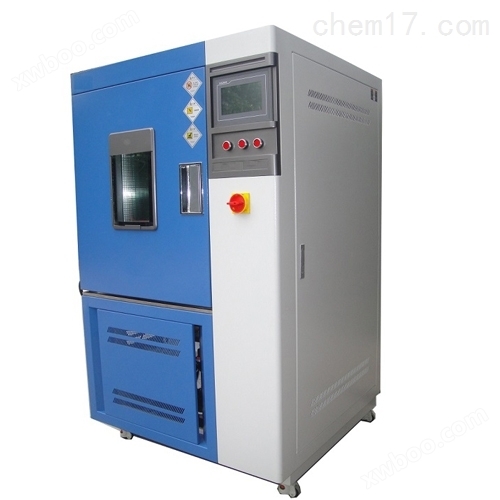
WDCJ-500/S High and Low Temperature/Cold and Hot Shock Test Chamber Beijing Manufacturer
NegotiableUpdate on 04/06
- Model
- Nature of the Manufacturer
- Producers
- Product Category
- Place of Origin
Overview
The WDCJ-500/S high and low temperature/cold and hot shock test chamber, manufactured by Beijing manufacturer $r $n, is suitable for adaptability testing of electrical, electronic, rubber and plastic materials and other military equipment under rapid changes in ambient atmospheric temperature. Through this equipment test, the reliability of the product can be improved and the quality control of the product can be carried out.
Product Details
WDCJ-500/S High and Low Temperature/Cold and Hot Shock Test Chamber Beijing Manufacturer
1、 Product Overview:The cold and hot shock test chamber is a testing equipment used in the metal, plastic, rubber, electronics and other material industries to test the structure or composite materials. It can withstand continuous environments of high and low temperatures in an instant, and can detect chemical changes or physical damage caused by thermal expansion and contraction of the sample in a short period of time.
Meet the standard: GJB150.3; GJB150.4; GJB150.5 temperature shock test; GB2324.22 Test Na; GB2423.1 Test A Low temperature test method; GB2423.2 Test B High temperature test method; GJB360.7 temperature shock test; GJB367.2 Temperature shock test.
The high and low temperature impact test chamber is divided into three box and two box types according to the testing requirements and standards, with the difference being the testing method and internal structure. The three box type is divided into a cold storage chamber, a heat storage chamber, and a testing chamber. The product is placed in the testing chamber during testing. The two box type is divided into a high temperature chamber and a low temperature chamber, which switch between high and low temperatures by driving the basket with a motor. The product is placed in the basket and moves together with it.
2、 Main technical indicators
| model | WDCJ-162/S | WDCJ-340/S | WDCJ-500/S | WDCJ-010/S |
| Studio size mm | 450×450×450 | 600×600×600 | 800×800×800 | 1000×1000×1000 |
| Temperature shock range | -20℃ ~ 150℃ -40℃ ~ 150℃ -60℃ ~ 150℃ | |||
| temperature fluctuation | ±0.5℃ | |||
| Temperature Uniformity | ≤2℃ | |||
| temperature deviation | ≤±2℃ | |||
| recovery time | ≤ 5 minutes (related to cooling water temperature, exposure temperature difference, constant temperature time, and sample weight) | |||
| cooling time | 20 ℃~-40 ℃ for about 50 minutes (when operating separately) | |||
| Convert time | 10±5S | |||
| Impact method | Three box temperature cycling impact, sample item * stationary, automatic control of cycling process, adjustable dwell and transition time | |||
WDCJ-500/S High and Low Temperature/Cold and Hot Shock Test Chamber Beijing Manufacturer
3、 Overview of Manufacturing Solutions
The three box temperature shock test chamber is an integral structure consisting of four main parts: the box body, low-temperature refrigeration system, electronic control system, and valve ventilation system; The studio is located at the front of the box, the pre cooling chamber is located at the lower front of the box, the preheating chamber is located at the upper rear of the box, the electronic control system is located on the right side of the box, and the refrigeration system is located at the lower rear.
1. Box structure
1.1 Box Material: The testing chamber workshop is made of SUS304 # imported stainless steel plate; The shell is processed and formed from cold-rolled steel plates, and the surface is treated with acid pickling, phosphating, and paint spraying;
1.2 Load bearing capacity: The workshop can bear 30kg, and the sample remains stationary during the test;
1.3 Test lead hole: with a diameter of 50mm, it is mainly used to introduce sensor wires, detection cables, and other types of leads into the box, making it convenient for users to conduct power on testing of the product;
1.4 Observation Window: A multi-layer insulated glass observation window is installed on the front door of the box, and an EC film heating defrosting device is installed on the inside of the observation window;
1.5 Lighting Device: A switchable, high and low temperature resistant, and moisture-proof lighting fixture is installed at the top of the studio for easy observation of the working conditions inside the test chamber;
1.6 Gate: Single door, with the same inner layer material as the studio, double-layer sealing structure, and high and low temperature resistant silicone rubber sealing strip.
2. Refrigeration system
Principle of refrigeration system:
The refrigeration section is the main part of the equipment that generates a cold source, providing the required cooling capacity for equipment cooling, low temperature, and constant temperature. Depending on the testing status of the equipment, the refrigeration system automatically starts to provide cooling capacity for the corresponding testing process, thereby achieving the goal of meeting the performance indicators of the equipment. The mechanical refrigeration of this device adopts steam compression refrigeration, and its basic principle of refrigeration is as follows:
Steam compression refrigeration is an economical and widely used refrigeration method, as well as a commonly used refrigeration method in environmental testing equipment. Its principle is to use the latent heat of evaporation of liquids such as Freon to absorb heat from the cooled object and achieve refrigeration. The liquid entering the evaporator through expansion valve throttling absorbs latent heat of evaporation from surrounding objects and evaporates. After evaporation, it becomes a low-temperature and low-pressure gas that is sucked in by the refrigeration compressor. After compression by the compressor, it becomes a high-temperature and high-pressure gas that enters the water-cooled or air-cooled condenser, where it is cooled into high-pressure liquid, and then enters the evaporator through the expansion valve. This cycle repeats, absorbing heat from low temperatures to achieve refrigeration, and then releasing heat from high temperatures.
2.1 Refrigeration unit:
French Taikang compressor unit; The refrigeration unit is welded and assembled by professional manufacturers (outsourced) to ensure the good performance of the refrigeration system, especially to prevent leakage and failure of the refrigeration system.
2.2 Cooling method:
Single machine cooling, the control system automatically adjusts the cooling capacity. During the cooling stage, the compressor is fully powered for cooling. When the temperature is low and constant, the heating system can be used only for partial cooling to save energy and reduce operating costs.
2.3 Oil separator:
Whether the compressor has sufficient refrigerant oil will directly affect its lifespan; If refrigeration oil seeps into the refrigeration system, especially into each heat exchanger, its performance will be greatly reduced; Therefore, an oil separator needs to be installed in the system, and the German oil separator has better performance.
2.4 Refrigeration evaporator and condenser:
Adopting evaporator and condenser matched with compressor; The evaporator is located in the interlayer of the air duct at one end of the pre cooling chamber of the test box, and is forcibly ventilated by a blower motor for rapid heat exchange; The condenser is located inside the refrigeration unit.
2.5 Refrigeration auxiliary components:
Other auxiliary components in the refrigeration system, such as solenoid valves and filters, are all imported to ensure quality.
2.6 Energy regulation measures:
On the premise of ensuring the main technical indicators of the test chamber, it is necessary to adjust the cooling capacity of the system according to different cooling rates and temperature ranges. Therefore, in addition to the corresponding energy adjustment measures considered above, such as evaporation temperature adjustment, energy adjustment, and thermal bypass energy adjustment, we can ensure that the energy consumption of the equipment is reduced while meeting the main technical indicators. At any low-temperature temperature point, there is no need for heating balance.
2.7 Low temperature pipeline:
Low temperature pipelines use high-quality oxygen free copper pipes, nitrogen filled welding processes to ensure welding quality, and specialized pipe routing techniques.
2.8 Condensed water collection tray:
A condensate drain pan is installed at the bottom of the refrigeration system and discharged outside the box.
2.9 Cooling method: Air cooling.
2.10 Refrigerant: Environmentally friendly refrigerant R404A is used.
3. Electrical control system
3.1 Control device:
The control part of the test chamber is an imported program controller (PLC), equipped with a color LCD display touch control screen, relevant interfaces and software, and can be connected to a regular computer for communication. The control system is equipped with input and output modules and corresponding control modules, with two analog inputs to detect the temperature of the preheating chamber and the pre cooling chamber, respectively; Two control outputs: control the temperature of the preheating chamber and pre cooling chamber; More than ten switch outputs are used to control the timing and lighting of the compressor; More than ten switch inputs are used to monitor various alarm signals, such as over temperature, over pressure, phase loss, phase misalignment, water shortage, compressor oil shortage, etc. The alarm at any moment is recorded, and the corresponding reasons and solutions can be displayed on the screen for analysis. Using a program controller as the main control system of the machine, it can automatically combine subsystems such as heating, cooling, and ventilation valves to achieve intelligent control of the entire process.
3.2 Function Description:
3.2.1 It has the ability to set temperature, conversion time, dwell time, and conversion speed arbitrarily;
3.2.2 has the characteristics of simple operation, easy to learn and understand, with a fully Chinese friendly human-machine interface, reducing the requirements for operators;
3.2.3 Can display: set temperature of each box, measured temperature, measured relative humidity, running time, remaining time, program number and section number, heating, cooling and other working status and real-time clock, and can display programmed temperature curve and real-time working curve segments;
3.2.4 Up to 20 programs can be set, with an additional 200 segments per program;
3.2.5 Configure a micro printer that can print test data;
3.2.6 Equipped with a standard RS232 computer communication interface, a transmission cable with RS232/485 conversion function, and an operating system CD. Realize remote test data collection, programming control and other functions through the upper computer and Internet;
3.2.7 Sensor: Pt100 platinum resistor;
3.2.8 Setting accuracy: temperature 0.1 ℃, time 1 minute;
3.2.9 Multiple protection functions such as studio overheating, compressor overheating, overpressure, overload, power phase loss, water interruption, phase loss, phase sequence error, etc; When the equipment malfunctions, the electronic control system automatically shuts down the entire machine and has corresponding sound and light alarms to protect the equipment from damage, ensuring safe and reliable operation of the test box.
3.2.10 It has a multifunctional box and can be used as a low-temperature test box, a high-temperature test box, and a temperature shock box respectively.
Similar Product Recommend