-
E-mail
lwlihui888@163.com
-
Phone
13810278121
-
Address
No. 27 Binhe Street, Daxing District, Beijing
Product Categories
Beijing North Lihui Experimental Instrument Equipment Co., Ltd


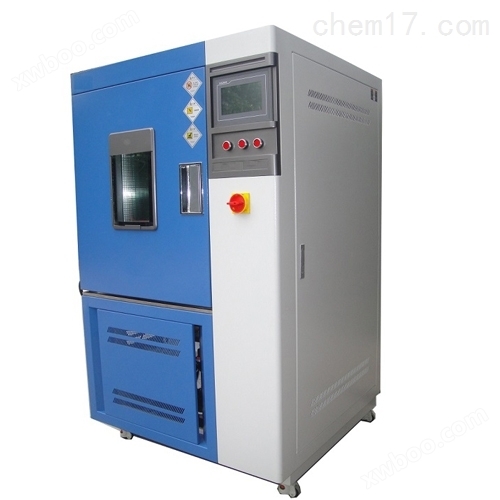
50L/80L/100L/150L three box thermal shock test chamber
NegotiableUpdate on 04/06
- Model
- Nature of the Manufacturer
- Producers
- Product Category
- Place of Origin
Overview
50L/80L/100L/150L three box thermal shock test box $r $n This product is used for the physical changes of electronic and electrical components, automation components, communication components, automotive parts, metals, chemical materials, plastics and other industries, defense industry, aerospace, military industry, BGA, PCB substrate, electronic chip IC, semiconductor ceramic and polymer materials
Product Details
50L/80L/100L/150L three box thermal shock test chamber
Product Overview:This product is used in industries such as electronic and electrical components, automation parts, communication components, automotive parts, metals, chemical materials, plastics, etc. It is an ideal debugging tool for the physical changes of defense industry, aerospace, military industry, BGA, PCB substrate, electronic chip IC, semiconductor ceramic magnetic and polymer materials. It can be used to adjust the repeated tensile force of materials at high and low temperatures, as well as the chemical changes or physical damage caused by thermal expansion and contraction of products, to confirm the quality of products. From precision IC to heavy machinery components, it is indispensable for all.
1、 Main technical indicators
| model | WDCJ-50B/S | WDCJ-80B/S | WDCJ-100B/S | WDCJ-150B/S |
| Studio size mm | 380×360×400 | 400×400×500 | 400×500×500 | 500×600×500 |
| Temperature shock range | -20℃ ~ 150℃ -40℃ ~ 150℃ -60℃ ~ 150℃ | |||
| temperature fluctuation | ±0.5℃ | |||
| Temperature Uniformity | ≤2℃ | |||
| temperature deviation | ≤±2℃ | |||
| recovery time | ≤ 5 minutes (related to cooling water temperature, exposure temperature difference, constant temperature time, and sample weight) | |||
| cooling time | 20 ℃~-40 ℃ for about 50 minutes (when operating separately) | |||
| Convert time | 5±5S | |||
| meet the standards | GJB150.3; GJB150.4; GJB150.5 temperature shock test; GB2324.22 Test Na; GB2423.1 Test A Low temperature test method; GB2423.2 Test B High temperature test method; GJB360.7 temperature shock test; GJB367.2 Temperature shock test. | |||
50L/80L/100L/150L three box thermal shock test chamber
2、 Box structure:
1. Box shell material: A3 steel plate spray painted on the outer surface;
2. Material of the inner liner of the box: SUS304 stainless steel plate;
3. Observation window: Install a rectangular multi-layer insulated glass observation window (300 × 200mm) on the high-temperature box. Install lighting fixtures on the observation window;
4. Insulation material: Ultra fine glass fiber cotton connects the inner chamber, outer shell, high temperature chamber, and low temperature chamber into a whole;
5. Sample rack movement method: The sample rack relies on a linear reciprocating drive system installed at the bottom of the box to move up and down;
3、 Control system:
1. Control device: The main controller adopts the "7.0 Japan UYI" programmable touch LCD display screen from Japan UYI. The controller adopts the LCD display screen, which can be directly clicked with fingers to set parameters, test curves, running time, heater working status, and PID parameter self-tuning function. The programming of the control program adopts a human-machine dialogue method, which only requires setting the temperature to achieve the automatic operation function of the refrigeration machine. The control system has a complete detection device that can automatically display detailed faults and alarms;

2. Setting accuracy: Temperature: 0.1 ℃
3. User program capacity: 120 groups x 100 segments;
4. Running mode: program running, constant running;
5. Independent over temperature protection instrument;
6. Accumulated working time timer for equipment;
4、 Refrigeration system:
1. Refrigeration system and compressor: In order to ensure the cooling rate and low temperature requirements of the test chamber, this test chamber adopts a binary cascade water-cooled refrigeration system composed of an imported German semi closed compressor. The stacked refrigeration system consists of a high-temperature refrigeration cycle and a low-temperature refrigeration cycle, with the connecting container being an evaporative condenser. The evaporative condenser also serves as an energy transfer device, transferring the thermal energy inside the working chamber through a two-stage refrigeration system to achieve the goal of high temperature. The design of refrigeration systems applies energy regulation technology, which is an effective processing method that can ensure the normal operation of refrigeration units while effectively adjusting the energy consumption and cooling capacity of the refrigeration system, reducing the operating costs and failure rates of the refrigeration system to a more economical state;
2. Working principle of refrigeration: Both high and low refrigeration cycles use reverse Caryol cycle, which consists of two isothermal processes and two adiabatic processes. The process is as follows: the refrigerant is adiabatically compressed to a higher pressure by the compressor, consuming work to increase the exhaust temperature. Then, the refrigerant exchanges heat with the surrounding medium through the condenser at an isothermal state, transferring heat to the surrounding medium. After the refrigerant undergoes adiabatic expansion through the valve, the temperature of the refrigerant decreases. The refrigerant absorbs heat from objects with higher temperatures through the evaporator, causing the temperature of the cooled object to decrease. This cycle repeats itself to achieve the goal of cooling down;
5、 Air conditioning system:
1. Forced ventilation internal balance temperature control method (BTC), which refers to the control system controlling the output of the heater based on the set temperature point through PID automatic calculation output under continuous operation of the refrigeration system, ultimately achieving a dynamic balance;
2. Air circulation device: Built in air conditioning room, circulating air duct and long axis centrifugal fan, using efficient refrigeration and energy regulation system, effectively exchanging through efficient fan to achieve temperature change. By improving the airflow, the air flow rate and heat exchange capacity with the heater and air cooler have been increased, thereby significantly improving the temperature uniformity of the test chamber;
Equipment usage conditions:
1. Environmental temperature: 5-25 ℃
2. Environmental humidity: ≤ 85% R · H

Similar Product Recommend