-
E-mail
shenhaisong2006@126.com
-
Phone
13777952852
-
Address
No.1 Xinmei Road, Xinqiao, Xiangshan, Ningbo
Product Categories
Ningbo Huazi Pharmaceutical Equipment Manufacturing Co., Ltd. (Ningbo Fuhaihua Pressure Vessel Manufacturing Co., Ltd.)
Supply ion exchange equipment
NegotiableUpdate on 02/10
- Model
- Nature of the Manufacturer
- Producers
- Product Category
- Place of Origin
Overview
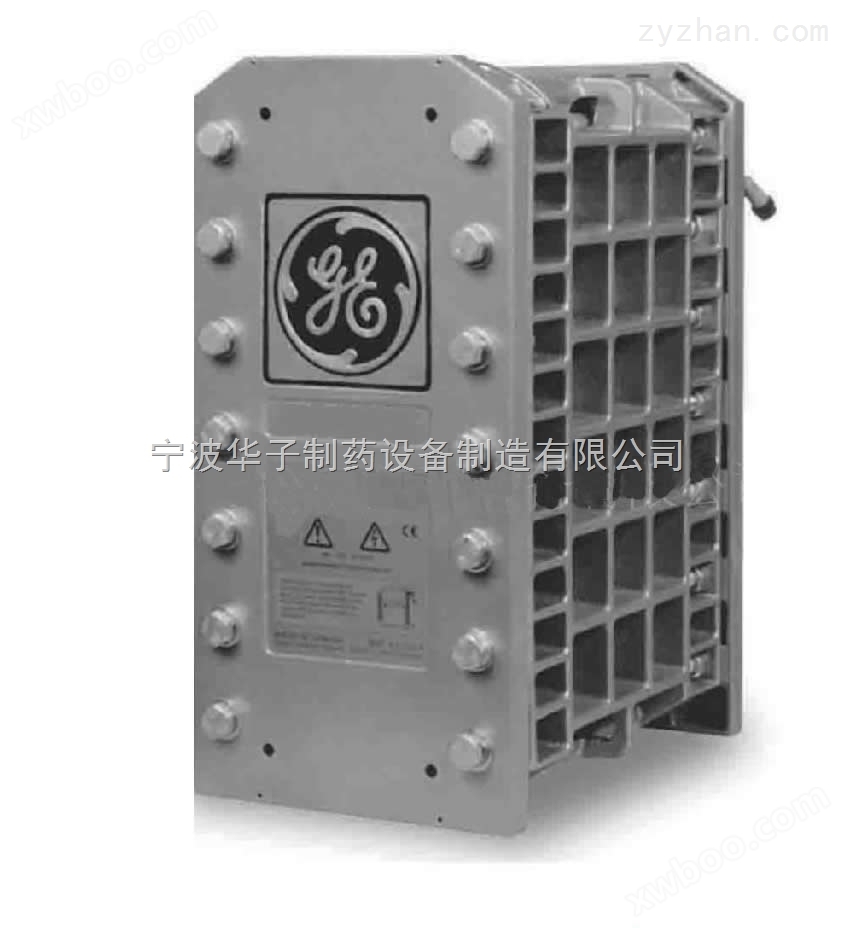
The supply of ion exchange equipment is a new water treatment technology that combines two mature water purification technologies - electrodialysis and ion exchange. When water passes through the EDI membrane stack, the cations and anions in the water are first adsorbed and conducted by the ion exchange resin. At the same time, under the action of a direct current electric field, these cations and anions enter the concentrated water chamber through the cation exchange membrane and are removed.
Product Details
Supply ion exchange equipmentProduct Introduction
Electrodeionization (EDI) is a new water treatment technology that combines two mature water purification techniques - electrodialysis and ion exchange. When water passes through the EDI membrane stack, the cations and anions in the water are first adsorbed and conducted by the ion exchange resin. At the same time, under the action of a direct current electric field, these cations and anions enter the concentrated water chamber through the cation exchange membrane and are removed. During this process, the ion exchange resin is continuously regenerated by the H+and OH - ions produced by hydrolysis. The dissolved salts in water can be removed under low energy consumption and without the need for chemical regeneration. This allows for high resistivity product water to be produced continuously at high flow rates.
Supply ion exchange equipmentProduct Features
Ion exchange reactions are reversible and occur in equimolar amounts. Obtained from experimentsKnow, cations in dilute solutions at room temperatureExchange potentialWith ionselectric chargeThe increase in radius leads to an increase in height; Organic ions with high molecular weight andmetalComplex anions have a high exchange potential. Highly polarized ions such as Ag+, Tl+, etc. also have high exchange potentials. The ion exchange rate decreases with the increase of resin cross-linking degree and increases with the decrease of particles.temperatureAs the concentration increases, the exchange reaction rate also increases. Ion exchange resin can be regenerated. Exchange depleted ion exchange resin and appropriatesourThe exchange of alkali or salt solutions to convert the resin into the desired form is called regeneration. These types of acids, bases, or salts are called regenerators.
Product Description
A separation method based on the exchange between exchangeable ions on ion exchangers and ions in liquid phase. Widely using artificially synthesized ion exchangeresinAs an ion exchanger, it is a insoluble polymer with a network structure and ionizable active groupselectrolyteAccording to the different active groups on the resin skeleton, it can be divided into cation exchange resin, anion exchange resinZwitterionic ion exchange resinChelating resin and redox resin, etc. The resin used for ion exchange separation requires insolubility, a certain degree of crosslinking, andSwelling effectAnd the exchange capacity and stability need to be high.