-
E-mail
hebeiguorunhuanbao@163.com
-
Phone
13483771100
-
Address
Chang'an Road Subdistrict, Dingzhou City
Product Categories
Hebei Guorun Environmental Protection Technology Co., Ltd
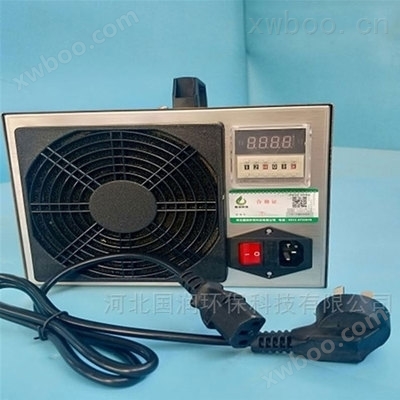
Space disinfection ozone generator
NegotiableUpdate on 01/21
- Model
- Nature of the Manufacturer
- Producers
- Product Category
- Place of Origin
Overview
Space disinfection ozone generator is a device used to produce ozone gas (O3). Ozone is easy to decompose and cannot be stored, so it needs to be produced and used on site (in special cases, short-term storage can be carried out). Therefore, any place where ozone can be used must use it
Product Details
Space disinfection ozone generatorIt is a device used to produce ozone gas (O3). Ozone is easily decomposed and cannot be stored, so it needs to be produced and used on-site (in special cases, short-term storage can be carried out). Therefore, it must be used in any place where ozone can be used.
Space ozone generatorIt is a device used for producing ozone gas (O3). Ozone is prone to decomposition and cannot be stored, so it needs to be produced and used on-site (in special cases, short-term storage can be carried out). Therefore, it must be used in any place where ozone can be used. Ozone gas is widely used in fields such as drinking water, wastewater, industrial oxidation, food processing and preservation, and space sterilization. The generated ozone gas can be directly utilized or mixed with liquids through mixing devices to participate in reactions.
The space ozone generator circuit consists of transistors VT1 and VT2, inductor coils L1-13, pulse transformer T, current limiting resistor R1, charging capacitor C3, bidirectional trigger diode 5, etc., forming a push-pull oscillation circuit; The filtering inductor L0, rectifier diode VD1, and filtering capacitors C1 and C2 form a half wave rectification filtering circuit. Connect the power supply, AC 220V voltage is filtered by LO, rectified by VD1, and a voltage of about 280V is generated at both ends of C1 to supply the push-pull oscillation circuit. At the moment of startup, VT1 conducts. Due to the charging effect of C3, the bidirectional trigger diode VD5 is turned off. When the charging voltage at both ends of C3 rises to 32V, VD5 is triggered to conduct, causing VT2 to conduct. During the conduction period of VT2, C3 gradually discharges, causing VT2 to turn off. After VTl is turned on, positive feedback voltage is generated on L1 and L2 under the action of pulse transformer T. This voltage is applied to the bases of VTl and VT2 respectively, causing VTl and VT2 to alternately turn on and off (i.e. when VTl is turned on, VT2 is turned off); When VT2 is turned on, VTl is turned off, and the push-pull oscillation circuit oscillates. After the push-pull oscillation circuit works, a pulse high voltage is generated on the secondary winding L6 of the pulse transformer T, causing the ozone generator VG to operate and produce ozone.

At the same time, the light-emitting diode VD7 also lights up and works. Choose 2SC2653 or BU406 silicon NPN high back voltage transistor for component selection VTl and VT2. Require current amplification factor β>100. VD1, VD4, and VD6 use 1N4007 rectifier diodes; VD5 uses DB3 type bidirectional trigger diode. All R1 and R6 are equipped with RJ-1/8W metal film resistors. L0 is a 5mH magnetic core inductor coil, which can be wound 210 turns on the skeleton with a Φ 0.25mm enameled wire; L1 is made by winding a single core plastic copper wire with a diameter of 0.2mm around the same magnetic ring, where L1 and L2 are wound 3 turns each, and L3 is wound 9 turns. The pulse transformer T can be modified using a 14 inch black and white TV output transformer. During the modification, the high voltage package is used as L6, and the low voltage package skeleton is wrapped with a Ø 0.45mm enameled wire for 168 turns as L4, and a Ø 0.23mm enameled wire for 4 turns as L5 (wrapped on the outer layer). Ozone generator VG is selected with models such as Z-210, Z-15, Z-20, etc. Produce and debug all electronic components except for the ozone generator VG, install them on a self-made printed circuit board, and pack them into a plastic or wooden box of appropriate size. Fix the light-emitting diode VD7 through a hole on the box surface and connect it to the ozone generator VG. As long as the components are in good condition and the wiring is correct, it can work normally when powered on.
Similar Product Recommend