-
E-mail
2180702571@qq.com
-
Phone
13795309406
-
Address
1501 Caoyang Business Building, 889 Zhongjiang Road, Putuo District, Shanghai
Product Categories
Shanghai Weitelui Industrial Development Co., Ltd
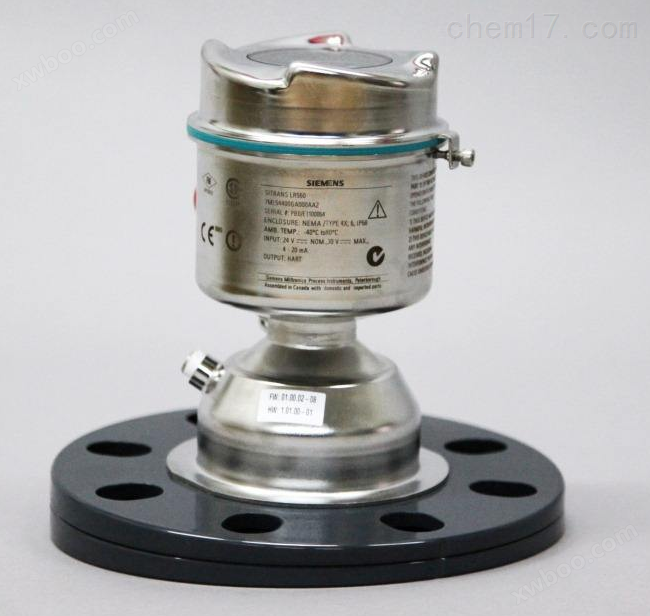
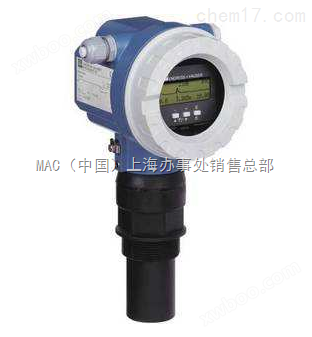
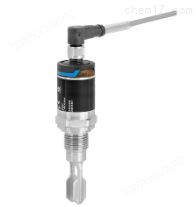
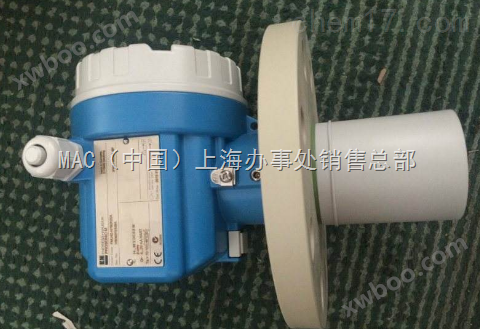
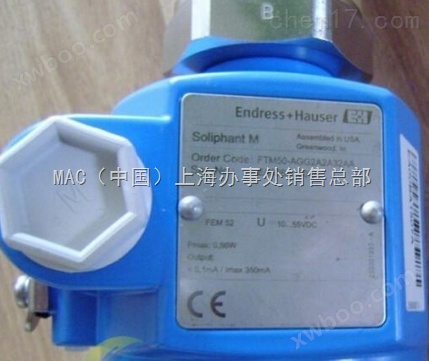
Siemens radar level gauge 7ML54400AA001AB1 in stock
NegotiableUpdate on 01/22
- Model
- Nature of the Manufacturer
- Producers
- Product Category
- Place of Origin
Overview
The difference between radio frequency admittance technology and traditional capacitance technology lies in the diversity of measurement parameters, the driving three terminal shielding technology, and the addition of two important circuits, which are improved based on valuable experience in practice. The above technology not only solves the problems of cable shielding and temperature drift, but also solves the problem of hanging materials at the root of vertically installed sensors. The two added circuits are a high-precision oscillator driver and an AC phase detector sampler.
Product Details
SIEMENS radar level gaugeThe second issue is that for conductive materials, the grounding point on the surface of the probe insulation layer covers the entire material and hanging area, allowing the effective measurement capacitance to extend to the top of the hanging area, resulting in hanging errors, and the stronger the conductivity, the greater the error. But no material is conductive. From an electrical perspective, the hanging material layer is equivalent to a resistor, and the part of the sensing element covered by the hanging material is equivalent to a transmission line composed of countless infinitely small capacitors and resistance elements.
According to mathematical theory, if the hanging material is long enough, the impedance and reactance values of the capacitance and resistance parts of the hanging material are equal. Therefore, an AC phase detector sampler can be used to measure capacitance and resistance separately. The measured total capacitance is equivalent to the c level+C hanging material, and then subtracting the resistance R equal to the C hanging material, the true value of the level can be obtained, thereby eliminating the influence of hanging material. The measurement of multiple parameters such as C measurement=C level+C hanging material C level=C measurement - C hanging material=C measurement - R is the basis of measurement, and the AC phase detector sampler is the means to achieve it. Due to the use of the above three technologies, radio frequency admittance technology has demonstrated extraordinary vitality in field applications. It is currently the world's material level measuring instrument.
SIEMENS radar level gaugeThe radar level gauge adopts the echo processing and data processing techniques mentioned above, combined with many characteristics such as high frequency and penetration performance of radar waves. Therefore, the radar level gauge has better performance than contact level gauges and similar non-contact level gauges, and is the preferred product for users to purchase. These include: continuous and accurate measurement under harsh weather conditions, very simple operation and easy debugging, accurate and safe, and energy saving. In general, as long as used according to operating specifications, it does not require maintenance and is reliable. It can also measure all media. The advantages of radar level gauges are also significant competitive advantages.
Precautions for installation:
(1) When measuring liquid materials, the axis of the sensor is kept perpendicular to the surface of the medium; When measuring solid materials, the sensor needs to be tilted at a certain angle due to the stacking angle of the solid medium.
(2) Try to avoid devices that cause false reflections within the emission angle. Special attention should be paid to avoiding obstacles within the 1/3 conical transmission area close to the antenna (as the closer the obstacle device, the stronger the false reflection signal). If it is unavoidable, it is recommended to use a refractive plate to refract the excessively strong false reflection signal away. This can reduce the energy density of false echoes, making it easier for the sensor to filter out false signals.
(3) Avoid the feeding port to prevent false reflections.
(4) The sensor should not be installed at the center of the arched tank (otherwise the false echo received by the sensor will be enhanced), nor should it be installed very close to the tank wall. The best installation position is at 1/2 of the container radius.
(5) Avoid installing in areas with strong eddy currents. For example, due to stirring or strong chemical reactions, it is recommended to use a waveguide or bypass tube for measurement.
(6) If the sensor is installed on the connector, the antenna must protrude from the connector. The horn antenna extends at least 10mm from the connecting pipe. The length of the connecting pipe for the rod antenna is 100 or 250mm longer. The diameter of the connecting pipe is 250mm smaller. The method of increasing the diameter of the connecting pipe can be adopted to reduce the interference echo caused by the connecting pipe.
(7) Regarding waveguide antenna: The inner wall of the waveguide must be smooth, and the waveguide with an opening below must reach the required low liquid level in order to measure in the pipeline. The type plate of the sensor should be aligned with the axis of the waveguide opening. If the measured dielectric constant is less than 4, a reflector plate should be installed at the end of the waveguide, or the end of the waveguide should be bent to a certain degree to refract the reflected echo at the bottom of the container.
SIEMENS radar level gaugeCommon models:
7MF4033-1CA10-2AC6-Z
7MF4033-1DA10-2AC6-Z
7MF4033-1EA10-2AC6-Z
7MF4433-1CA10-2AC6-Z
7MF4433-1DA10-2AC6-Z
7MF4433-1EA10-2AC6-Z
7MF4433-1FA10-2AC6-Z
7ML54400HB000AA2
7ML54401HB000AA2
7ML54400GB000AA2
7ML54401GB000AA2
7MF1567-3DB00-5GA1
7MF1567-3DA00-5GA1
Similar Product Recommend