-
E-mail
985854845@qq.com
-
Phone
18369889886
-
Address
Quanpu Town Industrial Zone, Liangshan County, Jining City, Shandong Province
Product Categories
Liangshan Liulijing Second hand Equipment Co., Ltd

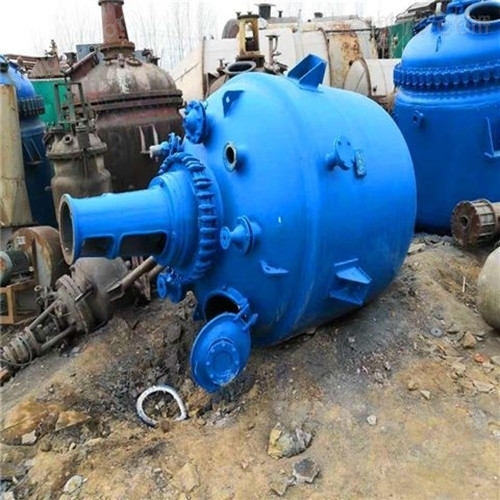
Second hand stainless steel high-pressure reactor idle for sale
NegotiableUpdate on 01/21
- Model
- Nature of the Manufacturer
- Producers
- Product Category
- Place of Origin
Overview
Second hand stainless steel high-pressure reactor idle for sale. The main material for the high-pressure reactor body is 1cr18Ni10Ti stainless steel, and titanium (TA2), nickel (Ni6), and composite steel plates can be made according to different medium requirements. The structure of the reactor body includes a flat cover, a convex cover, and a closed reactor body with a manhole. The opening on the reactor cover can be designed according to user requirements; The heating methods include jacket steam, jacket hot oil electric heating, etc., which can be optionally selected by users when ordering.
Product Details
Second hand stainless steel high-pressure reactor idle for saleThe material of the high-pressure reaction kettle body is mainly made of 1cr18Ni10Ti stainless steel, and titanium (TA2), nickel (Ni6), and composite steel plates can be made according to different medium requirements. The kettle body structure includes flat cover, convex cover, and closed reaction kettle body with manhole. The opening on the kettle cover can be designed according to user requirements; The heating methods include jacket steam, jacket hot oil electric heating, etc., which can be optionally selected by users when ordering. For the inner surface of the kettle with polishing requirements, the above mirror polishing level can be achieved. For high viscosity materials, it can be processed into a conical bottom for easy feeding and cleaning.
Magnetic transmission device is the core technology for material mixing in high-pressure reactors and is a necessary component for designing pressures exceeding 50 bar. After being made public, it became the industry standard for compression mixing equipment.
Second hand stainless steel high-pressure reactor idle for saleThe magnetic transmission device seals the components that are truly used for stirring in a pressure environment, thereby * solving the reliability of dynamic sealing between the stirring shaft and the reactor. Due to the fact that the basic manufacturing materials of magnetic transmission devices are ferromagnetic substances (iron-based alloys, nickel based alloys), the magnetic permeability and field have almost no loss when passing through the sealing alloy layer. The rotating magnetic field generated by the externally driven permanent magnet can be effectively received by the internal permanent magnet rotor, thereby driving the stirring components inside the reactor to mix materials. The high-pressure reactor should be used at the designated location and operated according to the instructions. Identify the test pressure, usage pressure, and usage temperature conditions engraved on the main container, and use them within their allowable range.
The high-pressure reactor is a precision equipment that uses a conical contact sealing form through a sealing ring, and achieves sealing by tightening the main bolt to press them against each other. Special care must be taken for the sealing cone surface to avoid damage caused by various collisions. When installing the cover, first place the reaction kettle body, then carefully install the kettle cover in a fixed position on the kettle body. When tightening the main bolts, they must be tightened diagonally and symmetrically in multiple steps, with even force. The kettle cover is not allowed to tilt to one side to achieve good sealing effect, and the specified tightening torque should not be exceeded to prevent the sealing surface from being squeezed or accelerated wear.
The pressure used by the pressure gauge should be within 1/2 of its indicated pressure. And often compare the pressure gauge with the standard pressure gauge and calibrate it.
Oxygen pressure gauges should be avoided from being mixed with pressure gauges used for other gases.
Safety valves and other safety devices must use instruments that have undergone regular inspections and meet the specified requirements.
Attention must be paid during operation to accurately insert the thermometer into the reaction solution.
The interior and lining parts of the high-pressure reactor should be kept clean.
When covering the disc flange cover, the bolts located on the diagonal should be tightened in pairs in sequence.
Similar Product Recommend