-
E-mail
2180702571@qq.com
-
Phone
13795309406
-
Address
1501 Caoyang Business Building, 889 Zhongjiang Road, Putuo District, Shanghai
Product Categories
Shanghai Weitelui Industrial Development Co., Ltd
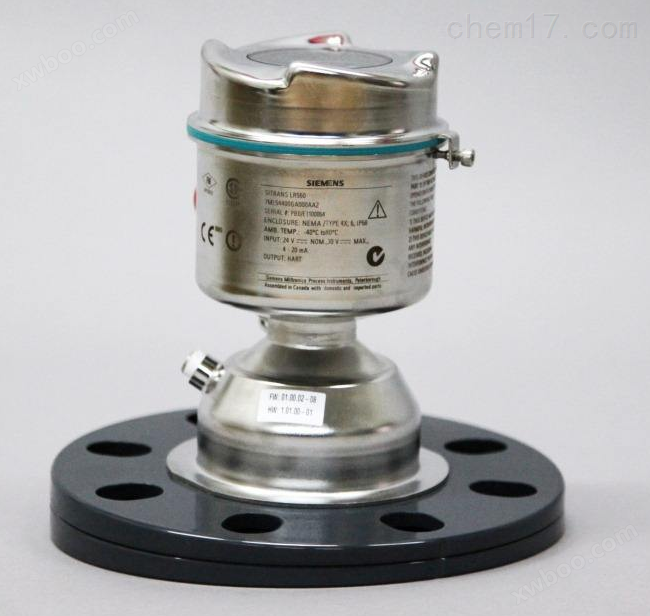
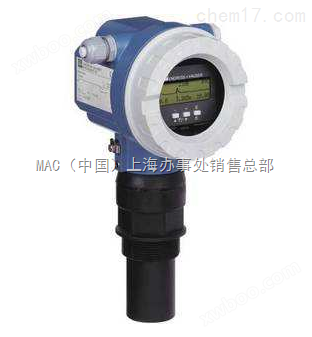
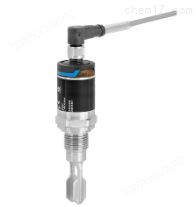
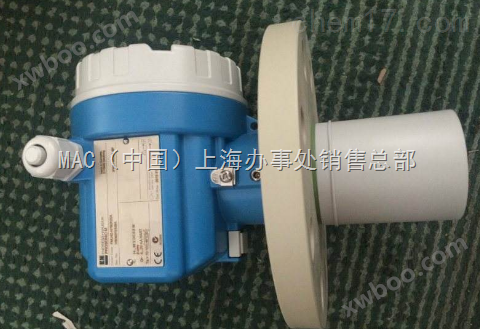
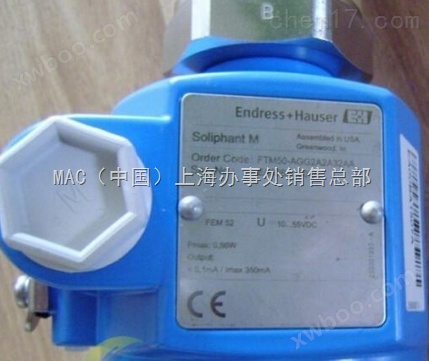
SIEMENS radar level gauge 7ML54401HB000AA2 in stock
NegotiableUpdate on 01/22
- Model
- Nature of the Manufacturer
- Producers
- Product Category
- Place of Origin
Overview
The difference between radio frequency admittance technology and traditional capacitance technology lies in the diversity of measurement parameters, the driving three terminal shielding technology, and the addition of two important circuits, which are improved based on valuable experience in practice. The above technology not only solves the problems of cable shielding and temperature drift, but also solves the problem of hanging materials at the root of vertically installed sensors. The two added circuits are a high-precision oscillator driver and an AC phase detector sampler.
Product Details
SIEMENS radar level gaugeHigh frequency radar level sensors (mainly referring to 26GHz and 24GHz) have the advantages of high energy, small beam angle (generally, the beam angle of a Φ 95 horn antenna is 8o, ¢ 123, and the emission angle is 6 °¢ 246 (usually parabolic)), small antenna size, and high accuracy. Low frequency radar, due to its low energy and dispersed energy, has a large emission angle and poor directionality. When the horn antenna diameter of low-frequency pulse radar is Φ 246, the beam angle is only 15o.
The wavelength of the 26GHz radar is 11mm, and the wavelength of the 6GHz radar is 50mm. When the radar measures the level of bulk materials, the radar wave reflection mainly comes from the diffuse reflection of the material surface. The intensity of the diffuse reflection is proportional to the size of the material and inversely proportional to the wavelength. That is to say, for the same material, the shorter the wavelength, the easier it is to be reflected, and thus the better the echo signal during radar measurement. For example, when a basketball touches a table tennis ball, the basketball generally does not bounce back, while when a table tennis ball touches a basketball, the table tennis ball is bounced back. However, most bulk materials have a diameter much smaller than 50mm, which is why the current 26GHz radar is the choice for bulk material level measurement.
Due to the harsh on-site environment, dirt, water vapor, etc. will accumulate on the radar antenna over time. The 26GHz radar antenna is small, and adding an antenna cover can greatly improve the impact of dirt and water vapor. The 6GHz radar antenna is large, and adding an antenna cover is difficult. The overall instrument is large, and cleaning is difficult.
SIEMENS radar level gaugeWhen using low-frequency radar (6GHz) for solid-state measurement, the measurement range will not exceed 30m (such as VEGA's PULS54/66; The measurement range of 6GHz low-frequency radar produced by domestic manufacturers, such as E+H FMR230, for measuring solid level will not exceed 30 meters, which cannot meet all level measurements of cement lines with a scale of 2500T/d or above; High frequency radar generally has a measurement range of up to 70 meters, and even up to 100 meters, which can cover all silos of cement production lines of all sizes.
Due to its good directionality, small emission angle, and strong resistance, the high-frequency radar level gauge is very suitable for measuring material levels in silos with large aspect ratios, especially in situations such as calcium carbide furnace and converter silos, where low-frequency radar cannot be used for measurement.
Compared with high-frequency radar, low-frequency radar has a much lower ability to combat dust due to its low frequency, dispersed energy, and insufficient energy concentration.
These reasons determine that high-frequency radar is the mainstream product for solid level measurement, and the difference between low-frequency radar level meters highlights the advantages of high-frequency radar level meters.
SIEMENS radar level gaugeP DS III HART series 7MF4033 series 7MF4433 series pressure transmitter differential pressure transmitter
7MF4033-1BA10-2AC6-Z
7MF4033-1CA10-2AC6-Z
7MF4033-1DA10-2AC6-Z
7MF4033-1EA10-2AC6-Z
7MF4433-1CA10-2AC6-Z
7MF4433-1DA10-2AC6-Z
7MF4433-1EA10-2AC6-Z
7MF4433-1FA10-2AC6-Z
Siemens radar level gauge
1P 7ML54400HB000AA2
1P 7ML54401HB000AA2
1P 7ML54400GB000AA2
1P 7ML54401GB000AA2
Similar Product Recommend