-
E-mail
2180702571@qq.com
-
Phone
13795309406
-
Address
1501 Caoyang Business Building, 889 Zhongjiang Road, Putuo District, Shanghai
Product Categories
Shanghai Weitelui Industrial Development Co., Ltd
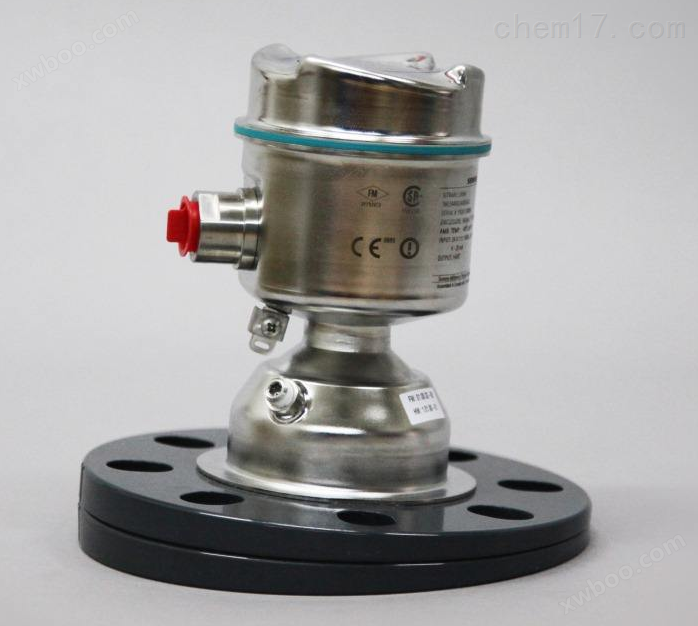
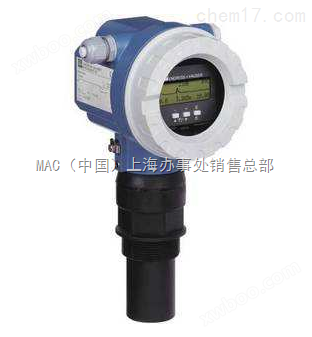
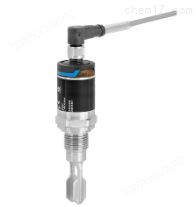
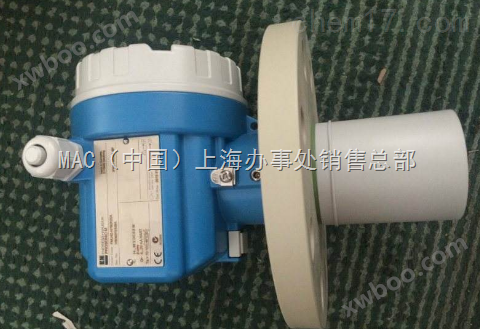
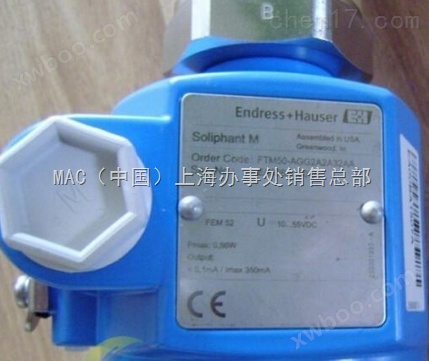
SIEMENS radar level gauge 7MF4433-1DA10-2AC6 in stock
NegotiableUpdate on 01/22
- Model
- Nature of the Manufacturer
- Producers
- Product Category
- Place of Origin
Overview
The difference between radio frequency admittance technology and traditional capacitance technology lies in the diversity of measurement parameters, the driving three terminal shielding technology, and the addition of two important circuits, which are improved based on valuable experience in practice. The above technology not only solves the problems of cable shielding and temperature drift, but also solves the problem of hanging materials at the root of vertically installed sensors. The two added circuits are a high-precision oscillator driver and an AC phase detector sampler.
Product Details
SIEMENS radar level gaugeWorking principle and characteristics:
Radio frequency admittance level meter is a level control technology developed from capacitive level control technology, which is anti hanging, more reliable, accurate, and widely applicable. The meaning of "admittance" in "radio frequency admittance" is the reciprocal of impedance in electricity. It is composed of resistive, capacitive, and inductive components, and "radio frequency" refers to high frequency. Therefore, radio frequency admittance technology can be understood as measuring admittance with high frequency. A high-frequency sine oscillator outputs a stable measurement signal source, utilizing the principle of a bridge to accurately measure the admittance of sensors installed in the container under test. In direct action mode, the output of the instrument increases with the rise of the material level.
The difference between radio frequency admittance technology and traditional capacitance technology lies in the diversity of measurement parameters, the driving three terminal shielding technology, and the addition of two important circuits, which are improved based on valuable experience in practice. The above technology not only solves the problems of cable shielding and temperature drift, but also solves the problem of hanging materials at the root of vertically installed sensors. The two added circuits are a high-precision oscillator driver and an AC phase detector sampler.
The problem is that the material itself is equivalent to a capacitor to the probe, which does not consume the energy of the transmitter (pure capacitor does not consume energy). However, if the equivalent circuit of the hanging material to the probe contains a resistor, the impedance of the hanging material will consume energy, thereby pulling down the oscillator voltage and causing changes in the bridge output, resulting in measurement errors. We have added a driver between the oscillator and the bridge to replenish the consumed energy, thus stabilizing the oscillation voltage applied to the probe.
SIEMENS radar level gaugeP DS III HART series 7MF4033 series 7MF4433 series pressure transmitter differential pressure transmitter
7MF4033-1BA10-2AC6-Z
7MF4033-1CA10-2AC6-Z
7MF4033-1DA10-2AC6-Z
7MF4033-1EA10-2AC6-Z
7MF4433-1CA10-2AC6-Z
7MF4433-1DA10-2AC6-Z
7MF4433-1EA10-2AC6-Z
7MF4433-1FA10-2AC6-Z
1P 7ML54400HB000AA2
1P 7ML54401HB000AA2
1P 7ML54400GB000AA2
1P 7ML54401GB000AA2
SIEMENS radar level gaugeRadar waves are a special form of electromagnetic waves, and radar level gauges utilize the unique properties of electromagnetic waves for level detection. The physical characteristics of electromagnetic waves are similar to visible light, and their propagation speed can be equivalent to the speed of light. Its frequency is between 300MHz-3000GHz. Electromagnetic waves can penetrate interference sources such as space vapor and dust, and are easily reflected when encountering obstacles. The better the conductivity or dielectric constant of the measured medium, the better the reflection effect of the echo signal.
The higher the frequency of the radar wave, the smaller the angle emitted, the greater the energy (magnetic flux or field strength) per unit area, the smaller the attenuation of the wave, and the better the measurement effect of the radar level gauge.
Similar Product Recommend