-
E-mail
2213709555@qq.com
-
Phone
13821517568
-
Address
Balitai Jianxin City 10-458
Product Categories
Jingnan Huajian (Tianjin) Technology Co., Ltd
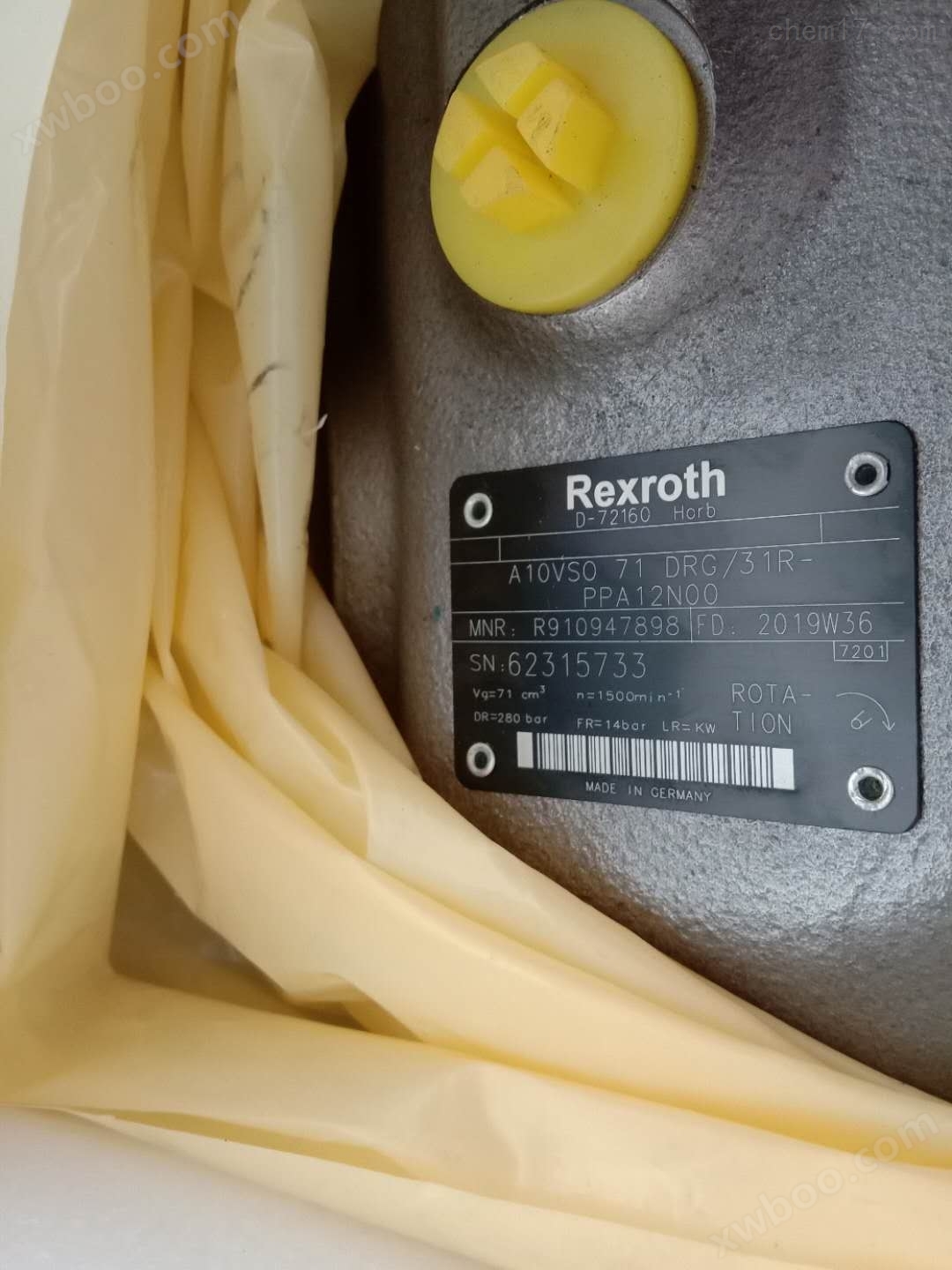
Quotation from Vickers plunger pump manufacturer
NegotiableUpdate on 01/22
- Model
- Nature of the Manufacturer
- Producers
- Product Category
- Place of Origin
Overview
VICKERS is a hydraulic brand under the Fluid Power division of Eaton Group, whose main products include hydraulic pumps, motors, cylinders, hydraulic valves, etc. Eaton's fluid power products are widely used, including earthmoving machinery, agriculture, construction, aviation, mining, forestry, public facilities, and material handling.
Product Details
Quotation from Vickers plunger pump manufacturer
The hydraulic oil tank of the Vickers plunger pump relies on air pressure to supply oil. After starting the machine each time, the hydraulic tank must reach the required air pressure before operating the machinery. There are two types of direct axis inclined disc piston pumps: pressure oil supply type and self suction type. Pressure oil supply hydraulic pumps mostly use oil tanks with air pressure, and some hydraulic pumps themselves have oil replenishment pumps to provide pressure oil to the hydraulic pump inlet. The self-priming hydraulic pump has strong self-priming ability and does not require external oil supply. For self-priming plunger pumps, the oil in the hydraulic oil tank must not be lower than the lower limit of the oil gauge, and a sufficient amount of hydraulic oil must be maintained. The higher the cleanliness of hydraulic oil, the longer the service life of hydraulic pumps.
Structural form of Vickers oil pump
1) Vickers plunger pump is an important device in hydraulic systems. It relies on the reciprocating motion of the plunger in the cylinder body to change the volume of the sealed working chamber to achieve oil suction and pressure. Piston pumps have the advantages of high rated pressure, compact structure, high efficiency, and convenient flow regulation. They are widely used in high-pressure, high flow, and flow regulation applications, such as hydraulic presses, engineering machinery, and ships.
2) Vickers plunger and plunger sleeve are a pair of precision components that cannot be interchanged after pairing and grinding. They require high precision, smoothness, and good wear resistance, with a radial clearance of 0.002-0.003mm
3) There is a slanted groove cut on the cylindrical surface of the Vickers plunger head, which is connected to the top through radial and axial holes, with the purpose of changing the circulating oil supply; The plunger sleeve is equipped with inlet and return oil holes, both of which are connected to the low-pressure oil chamber in the pump upper body. After the plunger sleeve is inserted into the pump upper body, it should be positioned with positioning screws.
The method of changing the fuel supply varies depending on the position of the inclined groove at the head of the Vickers plunger.
Edit this paragraph on the return process of the Wigs oil pump
① The total stroke L of the reciprocating motion of the plunger remains constant and is determined by the lift of the cam.
② The fuel supply amount per cycle of the plunger depends on the fuel supply stroke, which is variable and not controlled by the camshaft.
③ The start time of fuel supply does not change with the variation of fuel supply stroke.
④ Rotating the plunger can change the end time of fuel supply, thereby altering the fuel supply amount
Mechanical principle of Vickers oil pump
The total stroke L of the reciprocating motion of the Vickers plunger pump is constant and determined by the lift of the cam. The fuel supply amount per cycle of the plunger depends on the fuel supply stroke, which is variable and not controlled by the camshaft. The start time of fuel supply does not change with the variation of fuel supply stroke. Rotating the plunger can change the end time of fuel supply, thereby altering the fuel supply amount. When the plunger pump is working, the cam on the camshaft of the fuel injection pump and the plunger spring force the plunger to reciprocate up and down, thereby completing the pumping task. The pumping process can be divided into the following three stages.
Oil inlet process
When the convex part of the cam rotates, under the action of the spring force, the plunger moves downward, and the upper space of the plunger (called the pump oil chamber) generates a vacuum degree. When the upper end face of the plunger opens the oil inlet hole on the plunger sleeve, diesel filled in the oil passage of the upper body of the oil pump enters the pump oil chamber through the oil hole, and the plunger moves to the bottom dead center, ending the oil inlet.
Oil supply process
When the camshaft rotates to the convex part of the cam and lifts the roller body, the plunger spring is compressed, the plunger moves upward, and the fuel is compressed. Part of the fuel flows back to the upper body oil chamber of the fuel injection pump through the oil hole. When the top surface of the plunger covers the upper edge of the oil inlet hole on the sleeve, due to the small clearance between the plunger and the sleeve (0.0015-0.0025mm), the pump oil chamber at the top of the plunger becomes a sealed oil chamber. As the plunger continues to rise, the oil pressure in the pump oil chamber rapidly increases.
pvq10-a2r-ss1s-20-cg-30
pvq10-a2r-se1s-20-cgd-30
pvq10-a2r-se1s-20-cm7-12
pvq10-a2l-se1s-20-cm7-12
pvq10-a2l-ss1s-20-c21-12
pvq10-a2l-ss3s-20-c21-12
pvq10-a2r-se1s-20-c21-12
pvq10-a2r-ss1s-20-c21-12
pvq10 a2r ss3s 20 c21 12
pvq10-a2l-se1s-20-c21-12
Quotation from Vickers plunger pump manufacturer
Similar Product Recommend