-
E-mail
943467149@qq.com
-
Phone
15832626071
- Address
Product Categories
Hejian Wanjie Sealing Materials Co., Ltd


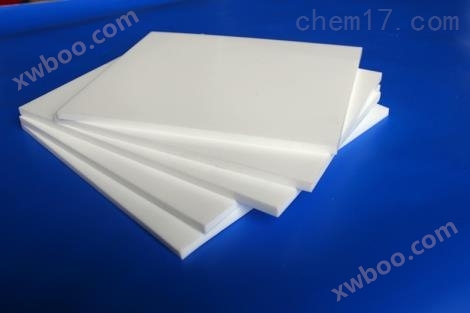


Guangdong engineering staircase polytetrafluoroethylene board manufacturer sells in stock
NegotiableUpdate on 01/22
- Model
- Nature of the Manufacturer
- Producers
- Product Category
- Place of Origin
Overview
PTFE plates are divided into two types: molded plates and turned plates. Molded plates are made by molding PTFE resin at room temperature using a molding method, followed by sintering and cooling. The turning plate is made of polytetrafluoroethylene resin through pressing, sintering, and rotary cutting. Guangdong engineering staircase polytetrafluoroethylene board manufacturer sells in stock
Product Details
Guangdong engineering staircase polytetrafluoroethylene board manufacturer sells in stock
The manufacturer introduces the production of 5 polytetrafluoroethylene plates at a price per square meter. PTFE plates are mainly used in engineering staircases and are a type of hard PTFE stair support that is widely used in modern staircase applications. Because the stairwell does not participate in the overall seismic calculation of the structure, sliding supports need to be designed according to traffic restrictions.
Manufacturer Introduction: Bridge Pad for Building Stairs * PTFE Stair Board Bridge Beam Pad for Building Stairs * PTFE Stair Board PTFE Stair Board Manufacturer PTFE Board is suitable for temperatures ranging from -180 ℃ to+250 ℃. It is mainly used as a lining for electrical insulation materials and corrosive media.
Its specific uses include bearings for chemical equipment, papermaking machinery, agricultural machinery, as rings, machine tool guides, and guide rings; Widely used in civil and architectural engineering as support blocks for bridges, steel structure roof trusses, large chemical pipelines, storage tanks, as well as bridge bearings and bridge rotors. Made of suspended polytetrafluoroethylene through compression molding, it is divided into two types according to production process: compression molding plate and turning plate.
What is the price of 5mm thick PTFE board for stairs? Introduction to PTFE board: Low friction performance. In terms of load application, some equipment's friction parts are not suitable for lubrication, such as when lubricating grease will be dissolved by solvents and fail?.
The development of metallurgical industry. Metallurgical industry refers to the industrial sector that explores, mines, selects, refines, and rolls metal minerals into materials, including black metallurgical industry and non-ferrous metallurgical industry. It is an important raw material industry sector that provides metal materials for various sectors of the national economy and is also the material basis for economic development. Over the past five years since its establishment, the steel industry has developed rapidly. While developing the steel industry in coastal cities such as Dalian, Tianjin, and Shanghai, a number of large-scale auxiliary raw material enterprises such as steel, ferroalloys, refractory materials, etc. have been built in inland areas such as Baotou, Taiyuan, Wuhan, Chongqing, and Panzhihua. Along with the development of black metallurgy industry, the smelting and processing industry of non-ferrous metals has rapidly developed. Liaoning, Heilongjiang, Shandong, Henan, Sichuan, Guizhou, Gansu and other places have successively built a number of large-scale alumina plants, electrolytic aluminum plants and aluminum processing plants.
The PTFE sliding plate of the sliding bracket has excellent chemical corrosion resistance and dielectric properties among known plastics. It does not age or stick. The PTFE stair board can be used at temperatures ranging from -180 ℃ to+280 ℃ under no load, and it has a low coefficient of Z among known solid materials. Manufacturer's introduction: Building PTFE staircase building panel_5mm PTFE panelPrice: Building PTFE staircase building panel_5mm PTFE panelPrice: PTFE panels are divided into two types: molded panels and turned panels. Molded panels are made by molding PTFE at room temperature, followed by sintering and cooling.
With the improvement of people's living standards, stricter requirements are constantly being put forward for the importance of various building safety, such as polytetrafluoroethylene stair treads, which are designed for seismic and shock absorption requirements; The PTFE bridge support plate structural plate or steel structure support plate is also used for the vibration damping requirements of bridges or steel structural components. PTFE is corrosion-resistant, aging resistant, elastic, and suitable for buffering requirements in cement steel structures.
Generally, thermoplastic plastics can be classified into two types: crystalline and amorphous. Crystalline plastics appear semi transparent, milky or opaque in appearance, only transparent in a thin film state, with hardness ranging from soft to keratinous. Amorphous is generally colorless and fully transparent when no additives are added. Its hardness ranges from harder than that of keratinized rubber (in which case plasticizers and other additives are often added). Thermosetting plastics usually contain fillers and are not transparent, but they are transparent without fillers. The elastomer has a rubber like feel and a certain degree of stretch. The heating characteristics of the three types of plastics mentioned above are also different, and can be identified through heating methods. Thermoplastic materials soften and melt easily when heated, and become transparent when melted. They can often be pulled out of the melt and are usually easy to heat seal.
The sliding block of bridge support is made of PTFE plate. The sliding block of bridge support is made of PTFE plate, which has high hardness and certain elasticity. Manufacturer introduction: 12mm thick polytetrafluoroethylene plate manufacturer
Guangdong engineering staircase polytetrafluoroethylene board manufacturer sells in stock

Various types of polytetrafluoroethylene products have played a crucial role in the national economy, including chemical, mechanical, electronic, electrical, aerospace, environmental protection, and bridge industries. Tetrafluoroethylene board is suitable for temperatures ranging from -180 ℃ to+250 ℃. It is mainly used as an electrical insulation material and as a lining, supporting slider, track seal, and lubricating material for contact with corrosive media. Rich cabinet furniture uses it in light industry and is widely used as an anti-corrosion lining material for chemical and dye industry containers, storage tanks, reaction towers, and large pipelines; Aviation and other heavy industry sectors; Mechanical, construction, transportation bridge sliders, guide rails; Anti sticking materials for printing and dyeing, light industry, textile industry, etc
38kj. Therefore, during low-temperature cracking, polytetrafluoroethylene is significantly depolymerized into tetrafluoroethylene. The weight loss rate (%) of polytetrafluoroethylene at 2370 and 420 ℃ is 110-410-3 and 910 per hour, respectively. It can be seen that polytetrafluoroethylene can? Long term application at 260 ℃. Due to the by-products such as fluorophosgene and quanfoyifingxi that occur during low-temperature cracking, special attention should be paid to protection and avoiding open flames caused by polytetrafluoroethylene. Metal wound pads are widely used in industries such as petroleum, chemical, metallurgical, power generation, and shipbuilding, and are key components for static sealing of equipment such as pressure pipelines, valves, pumps, and heat exchangers in China. Stair PTFE board is mainly used in engineering stairs as a hard PTFE stair support, which is widely used in current stair applications. Due to the fact that the stairwell does not participate in the overall seismic calculation of the structure, sliding supports are designed according to the requirements of traffic restrictions. It is necessary to comply with the design requirements and construction standards for the types of PTFE boards used in stairs.
Similar Product Recommend