-
E-mail
943467149@qq.com
-
Phone
15832626071
- Address
Product Categories
Hejian Wanjie Sealing Materials Co., Ltd


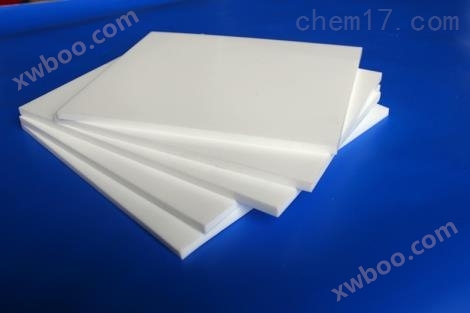


*5mm PTFE board - Bao'an District, Shenzhen
NegotiableUpdate on 01/22
- Model
- Nature of the Manufacturer
- Producers
- Product Category
- Place of Origin
Overview
PTFE plates are divided into two types: molded plates and turned plates. Molded plates are made by molding PTFE resin at room temperature using a molding method, followed by sintering and cooling. The turning plate is made of polytetrafluoroethylene resin through pressing, sintering, and rotary cutting. *5mm PTFE board - Bao'an District, Shenzhen
Product Details
manufacturerDirect sales of 5mm polytetrafluoroethylene board - Bao'an District, Shenzhen
PTFE sheets, with their excellent performance, have become increasingly popular and widely used in various types of sealing industries, replacing PTFE sealing tapes and other sealing materials. It can effectively eliminate various types of mechanical equipment. Fuel tank end cap. Cylinder end cap. Gearbox end cover. Various pipeline flanges. Device. Storage and transportation containers. Tower type. Can type. Especially for leaks in non-metallic PTFE rod industrial production facilities, strengthening sealing efficiency is a solution for industrial production enterprises and related industries to deal with gas. Liquid medium "running, emitting, dripping, leaking" is an effective tool for leakage. PTFE board is a new type of sealing product that can replace gaskets. PTFE board. Resin. Almost all adhesive substances such as coatings can be easily resistant to chemical corrosion and strong acids. Used for low temperature -196 ℃. Transfer printing hot press tablecloth, carpet backing adhesive curing conveyor belt, rubber vulcanization conveyor belt, abrasive sheet curing release cloth, etc. Architectural membrane materials: roofs for various sports venues. Station pavilion. Umbrella. Landscape canopy, etc. Used for anti-corrosion coating of various petrochemical pipelines, environmental desulfurization of power plant exhaust gas, etc. Polytetrafluoroethylene (PTFE), abbreviated as Teflon or PTFE in English, is known as the "plastic king" by PTFE turning plates in Zhejiang, USA. Its Chinese trade name is "PTFE". Teflon.
The general crystallinity is 90-95%, and the melting temperature is 327-342 ℃. The CF2 units in polytetrafluoroethylene molecules are arranged in a zigzag shape. Due to the slightly larger radius of fluorine atoms compared to hydrogen, adjacent CF2 units cannot be oriented in a trans cross manner, but instead form a helical twisted chain, with fluorine atoms covering almost the entire surface of the polymer chain. This molecular structure explains the various properties of polytetrafluoroethylene. When the temperature is below 19 ℃, a 13/6 helix is formed; At 19 ℃, a phase transition occurs, causing the molecules to slightly unravel and form a 15/7 helix. Polytetrafluoroethylene (F4, PTFE) has a series of excellent performance characteristics: high temperature resistance - * operating temperature of 200-260 degrees, low temperature resistance - still soft at -100 degrees;
And the crystallinity of poly is generally 90-95%. We often need to utilize the outstanding performance of polytetrafluoroethylene for applications, using single-sided activated sodium naphthalene treatment to facilitate bonding with materials such as rubber and stainless steel, while maintaining the characteristics of PTFE film on the other surface, such as mouse pad film, flat gasket, rubber surface, etc., in order to maintain the inherent single-sided properties of PTFE film. When processing, it is generally necessary to apply or seal the other side with adhesive tape for protection. The sodium naphthalene treatment time should not be too long, as it may cause damage. For PTFE membranes with a thickness of 0.02mm, the appropriate processing time is 5-7 seconds, while for membranes with a thickness of 0.2mm, the processing time can be set at 30-45 seconds.


Temperature range of -20 to 250 ℃ (-4 to 482 ° F), allowing for sudden cooling and heating, or alternating cold and hot operations. The price per square meter of 5mm polytetrafluoroethylene board for stairs is 400 yuan per square meter. The price of the whole board is calculated as 2.3g/cm3, and the actual weight of Flat noodles or plate is calculated as 2.1g/cm3. It has excellent chemical stability, can withstand all strong acids, bases, strong oxidants, and does not react with various organic solvents. PTFE has a wide temperature range and can be applied to -180 ℃~250 ℃ under pressure. The density of 5mm polytetrafluoroethylene board for stairs is 2.1-2.3g/cm3, and the price of the whole board is calculated as 2.3g/cm3. The actual weight of Flat noodles or plate is calculated as 2.1g/cm3. It has excellent chemical stability, can resist all strong acids, bases and oxidants, and does not react with various organic solvents. The density of polytetrafluoroethylene board used for stairs is 2.1-2.3g/cm3.
manufacturerDirect sales of 5mm polytetrafluoroethylene board - Bao'an District, Shenzhen By adding different additives (such as graphite, which has stable chemical properties such as glass fiber and copper powder) during the sintering process of polytetrafluoroethylene, modified polytetrafluoroethylene can be obtained, mainly to improve its mechanical and thermal properties. Polytetrafluoroethylene can be used as a sealing gasket, or as a sealing, insulating element, and low friction moving element for mobile introduction devices. The application temperature range of polytetrafluoroethylene is -50~200 ℃, and its high working temperature can reach 250 ℃. High salinity brine treatment, food processing, heat recovery, and biomedical applications. Membrane is an important component of MD systems, used as a medium for liquid water transport and water vapor transport. The 5-thick polytetrafluoroethylene plate * is used for pouring concrete in Pingliang and sliding stairs. The polytetrafluoroethylene plate for electric stairs also has excellent mechanical processing performance in the atmosphere and is often used to support sliders, tracks, seals, machinery, and construction. Processed into turning film or turning plate.
The breakdown voltage strength of PTFE film is related to its orientation. The higher the orientation (i.e. molecular orientation), the higher the breakdown voltage strength of the film. When users require voltage resistant thin film products, the orientation of ordinary thin films should be adjusted accordingly. As for the orientation of the film, it must be geometric, which can be confirmed. The mastery of film orientation is a major parameter in the processing of finished products of polytetrafluoroethylene films. The vast majority of the coating materials used in China's wire and cable industry are semi oriented films made of polytetrafluoroethylene (PTFE), which is determined by the industry's development. The degree of orientation of PTFE films is determined by the fact that the surface of the wrapped cable does not rupture or develop spots. Due to differences in manufacturing processes among different consumer manufacturers, there are also variations in the required directionality, typically ranging from 1.4 to 2.0.
The relationship between the breakdown resistance of PTFE film and its tensile strength and elongation at break is as follows: if the breakdown voltage strength is high, the tensile strength is high and the elongation at break is low. The tensile strength requirement for the thin film used in transformers is greater than 70MPa, and the elongation at break requirement is less than 60%. The breakdown resistance of this type of PTFE film can meet the utilization requirements of users.
3) Testing method: Conduct testing according to GB1408 "Power Frequency and Electrical Strength Test of Insulation Materials".
4. Dielectric constant and tangent of dielectric consumption angle
1) By measuring the tangent value of the dielectric consumption angle and the dielectric constant (ε) during the process, we can further understand the various factors that affect dielectric consumption and dielectric constant, which is an advanced function. The ratio of the dielectric constant of capacitors of the same size made with insulating materials as the medium and vacuum as the medium (under atmospheric pressure, the relative dielectric constant of the atmosphere is 1.00053). Therefore, in reality, capacitors made with atmosphere as the medium can be used as a reference for measuring the relative dielectric constant Degree). The dielectric constant of the evidence can be of high molecular polarity. Generally, materials with a dielectric constant greater than 3.6 are polar materials; Materials with a dielectric constant in the range of 2.8~3.6 are weakly polar materials; A dielectric constant less than 2.8 is considered non-polar material.
The dielectric consumption tangent, also known as the dielectric consumption tangent, refers to the energy consumed by a dielectric by converting electrical energy into thermal energy (to generate heat) within each unit volume of the dielectric. Characterize the physical quantity of dielectric material consumption after applying an electric field, expressed as tan δ, where δ is the dielectric consumption angle. The dielectric consumption angle is the angle between the current vector and voltage vector flowing through the dielectric under an alternating electric field. Apply a sine wave voltage to the dielectric and determine the tangent of the residual angle between the applied voltage and the constant current. The dielectric consumption tangent is the energy consumed by the medium during the cycle divided by the energy stored in the medium during the cycle.
2) Testing shows that dielectric constant and dielectric tangent are the two main components of insulating materials. As a capacitor, it is required that the material has a large dielectric constant to reduce the volume of the component. As a component in the collection, a smaller dielectric constant is required to reduce the capacitance between conductors and thus reduce the number of charging cycles. The dielectric constant is related to the density of the dielectric material. No different, when the density is low, the dielectric constant is also low. After charging a material with a dielectric constant of ε into a capacitor plate, the capacitance increases by a factor of ε r. Dielectric materials have the property of making space larger or smaller than practical dimensions. For example, when a dielectric material is placed between two charges, it will eliminate the force between them, as if they have been moved away.
3) Test essentials: Stop testing according to GB1409 "Experiment on Relative Dielectric Constant and Tangent Coefficient of Dielectric Consumption of Solid Insulation Materials at Power Frequency, Audio Frequency, and High Frequency". Tetrafluoroethylene (PTFE) is a functional engineering plastic. Tetrafluoroethylene (PTFE) has excellent corrosion resistance, resistance to rough temperatures, aging resistance, low friction, insulation, non adhesiveness, and non-toxic psychological inertia, making it a widely used special material in aviation, shipbuilding, chemical, machinery, electrical, construction, medical and other industries. Although polytetrafluoroethylene (PTFE) is a thermoplastic resin, due to its high melt viscosity (1010-1011 Pa · s) and poor powder activity control, it is difficult to stop processing and forming it using other plastic processing methods. The melt surface is high, the melt viscosity is high, and it is sensitive to shear without a fixed external shape, making it easy for the melt to break. Therefore, conventional thermoplastic molding processes such as melt extrusion and injection molding can only accept powder metallurgy for sintering and molding, or extrusion molding for building profiles. This attempt is to stop the processing technology of separating cold pressing and sintering phases that is accepted. The key to this forming method is to confirm the premise of cold pressing forming pressure and sintering process.
In general, the use of concrete fixation is intended to alter the oscillation frequency of the object: if an earthquake occurs, the sliding staircase can oscillate as a single unit with a small amplitude, rather than violently oscillating with the main building or the ground, and then reduce the damage caused by the earthquake, ensuring the safe passage is cleared during the earthquake and allowing personnel to evacuate in a timely manner. *The impact resistance of PTFE board for stairs is high among existing engineering plastics. Many materials may crack, break, shatter or experience surface fatigue under severe or repeated impacts. PTFE board for stairs has not been damaged during cantilever beam impact testing according to GB1843 standard. The PTFE stair slide is made by processing on the basis of PTFE sheet. The staircase skateboard mainly uses polytetrafluoroethylene: excellent sliding performance (small friction coefficient), excellent compression resistance, reliable strength, and a large proportion of tensile strength. Polytetrafluoroethylene stair slide is made by processing polytetrafluoroethylene board. Product model: 5mm polytetrafluoroethylene plate. To produce polytetrafluoroethylene sheets. The PTFE plate rubber bearing with vertical stiffness and elastic deformation can withstand vertical loads, and due to the low friction coefficient of the PTFE plate, the end of the beam is located inside the PTFE plate, which can adapt to rotating ends. Polytetrafluoroethylene stair slide is made by processing polytetrafluoroethylene board.
Similar Product Recommend