-
E-mail
13928758616@139.com
-
Phone
李经理13928758616~v~王经理13676225158
-
Address
Address of Guangzhou air shower manufacturer: 18-20 Longcheng Development Zone, Dalong Village, Panyu District, Guangzhou City
Product Categories
- Medical mesh high-efficiency air supply outlet
- Laminar flow hood series
- Laboratory Furniture Series
- Damping net efficient air supply outlet
- Stainless steel laboratory bench | Laboratory furniture
- Manufacturer of high-efficiency filter air outlet
- Single person single-sided ultra clean workbench
- pass-through window
Guangzhou Zijing Purification Equipment Co., Ltd
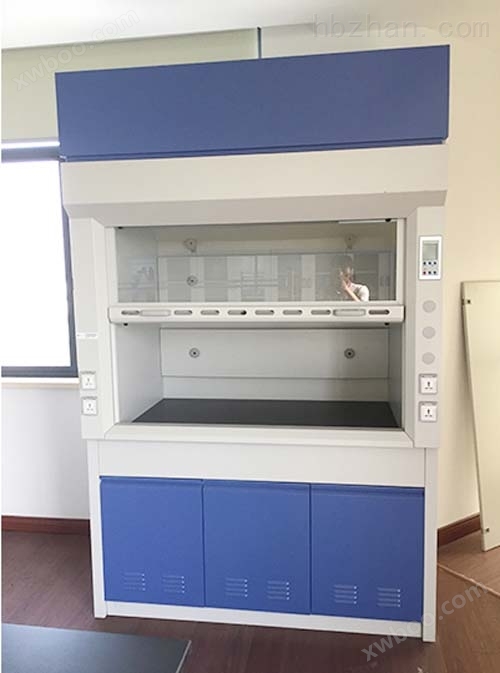


Fume hood | laboratory furniture
NegotiableUpdate on 03/22
- Model
- Nature of the Manufacturer
- Producers
- Product Category
- Place of Origin
Overview
Ventilation cabinet | One of the equipment in laboratory furniture, the ventilation cabinet can be selected from two types: low-temperature ventilation cabinet and high-temperature ventilation cabinet, with a similar enclosed hood. Small parts paint cabinets and chemical laboratory fume hoods are typical structures of cabinet style exhaust hoods. Ventilation Cabinet Series: Clean air type ventilation cabinet, ductless ventilation cabinet, PP floor type ventilation cabinet, PP table type ventilation cabinet, all wood ventilation cabinet, laboratory ventilation cabinet, supplementary air ventilation cabinet, fiberglass ventilation cabinet, steel wood ventilation cabinet.
Product Details
Fume hood | laboratory furnitureA fume hood is one of the equipment in laboratory furniture. There are two types of fume hoods to choose from: low-temperature fume hood and high-temperature fume hood, with similar enclosed hoods.
Ventilation Cabinet Series: Clean air type ventilation cabinet, ductless ventilation cabinet, PP floor type ventilation cabinet, PP table type ventilation cabinet, all wood ventilation cabinet, laboratory ventilation cabinet, supplementary air ventilation cabinet, fiberglass ventilation cabinet, steel wood ventilation cabinet.
Small parts paint cabinets and chemical laboratory fume hoods are typical structures of cabinet style exhaust hoods. Large room style fume hood, with one side open, allowing operators to work inside the cabinet. The fume hood is mainly used for painting large items and bagging powder materials. The working port of the fume hood has a significant impact on the airflow distribution inside the cabinet, which in turn directly affects the working effect of the cabinet style exhaust hood.
The exhaust hood of the fume hood is an important component of the local exhaust system. Its efficiency has a significant impact on the technical and economic performance of the entire exhaust system. A well-designed local exhaust hood can achieve better control effect with smaller air volume and ensure that the concentration of harmful substances in the work area meets the requirements of China's hygiene standards.
Exhaust cabinets are classified according to their degree of sealing, including sealed exhaust hoods, semi sealed exhaust hoods, and open exhaust hoods. A semi enclosed exhaust hood refers to an exhaust hood that, due to operational needs, often cannot completely or partially enclose equipment that generates pollutants, and must have a large working hole.
A fume hood is a type of semi enclosed exhaust hood. There are generally three forms of fume hoods, which differ in the position of the exhaust outlet and are suitable for pollutants with different densities. When the density of pollutants is low, use exhaust ventilation; When the density is high, use lower exhaust; When the density is uncertain, it is possible to choose to exhaust both up and down simultaneously, and the upper exhaust outlet can be adjusted. The door of the fume hood can be adjusted up and down. Under operating conditions, the smaller the opening of the door, the better, which has a better effect under the same exhaust volume. The ability of fume hoods to control pollutants mainly depends on the wind speed at the opening, generally ranging from 0.3 to 1.5 m/s.

Characteristics of low-temperature fume hood:
When the temperature of harmful substances is lower than the surrounding air temperature, it is called a low-temperature fume hood. As shown in Figure 1 (a), the movement of airflow when the cold process fume hood adopts upper exhaust. The suction velocity at the upper part of the working hole is 150% of the average flow velocity, while the lower part is only 60% of the average flow velocity, and harmful gases will escape from the lower part. To improve this situation, a baffle should be added inside the cabinet and the exhaust outlet should be located at the lower part of the fume hood, as shown in Figure 1 (b).

High temperature fume hood:
A fume hood used in processes with high heat generation is called a high-temperature fume hood. The hot air flow inside the hot process fume hood should rise upwards. If it is sucked in at the bottom like in the cold process, harmful gases will escape from the top, as shown in Figure 1 (c). Therefore, the fume hood for the thermal process must exhaust air from the upper part.
For processes with unstable heat generation, exhaust vents can be installed both above and below, as shown in Figure 1 (d). With the change of heat generation inside the cabinet, the ratio of upper and lower exhaust air volume can be adjusted to make the velocity distribution of the working hole more uniform. The exhaust volume of the fume hood is calculated according to equation (1):
In the formula, L1 represents the amount of harmful gases generated inside the fume hood, m/s;
ν - Control wind speed on the working hole, m/s;
A - the area of the operating port or gap, m2;
β - safety factor, β=1.1~1.2。
The controlled wind speed on the working holes of the fume hood used in the chemical laboratory can be determined according to Figure 2.
If the fume hood is placed in an air-conditioned, purified, or heated room, in order to reduce the exhaust volume of indoor air, an air curtain can be installed above the cabinet door. The air sent out by the air curtain can be taken from the outside or adjacent rooms, with an air volume of about 70% to 75% of the exhaust volume. This type of fume hood is called a gas supply fume hood, as shown in Figure 2. It can prevent the interference of indoor lateral airflow and save indoor exhaust air volume, greatly reducing the loss of indoor heat and cooling.

Application of fume hoods and laboratory furniture:
A fume hood is a local ventilation method that directly removes pollutants from the source. When pollutants are concentrated in a certain area, a fume hood is a more effective ventilation method to control the environmental hazards caused by pollutants. If comprehensive ventilation is adopted in this situation, it will instead cause pollutants to spread indoors; When the amount of pollutants generated is large, the required dilution ventilation volume is too large and even difficult to achieve in practice. There are many situations where pollutants occur at designated locations in industrial plants, such as plating tanks, dropping or operating points of bulk conveyor belts, welding workstations, chemical analysis stations, painting, grinding machines, etc. There are also some cases of fixed-point pollution generation in civil buildings, such as stoves in kitchens, hotpot in restaurants, chemical testing benches in schools, etc. It can be seen that the application of local exhaust is very extensive.

*Purification, clean laboratory decoration, laboratory cleanroom - fume hood manufacturer, laboratory cleanroom key
Laboratory cleanroom air shower, laboratory cleanroom FFU, laminar flow hood, clean room.
The company produces and sells laboratory equipment products such as laboratory benches, fume hoods, and laboratory furniture, providing overall laboratory planning and design, laboratory purification engineering decoration, and construction services.
A laboratory bench is a platform used in food factories, chemical research, cosmetics, medical, testing, water resources, petroleum and other enterprise units to conduct experiments, tests or place laboratory instruments.
Types of experimental benches: all steel * bench (with empty space), steel wood * bench (with empty space), PP * bench (with empty space), stainless steel * bench (with empty space), steel wood * bench (full concave cabinet), all steel * bench (full concave cabinet), steel wood * bench (full cabinet), all steel * bench (full cabinet), PP * bench (full cabinet).
Similar Product Recommend