-
E-mail
943467149@qq.com
-
Phone
15832626071
- Address
Product Categories
Hejian Wanjie Sealing Materials Co., Ltd


Corrosion resistant 5mm PTFE board supplier - Zhoukou Shenqiu
NegotiableUpdate on 01/22
- Model
- Nature of the Manufacturer
- Producers
- Product Category
- Place of Origin
Overview
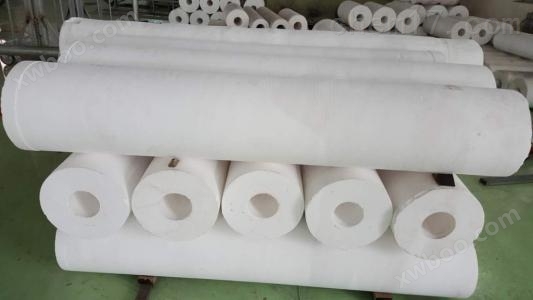
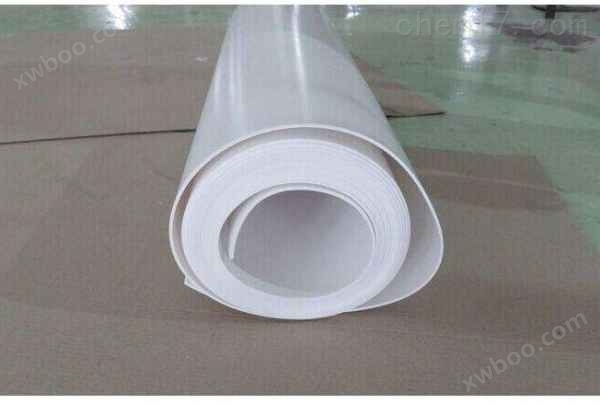
PTFE plates are divided into two types: molded plates and turned plates. Molded plates are made by molding PTFE resin at room temperature using a molding method, followed by sintering and cooling. The turning plate is made of polytetrafluoroethylene resin through pressing, sintering, and rotary cutting. Corrosion resistant 5mm PTFE board supplier - Zhoukou Shenqiu
Product Details
Corrosion resistant 5mm PTFE board supplier - Zhoukou Shenqiu
PTFE board is the abbreviation for polytetrafluoroethylene board, which belongs to polymer compounds and is currently one of the corrosion-resistant materials in the world. It is also a corrosion-resistant and chemical resistant material in the plastic field. From the current usage status, it is mostly used as a sealing material and gasket for corrosive and corrosive media.
Marcon PTFE board is trustworthy
Plays a buffering role in earthquake resistance. Construction process of polyethylene PTFE board for stairs? 1. Clean the surface of the stairs and do not allow sharp particles. 2. Lay plastic wrap. 3. Use polyethylene PTFE board for laying stairs. 4. Bolt fixation (note: spacing, edge distance). 5. Perform pouring. Introduction to Polyethylene Tetrafluoroethylene Board: Low Friction Performance in Load Application Due to the fact that some equipment's friction parts are not suitable for lubrication, such as in situations where lubricating grease will be dissolved by solvents and fail, or in industrial fields such as papermaking, food, and textiles where products need to avoid lubricating oil contamination, PTFE filling material becomes a material for mechanical equipment parts without oil lubrication (directly bearing loads). This is because the friction coefficient of the material is known to be low in solid materials. Its specific uses include bearings for chemical equipment, papermaking machinery, and agricultural machinery, as piston rings, machine tool guides, and guide rings; Widely used in civil and architectural engineering as supporting blocks for bridges, tunnels, steel roof trusses, large chemical pipelines, and storage tanks.


According to relevant standards, PTFE sheet materials can be divided into three categories:
1、 Used for electrical insulation materials, it can ensure that cables have high corrosion resistance and can also withstand high temperatures. PTFE cables are also a very expensive type of cable;
2、 Used for auditions and separators, mainly in highly corrosive media;
3、 The usage environment is very similar to the second type, but the PTFE plate exists in the form of a gasket or lining.

Due to its outstanding performance as a plastic material, the processing flow of PTFE sheets is more complex than ordinary plastics. Firstly, the raw materials must be tested before entering the crushing and screening process. Then, the material ratio needs to be carefully measured. After the reaction is completed, the molding process is carried out to produce semi-finished PTFE sheets, which are then sintered and cooled to form the PTFE sheets we see. So, there are also quite a few devices involved in the entire processing process.
The selection of it in this area is based on two points: excellent sliding performance and reliable strength and tensile strength. Polytetrafluoroethylene is currently known for its friction coefficient in solids Small materials (even smaller than ice), and the pressure of polytetrafluoroethylene board during production should be greater than 30MPa. The tensile strength of the product itself should be greater than 15MPa (equivalent to the strength of C15 concrete in construction), and the tensile rate should be greater than 150%. Choosing it in this area is based on two points: excellent sliding performance and reliable strength and tensile rate. The new corrosion-resistant polytetrafluoroethylene plate - PTFE PTFE plate is a new type of sealing product that can replace gaskets, washers, and other sealing products. It is a very novel and unique sealing material material manufactured using * processing technology. It is a continuous strip of white pure polytetrafluoroethylene product. It has good flexibility, compression resilience, creep resistance, high and low temperature resistance, excellent corrosion resistance, anti-aging, and self-lubricating properties. Excellent sealing performance. Corrosion resistant materials, insulation materials, anti stick coatings, etc. make polytetrafluoroethylene an irreplaceable product. Polytetrafluoroethylene has outstanding comprehensive performance, high temperature resistance, corrosion resistance, non stick, self-lubricating, excellent dielectric properties, and low friction coefficient. It is used as an engineering plastic and can be made into polytetrafluoroethylene pipes, rods, strips, plates, films, etc.
There should be no cracks, bubbles, delamination, or mechanical damage. The surface of the PTFE sheet pasted on the PTFE skateboard support should be pressed with a lubricating oil storage tank, with a diameter of 8mm ± 0.5nn and a depth of ` t_f `/2 ± 0.1mm. The total surface area of the storage tank should be 20% to 30% of the total surface area of the support. The oil storage tank should be formed by hot pressing. Cannot be formed by mechanical methods. The thickness of the PTFE sheet pasted on the PTFE skateboard support should not be less than 2. The 5mm thick polytetrafluoroethylene plate used in highway bridge structures is generally divided into two types: molded plate and turned plate. The molded plate is formed by molding polytetrafluoroethylene resin at room temperature, and then sintered and cooled. The turned plate is made by pressing, sintering, and rotary cutting polytetrafluoroethylene resin. It can withstand high temperatures up to 250 degrees Celsius and low temperatures up to minus 196 degrees Celsius, and is corrosion-resistant, highly lubricated, and gas resistant. High lubrication - is the friction coefficient in solid materials, non adhesive - is the surface tension in solid materials, does not adhere to any substance, and has extremely low mechanical properties. Its friction coefficient is only 1/5 of that of polyethylene, which is an important feature of perfluorocarbon surfaces. Due to the extremely low intermolecular forces between fluorine carbon chain molecules, polytetrafluoroethylene has non adhesiveness.
When sealing, in order to achieve a tight seal, gaskets can be added or sealed with glue, water, oil seals, etc. Polytetrafluoroethylene board can be used for gap and gap sealing, and can be used for crossing or applying putty, putty, etc. Sealing materials such as asphalt, raw material tape, or liquid raw material tape can be used for pipeline sealing, and sealing covers or oil seals can be used for relative moving parts. Polytetrafluoroethylene board is a high-performance polymer material with excellent comprehensive properties. Due to its excellent high temperature resistance, low temperature resistance, chemical corrosion resistance, dielectric properties, and electrical insulation properties, it is widely used in fields such as petrochemicals, pharmaceuticals, aerospace, and sealing materials. Although polytetrafluoroethylene board has many advantages, its surface energy is very low (critical surface tension is 1.8 mN/m) and its surface hydrophobicity is high (contact angle with water is greater than 100 degrees). This extremely low surface activity and non viscosity seriously affect the application of polytetrafluoroethylene in bonding, printing, and biocompatibility, especially limiting the composite of materials such as polytetrafluoroethylene films.
Corrosion resistant 5mm PTFE board supplier - Zhoukou ShenqiuAlthough the breaking of carbon carbon bonds and carbon fluorine bonds in perfluorocarbons requires energy absorption of 346.94 and 484.88 kJ/mol, respectively, the depolymerization of polytetrafluoroethylene to produce 1 mol of tetrafluoroethylene only requires energy of 171.38 kJ. Therefore, during high-temperature cracking, polytetrafluoroethylene mainly depolymerizes into tetrafluoroethylene. The weight loss rates (%) of polytetrafluoroethylene at 370 and 420 ℃ are 1 × 10-4 × 10-3 and 9 × 10⁻² per hour, respectively. It can be seen that polytetrafluoroethylene can be used at 260 ℃ *. Due to the production of highly toxic byproducts such as fluorophosgene during high-temperature cracking, it is important to pay attention to safety precautions and prevent polytetrafluoroethylene from coming into contact with open flames. Polytetrafluoroethylene has excellent electrical insulation properties. Its resistivity * and dielectric loss are very low, due to the fact that polytetrafluoroethylene (PTFE) does not adsorb or absorb water vapor (it does not absorb water or be wetted by water). Therefore, even at 100% relative humidity, the surface resistivity remains high.

Below, Yangcheng Electric Plastic in Yangzhong City will introduce the widespread application of polytetrafluoroethylene (PTFE) sheets. Polytetrafluoroethylene board is widely used in various industrial sectors such as aerospace, petrochemicals, machinery, electronics, construction, and textiles. It has become a material for many key technologies in modern industry. 1. The mechanical industry is mainly used for chemical corrosion resistant and high-temperature resistant sealing components, such as fillers, gaskets, gaskets, valve seats, valve boxes, valve discs, etc; High temperature pipelines, corrosion-resistant liners, diaphragms, containers, bearings, guide rails, oil-free lubricated piston rings, sealing rings, heat exchangers, pumps, etc. that transport corrosive media, and their dispersed liquids can be used for coating and impregnating porous products. In the electronics and electrical industry, it is mainly used to manufacture various wires and cables. This is because it has highly stable insulation properties. It has extremely low dielectric constant and dielectric loss at high or ultra-high frequencies, and its dielectric properties are minimally affected by temperature. In terms of medical materials, analytical instruments such as bottles, tubes, beakers, measuring cylinders, funnels, etc. can be made for ultra pure analysis and filtration. It is weather resistant and anti-aging at a high temperature of 300 ℃. After practical application, if it is placed for 200 days at a high temperature of 250 ℃, the thickness of the PTFE board for stairs will not be reduced in strength and weight. The PTFE board for stairs has the anti-corrosion performance of *, only the molten alkali metal and high temperature.
Tetrafluoroethylene board is suitable for temperatures ranging from -180 ℃ to+250 ℃, mainly used as electrical insulation material and contact corrosion medium
Products: PTFE board, PTFE rod, tube, plate, turntable. Polytetrafluoroethylene is a tetrafluoroethylene polymer. Polytetrafluoroethylene (PTFE) has a relatively large molecular weight, with a low molecular weight of 100000 and a high molecular weight of over 10 million, typically in the millions (with a degree of polymerization of 104 orders of magnitude, while polyethylene is only 103 orders of magnitude). The crystallinity is generally between 90% and 95%, abbreviated as PTFE in English. In the late 1930s, it was discovered that industrial production began in 40 years. The melting temperature is between 327 and 342 degrees Celsius. The CF2 units in polytetrafluoroethylene molecules are arranged in a zigzag pattern. Due to the slightly larger radius of fluorine atoms compared to hydrogen atoms, adjacent CF2 units in polytetrafluoroethylene plates cannot be reversed, but instead form helical twisted chains. Fluorine atoms almost cover the entire surface of the polymer chain. This molecular structure explains the various properties of polytetrafluoroethylene. When the temperature is below 19 degrees Celsius, a 13/6 helix is formed, and the phase transition occurs at 19 degrees Celsius, where the molecule slightly disintegrates and forms a 15/7 helix. The three major factors that affect the quality of ultra-high molecular weight polyethylene sheets are: raw materials, mold equipment, and processing and molding technology.
It does not react with any known acid or base, including the three strong acids. Polytetrafluoroethylene (PTFE) is not affected by moisture and does not dissolve in any known solvents (but can dissolve in molten alkali metals). Polytetrafluoroethylene (PTFE) is non flammable and non-toxic, and can only release toxic gases when heated above 400 ℃. Due to the inactive nature of polytetrafluoroethylene (PTFE), only special methods can be used to bond it. Attention should be paid to the working temperature of the adhesive during bonding. It is a polymer compound formed by the polymerization of tetrafluoroethylene, with a simple structural formula of - [- CF2-CF2-] n -. It has excellent chemical stability and corrosion resistance. Polytetrafluoroethylene, abbreviated as PTFE or F4, is one of the most corrosion-resistant materials today. 'Plastic King' is the common name for polytetrafluoroethylene, which is a plastic with excellent corrosion resistance. It is not corroded by known acids, bases, salts, or oxidants, and even the most powerful aqua regia is powerless against it.
Similar Product Recommend
