-
E-mail
3239385650@qq.com
-
Phone
15023158558
-
Address
Caijialiu Group, Free Trade Pilot Zone, Beibei District, Chongqing
Product Categories
Chongqing Yaxing Experimental Instrument Technology Co., Ltd

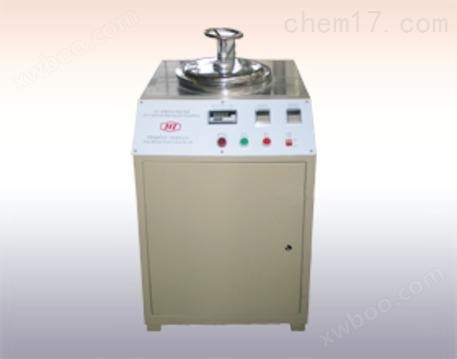
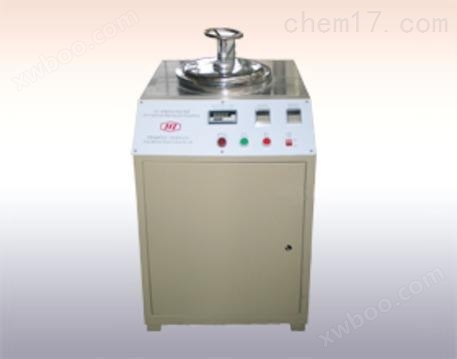
Ceramic tile vacuum water absorption device
NegotiableUpdate on 01/23
- Model
- Nature of the Manufacturer
- Producers
- Product Category
- Place of Origin
Overview
The ceramic tile vacuum water absorption device adopts a stainless steel vacuum chamber, with automatic control of vacuum degree and manual control of water supply and drainage. It has the characteristics of easy operation and accurate testing. This vacuum device is suitable for testing the water absorption rate of building sanitary ceramics and other materials. This vacuum device complies with Q/JY005-2003 "CXK Ceramic Vacuum Water Absorption Vacuum Device" and GB/T381
Product Details
CXK typeCeramic tile vacuum water absorption deviceAdopting a stainless steel vacuum chamber, the vacuum degree is automatically controlled, and the water supply and drainage are manually controlled, which has the characteristics of easy operation and accurate testing. This vacuum device is suitable for testing the water absorption rate of building sanitary ceramics and other materials. This vacuum device complies with Q/JY005-2003 "CXK Ceramic Vacuum Water Absorption Vacuum Device" and meets the requirements of the vacuum method for testing equipment in GB/T3810.3-2006 "Test Methods for Ceramic Bricks - Part 3: Determination of Water Absorption, Visible Porosity, Apparent Relative Density and Bulk Density", ISO10545-3:1995 "Ceramic Bricks - Part 3: Determination of Water Absorption, Visible Porosity, Apparent Relative Density and Bulk Density", TOCT13449-82 and other test methods.
IICeramic tile vacuum water absorption deviceMain technical parameters
1. The vacuum degree of the system should be continuously adjustable within the range of 0-10KPa.
The pumping time required for the system to reach a vacuum degree of 10kPa should not exceed 10 minutes.
3. The maximum number of large-sized specimens that can be placed in the experiment is 15 pieces of 200 × 200 × 10 (mm).
4. Dimensions: (length x width x height) 720 × 550 × 1160 (mm)
3、 Ceramic tile water absorption rate vacuum device main structure of vacuum device
The vacuum device consists of a vacuum system, a water supply and drainage system, an automatic vacuum control system, and a chassis.
The vacuum system consists of vacuum pressure control gauge 1, vacuum container 2, chassis 5, vacuum pump 6, electromagnetic vacuum valve 7, pressure transmitter 8, transition bottle 10, intake valve 11, and pipelines.
The water supply and drainage system consists of inlet valve 12, drainage valve 3, water reservoir 4, and water pipes.
The vacuum degree control system consists of vacuum pressure control gauge 1, vacuum pump 6, pressure transmitter 8, main power switch, and solenoid valve 7.
4、 Working principle of ceramic tile water absorption rate vacuum device
The air in the vacuum container is pumped into the air through pipelines, transition bottles, and vacuum valves by a vacuum pump, creating a vacuum in the container. The schematic diagram is shown in Figure 2. The water supply valve is opened, and the pressure difference between vacuum and atmospheric pressure causes distilled water to automatically enter the vacuum container. When the pressure in the container is equal to the external *, gravity causes distilled water to flow back into the water storage tank. The principle of automatic vacuum control is shown in Figure 3. Connect power S1, start the pump, open solenoid valve YV, and start vacuuming. When the vacuum level rises and the indicator needle touches the upper limit needle, KA2 loses power, the solenoid valve closes, and the pump stops pumping. The experimental time is long, and leakage causes a decrease in vacuum degree. The indicator needle rotates and when it touches the lower limit needle, KA1 is powered on, the solenoid valve opens, and the pump works. Thus, the vacuum level in the container is controlled to remain within the indicated range of the upper and lower limit needles.
5、 Installation and calibration of ceramic tile water absorption rate vacuum device
1. Adjust the foot screws to balance the vacuum device and keep it basically horizontal.
2. Use a copper core plastic wire of no less than 1.5 square millimeters to reliably ground the vacuum device.
3. Wrap the connecting thread of the vacuum gauge with sealing tape, apply vacuum sealing oil, place a sealing ring in the corresponding screw hole on the top of the vacuum container cover, and screw the vacuum gauge in. Be careful not to screw it too tightly to avoid damaging the threads and making the front of the watch face forward. Then, connect the terminals of the meter to the corresponding signal wires according to the wire numbers.
6、 Application and Operation of Ceramic Tile Water Absorption Vacuum Device
1. Connect the power supply and adjust the pressure control gauge on the operation panel using the "∧" and "∨" keys to set the vacuum pressure setting value to 9kPa.
1. Close inlet valve 11, inlet valve 12, and drain valve 3, insert the processed and weighed ceramic tiles into the slot of the sample holder in container 2, close the top cover of container 2, and tighten the screws in advance.
2. Check if there is water in the transition bottle. If there is water, it should be emptied first.
3. Press the "Start" button to start the system working.
When the pump automatically stops, start timing.
5. When the required test time is reached, open inlet valve 12 and add distilled water. When the water level reaches the observation window water level line (red line), close inlet valve 12 and continue to maintain.
6. Hold the test method for the required time, press the "stop" button, turn off the main power, open inlet valve 11, open drain valve 3, let the distilled water flow back to the water reservoir, loosen the pre tightening screw, open the container cover, take the sample, dry and weigh it.
Note: Method for setting the vacuum pressure control gauge: Set the pressure setting value by pressing the "∧" and "∨" keys, press the PAR key for about 3 seconds, and the pressure gauge will enter the parameter setting state. Press the PAR key to switch between different parameter values. Switch the parameter setting to the PROP setting state, where the up display shows PROP and the down display shows the vacuum pressure control range value. For example, setting PROP to 2, if the pressure setting value on the instrument panel is 9kPa, it means that the pressure holding range of the instrument control system is 9kPa to 11kPa.
7、 Precautions for ceramic tile water absorption rate vacuum device
1. The vacuum device must be safely grounded.
2. The direction of rotation of the vacuum pump must be consistent with the indicated direction *.
3. The vacuum container must be kept clean and free of accumulated water.
4. Regularly check the amount of distilled water and add distilled water.
5. Regularly check the oil level of the vacuum pump and pay attention to the instructions for using the vacuum pump.
6. Vacuum oil must be added to the vacuum pump, and engine oil must not be added.
When adding distilled water, be careful not to exceed the full mark of the water level gauge.
8. The vacuum gauge needs to be calibrated once a year.
When the vacuum level cannot be increased, check each sealing link.
10. During the experiment, the testing personnel should not leave at will; Turn off the machine when people leave; If there is an unexpected power outage in the power grid, the device power should be turned off immediately. Pay attention to whether there is water entering the transition bottle. Stop the machine and empty the water in the bottle before turning it on to avoid damage to the vacuum pump caused by water entering.


