-
E-mail
m975@163.com
-
Phone
13370059858
-
Address
Floor 2-3, No. 107 Xizha Branch Road, Shanghai
Product Categories
- UV spectrophotometer | 721 visible spectrophotometer
- Pipette | pipette gun
- German CS detector
- Drucker multifunctional process signal calibrator
- Drucker pressure transmitter
- German CS Hill Dew Point Meter
- Micro moisture analyzer
- GE Drucker pressure calibrator
- SUNTEX | SUNTEX Conductivity Meter | SUNTEX pH Meter
Shanghai Jinggong Industrial Co., Ltd
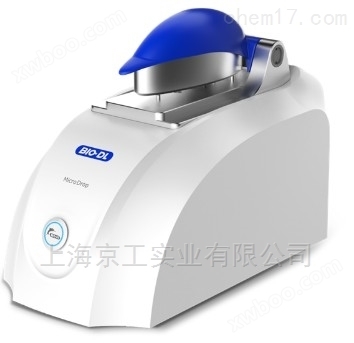
Baoyude Ultra Micro spectrophotometer
NegotiableUpdate on 04/26
- Model
- Nature of the Manufacturer
- Producers
- Product Category
- Place of Origin
Overview
Ultra micro spectrophotometer is a precision optical instrument that works by using spectrophotometry to quantitatively and qualitatively analyze substances. It is commonly used for nucleic acid, protein quantification, and bacterial growth concentration quantification. The Baoyude ultra micro spectrophotometer has a wide and important application in scientific research fields such as physics, chemistry, biology, medicine, materials science, and environmental science, as well as in modern production and management departments such as chemical engineering, medicine, environmental testing, and metallurgy.
Product Details
Micro Drop Baoyude Ultra Micro Spectrophotometer
Micro Drop is a full spectrum wavelength ultra micro spectrophotometer suitable for sample detection in a wider concentration range. It is easy to operate and can be measured immediately by wiping.

Micro DropUltra micro spectrophotometerapplication
UV detection: detect the absorbance value of the sample at conventional UV wavelengths;
Nucleic acid testing: It can detect the concentration of different types of nucleic acids such as dsDNA, ssDNA, RNA, and their absorbance values at 260nm and 280nm;
Probe detection: detecting the absorbance value of fluorescently labeled probes, which can be used to remove samples that have not been labeled with probes;
Protein detection: detect the concentration of purified protein and the absorbance at 280nm, and perform quantitative analysis of BCA, Bradford, Lowry, Pierce 660nm proteins;
Bacterial solution/suspended cell concentration detection: can detect the OD600 value of bacterial solution and monitor the growth of suspended cells;
Dynamics detection: used for measuring enzyme activity and growth curves in kinetic experiments;
Full wavelength scanning: 185-910nm full wavelength scanning, displaying absorption curve;
User defined detection: The detection parameters can be customized, such as large absorption peak, calculation formula, etc.
Micro DropCharacteristics of Ultra Micro Spectrophotometer:
More trace amount - small detection volume of 0.5 μ L, saving precious samples
More precise - achieving an optical path accuracy of 0.001mm and achieving high repeatability in absorbance detection
Faster - High concentration samples can be measured directly without dilution, with real-time detection results displayed within 5 seconds
Wide Range - Large Measurable~15000ng/μ L dSDNA, Continuous Wavelength Range 185-910nm
More convenient - can be connected to high-resolution tablets/computers to achieve local one finger control
More friendly - WiFi wireless connection function, saving time and space
Technical Specifications:

Requirements for the working environment of Micro Drop photometer
The requirements for the working environment of a spectrophotometer are as follows.
① The instrument should be placed in a dry room with a temperature range of 5-35 ℃ and a relative humidity not exceeding 85%.
② The instrument should be placed on a sturdy and stable workbench, and avoid strong or sustained vibrations.
③ Indoor lighting should not be too strong, and direct sunlight should be avoided.
④ The electric fan should not blow directly onto the instrument to prevent the unstable light source from affecting the normal use of the instrument.
⑤ Try to stay away from high-intensity magnetic fields, electric fields, and electrical equipment that generate high-frequency waves.
⑥ The power supply voltage for the instrument is AC 220V ± 22V, with a frequency of 50Hz ± 1Hz, and must be equipped with a good grounding wire. *Use electronic AC voltage regulators or AC constant voltage regulators with a power of over 1000W to enhance the anti-interference performance of the instrument.
⑦ Avoid using in places with corrosive gases such as hydrogen sulfide.
Daily maintenance and upkeep of ultra micro spectrophotometer
① Light source. The lifespan of the light source is limited. In order to extend the service life of the light source, do not turn on the light source when the instrument is not in use, and try to minimize the number of switches. The lights may not be turned off during short work intervals. The light source that was just turned off cannot be immediately turned back on. The continuous use time of the instrument should not exceed 3 hours. If it needs to be used for a long time, it is recommended to pause for 30 minutes. If the brightness of the light source is significantly reduced or unstable, it should be replaced with a new light in a timely manner. After replacement, adjust the position of the filament and do not touch the window or bulb directly with your hands to avoid oil contamination. If accidentally touched, wipe with anhydrous ethanol.
② Monochromator. The monochromator is the core part of the instrument, which is enclosed in a sealed box and cannot be disassembled. The wavelength selection should be rotated in a balanced manner, without excessive force. To prevent the dispersion element from getting damp and moldy, it is necessary to regularly replace the desiccant (silica gel) in the monochromator box. If the desiccant changes color, it should be replaced immediately.
③ Absorption pool. The absorption cell must be used correctly, and special attention should be paid to protecting the two optical surfaces of the absorption cell.
④ Detector. The photoelectric conversion element should not be exposed for a long time and should avoid strong light exposure or moisture and dust accumulation.
⑤ When the instrument stops working, the power must be cut off.
⑥ To avoid dust accumulation and contamination of the instrument, a dust cover should be covered when stopping work.
⑦ If the instrument is not in use temporarily, it should be powered on regularly for at least 20-30 minutes each time to keep the whole machine dry and maintain the performance of electronic components.