-
E-mail
525800722@qq.com
-
Phone
13831750213
-
Address
Cangzhou Economic Development Zone, Hebei Province
Product Categories
- Waterproof membrane testing instrument
- Paint film scratch tester
- traffic engineering
- Electric disc liquid limit gauge
- Highway geotechnical testing instrument
- Pressure/tension/universal testing machine
- Architectural gypsum testing instrument
- Concrete testing instrument
- Paint film and coating testing instrument
- Waterproof membrane impermeability meter
Hebei Zhongzheng Experimental Instrument Co., Ltd

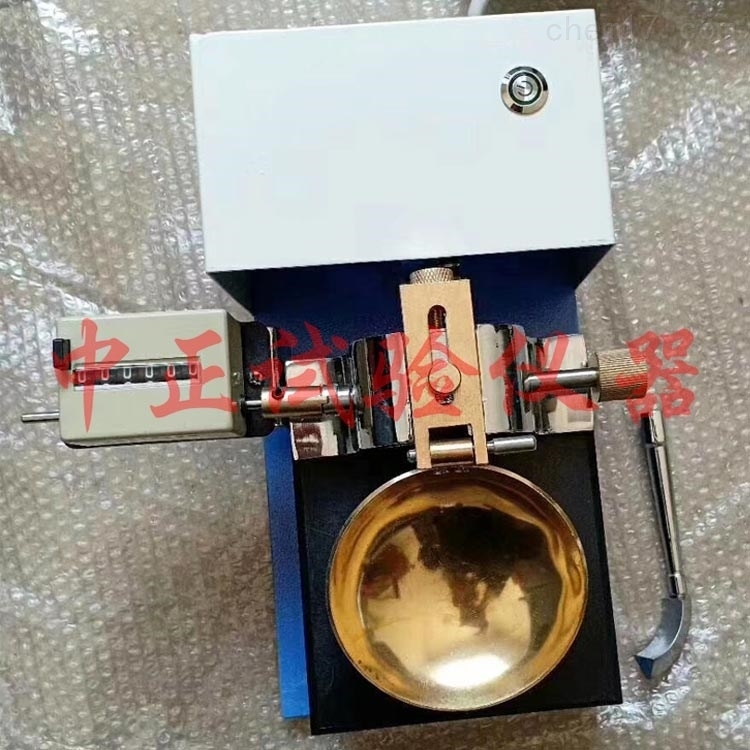
Automatic scratch tester for paint film
NegotiableUpdate on 01/22
- Model
- Nature of the Manufacturer
- Producers
- Product Category
- Place of Origin
Overview
The important physical properties of the automatic scratch tester for paint film directly affect the important performance of the coating, such as wear resistance; Wear resistant graininess; Scratch resistance; The impact resistance, retention effect of the coating film, and ease of cleaning are essential indicators for evaluating the performance of coatings, such as coating strength and hardness. The use of this instrument allows for a comprehensive evaluation of physical properties such as coating strength, hardness, and adhesion. Therefore, the purpose of this instrument is to characterize the strength, hardness, and adhesion of the coating by measuring the resistance to penetration of the coating sample when scratched by a scratch needle.
Product Details
QHZPaint film scratch tester Automatic scratch tester Paint coating film strength, hardness, adhesion
1. Purpose
The strength, hardness, and adhesion of the coating are important physical properties of the coating, and their size directly affects the important performance of the coating, such as wear resistance; Wear resistant graininess; Scratch resistance; The impact resistance, retention effect of the coating film, and ease of cleaning are essential indicators for evaluating the performance of coatings, such as coating strength and hardness. The use of this instrument allows for a comprehensive evaluation of physical properties such as coating strength, hardness, and adhesion. Therefore, the purpose of this instrument is to characterize the strength, hardness, and adhesion of the coating by measuring the resistance to penetration of the coating sample when scratched by a scratch needle.
This instrument is designed for implementation purposesGB9279-88The developed equipment is a condition for the implementation of this national standard.
2、 The working principle of the instrument
This instrument mainly consists of a needle frame and a worktable. The needle on the needle frame ensures that it acts vertically on the coating template (the template is fixed on the experimental table on the worktable and can be moved horizontally or vertically; horizontal movement can be motorized or manually after turning off the power, and vertical movement is manual).
After the power is turned on, the red indicator light on the power switch indicates that the instrument power is turned on. At this time, if the return switch is in the experimental state, the workbench moves from right to left, and the marking needle contacts the template during the "experimental" stroke; In the return trip (with the return switch turned back to the "return" state), the worktable moves from left to right, and the marking needle is lifted without touching the template. By changing the weight added to the marking needle holder, it is possible to measure whether the paint film can be scratched under different weights, using the required amount to scratch the paint filmZThe value of the scratch resistance of the coating is determined by the weight of a small weight.
3、 Main technical indicators
1The length of the needle should not be less than60mm
2Test bench movement speed:20—40mm/s
3Needle, needle tip, steel ball diameter1mm
4The inclination angle of the lower end face of the top bar:10—15°
5Weight loading range:0—2000g
6TheZSmall increments:50g
7Working voltage::220V50HZ
8Power consumption:15W
9Weight:10Kg
10External dimensions:180*230*280mm
4、 Usage requirements
1Coating sample: according toGB9271—88Preparation, specifications:120*50mm
2Experimental environment: Temperature23±2°CRelative humidity:50±5%(Reference)GB9278—88)
5、 Operation and usage methods
Aprepare
1, PressGB1727—79Request to prepare120*50mm(0.2—0.3mmThick) smooth tinplate or base plate prepared with paint film according to the requirements specified in the exhibits.
2Check the instrument
(1)Connect the power supply(220V)
(2)Press the main switch (power switch) and turn the toggle switch to the "experiment" stroke. The test bench moves laterally (to the left) to the left end and stops. Then turn the toggle switch to the "return" stroke. The test bench moves laterally (to the right) to the right end and stops. Note: The middle position of the toggle switch can be used for emergency "stop".
(3)Press the monitoring button to turn (jog) the pointer of the electricity meter, and at the same time, the indicator light will light up normally.
3Insert a new needle at the location where the needle is installed, which should be used immediately30Check the needle with a magnifying glass, and there should be no defects such as scratches, circles, rust spots, etc. The installation height of the needle should be appropriate.
4Insert the sample into the sample holder of the test bench, with the coating facing upwards, and rotate the longitudinal handle to move the test bench to the far end (level with the workbench) as the initial position.
5Place small weights on the weighing platform(50g)Or a slightly smaller load weight may be planned to break the coating.
BTest
1Turn the work button switch to the "experiment" position, and use the scratch needle to scratch the template. Observe with your eyes whether it is scratched. If it is scratched, the pointer of the electric meter will move and the scratch indicator light will light up. If it is not scratched, turn the work switch to "return" to stop the test bench at the right end, and then slowly move the handle longitudinally (forward rotation) to move the test bench a little (the second scratch marked should not overlap with the scratch). At the same time, you need to replace the scratch needle with a new inspection method as before, and replace it with a heavier weight of one level on the weight table. This is all the preparation for marking the second scratch.
2Repeat the above test until the coating is scratched (at this point, the scratch light will light up and the meter pointer will move, which can also be used)10Use a magnifying glass to observe whether the scratches have scratched the coating and exposed the bottom plate. The length of the scratches on the scratched area should be greater than20mm)At this point, the weight of the weight is the scratch resistance value of the coating (measured by this method).
3After repeating this testing step with the measured load on the original sample and a new sample, and obtaining consistent results, the scratch resistance value of the coating is determined to be the small load value that marks the entire sample path.
When the measured load values are different, the average of three load values is taken as the scratch resistance value of the coating.
6、 Maintenance:
1When using this instrument, it is necessary to ensure flexible rotation and lubrication (oil should be injected between the rotating and non rotating parts, as well as between the relative moving parts);
2After using this instrument for a period of time, check the fasteners to prevent loosening;
3When this instrument is not in use, attention should be paid to dust prevention, moisture prevention, corrosion prevention, and avoiding vibration and collision.
7、 Attachment
1One box of weights (one set):50gTwo items;100gTwo items;200gOne piece;500gThree pieces.
2Two magnifying glasses,30Double one,10Double one (self provided)