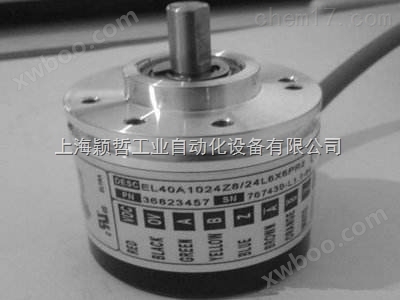
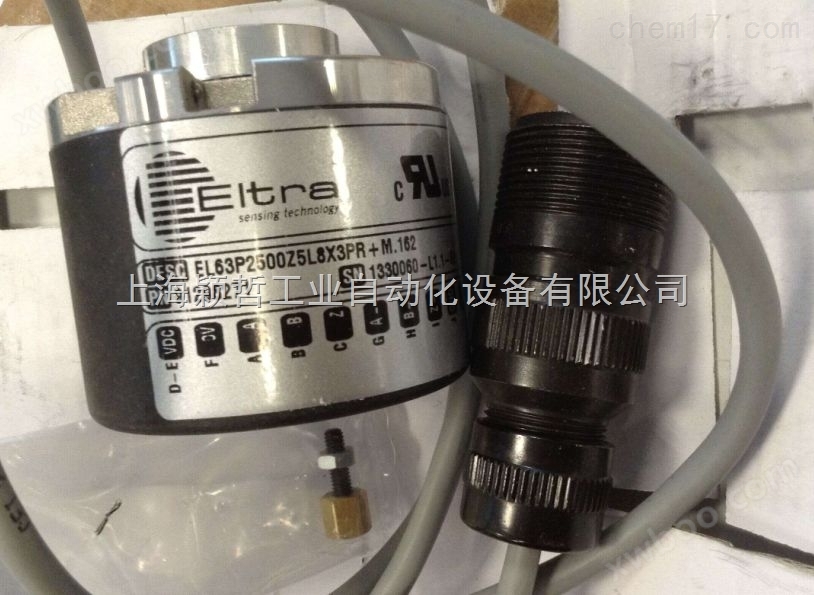
-
E-mail
2534706874@qq.com
-
Phone
18917076850
-
Address
Room C1, 27th Floor, Science and Technology Capital East Building, Beijing East Road, Huangpu District, Shanghai
Product Categories
Shanghai Yingzhe Industrial Automation Equipment Co., Ltd
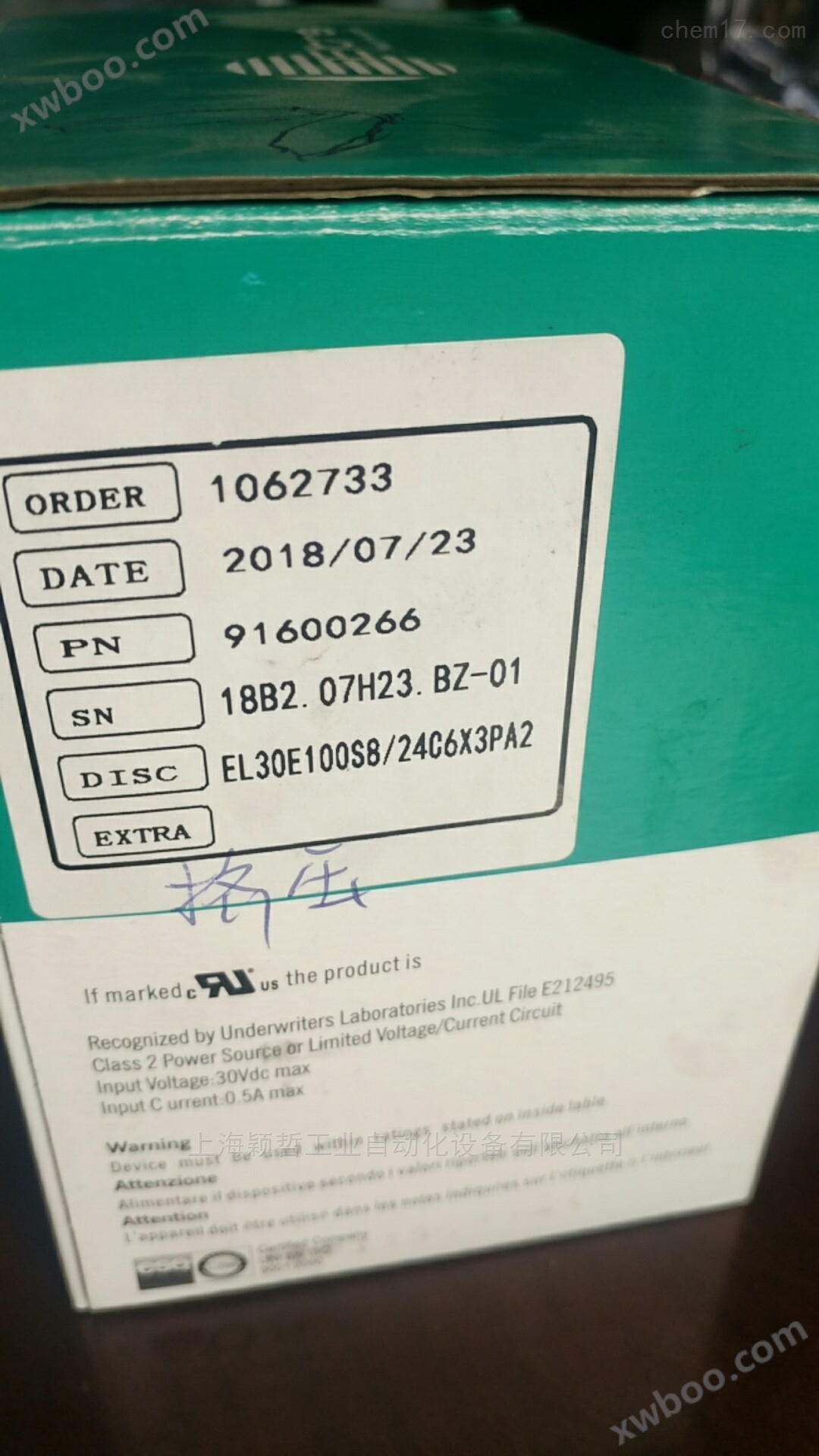
YiErChuang encoder EL30E100S8/24C6X3PA2
NegotiableUpdate on 05/01
- Model
- Nature of the Manufacturer
- Producers
- Product Category
- Place of Origin
Overview
EL30E100S8/24C6X3PA2: Eltra photoelectric encoders are divided into rotary photoelectric encoders and linear photoelectric encoders according to their different uses, which are used to measure rotation angles and linear dimensions, respectively.
Product Details
YiErChuang EncoderEL30E100S8/24C6X3PA2: Eltra photoelectric encoders are divided into rotary photoelectric encoders and linear photoelectric encoders according to their different uses, which are used to measure rotation angles and linear dimensions, respectively.
Eltra has developed various types of Eltra incremental encoders: various mechanical installation methods (solid shaft, blind hole shaft, through-hole shaft), various resolutions, mounting flange methods, circuit output methods, to meet various application needs. In addition to providing standard products, Eltra also offers product customization services to meet customers' special needs, providing customers with 360 degree * service.
Eltra incremental photoelectric rotary encoder:
The so-called encoder is a device that converts a certain physical quantity into a digital format. The function of encoders in motion control systems is to convert parameters such as position and angle into digital quantities. Various types of encoders can be formed using mechanisms such as electrical contact, magnetic effect, capacitive effect, and photoelectric conversion. The most common encoder in motion control systems is the photoelectric encoder.
The key component of a photoelectric encoder is the photoelectric encoding device. In a rotary photoelectric encoder, it is a circular codewheel or codedisk, while in a linear photoelectric encoder, it is a ruler shaped codestrip. The encoder and ruler can be made of materials such as metal, glass, and polymer according to their usage and cost requirements. Their principle is to generate digital optical signals representing the motion position during the motion process.
A combination of light blocking and light transmitting parts formed according to certain coding rules was engraved on a code wheel concentric with the measured axis. On one side of the code ring is a light-emitting diode or incandescent light source, and on the other side is a photoelectric device that receives light. The rotation of the measured axis causes the beam of light passing through the code wheel to be interrupted. Through the reception of photoelectric devices and the processing of electronic circuits, specific electrical signals are generated for output, which can then be digitally processed to calculate position and velocity information.
On modern high-resolution encoders, the transparent and opaque parts are narrow slits and lines, hence also known as circular gratings. The angle between adjacent narrow gaps is called the pitch angle, and the transparent narrow gap and the light shielding part each occupy approximately half of the pitch angle. The resolution of the encoder is expressed in terms of CPR counts per revolution, which refers to the number of pulses that can be generated in the photoelectric detection section after one rotation of the encoder. For example, if the CPR of a certain code wheel is 2048, the distinguishable angle is 10311.8 inches. On the code wheel, there is often an additional (or a set of) special narrow slots arranged to generate positioning (index) or zero position (zero) signals. The measuring device or motion control system can use this signal to generate a return to zero or reset operation.
The ELTRA encoder is a rotary sensor that converts rotational displacement into a series of digital pulse signals, which can be used to control angular displacement. If the encoder is combined with a gear bar or screw, it can also be used to measure linear displacement.
YiErChuang EncoderEL30E100S8/24C6X3PA2; After the encoder generates an electrical signal, it is processed by CNC, programmable logic controller (PLC), control system, etc. These sensors are mainly used in the following areas: machine tools, material processing, motor feedback systems, and measurement and control equipment. The conversion of angular displacement in ELTRA encoder adopts the principle of photoelectric scanning. The reading system is based on the rotation of a radial indexing disk, which is composed of alternating transparent and opaque windows. This system is entirely illuminated vertically by an infrared light source, which projects the image on the plate onto the surface of the receiver. The receiver is covered with a layer of grating called a collimator, which has the same window as the optical disc. The job of the receiver is to sense the light changes generated by the rotation of the optical disc, and then convert the light changes into corresponding electrical changes. Generally, a rotary encoder can also obtain a speed signal, which needs to be fed back to the frequency converter to adjust the output data of the frequency converter.
Eltra incremental rotary encoders mainly include:
Eltra incremental encoder accessories and special products
EPA/B
EVA/B/C
EMB/EMBO
EMD
G20/25/30A
Magnetic incremental rotary encoder
EMI22A
EMI38F/G
EMI40
EMI55A/AY
EMI63A/D
Etmr.
Optical Solid Axis Incremental Encoder Series
EL-ER30E/H/I
EH38A/B/D
EL-ER40A/B/C/E/H/I/N/X
EL-ER58B/C/H/T
EL-ER63A/D/E
Optical blind hole shaft, through-hole shaft incremental encoder series
AF35F
EH17-EH30M
EF36K
EH17-EH30MH-NPI2015
EL-ER38F/G
EL-ER40G
Similar Product Recommend