-
E-mail
2356253838@qq.com
-
Phone
18918225919
-
Address
206, Building 5, No. 319 Tongli Road, Jiuting Town, Songjiang District, Shanghai
Product Categories
Shanghai Spectral Analysis Instrument Co., Ltd
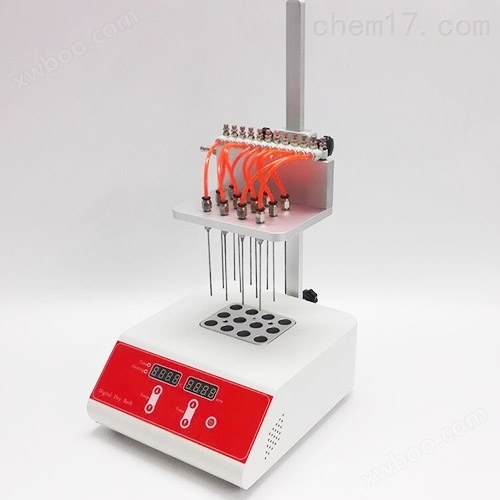
Working principle of dry nitrogen blower
NegotiableUpdate on 01/22
- Model
- Nature of the Manufacturer
- Producers
- Product Category
- Place of Origin
Overview
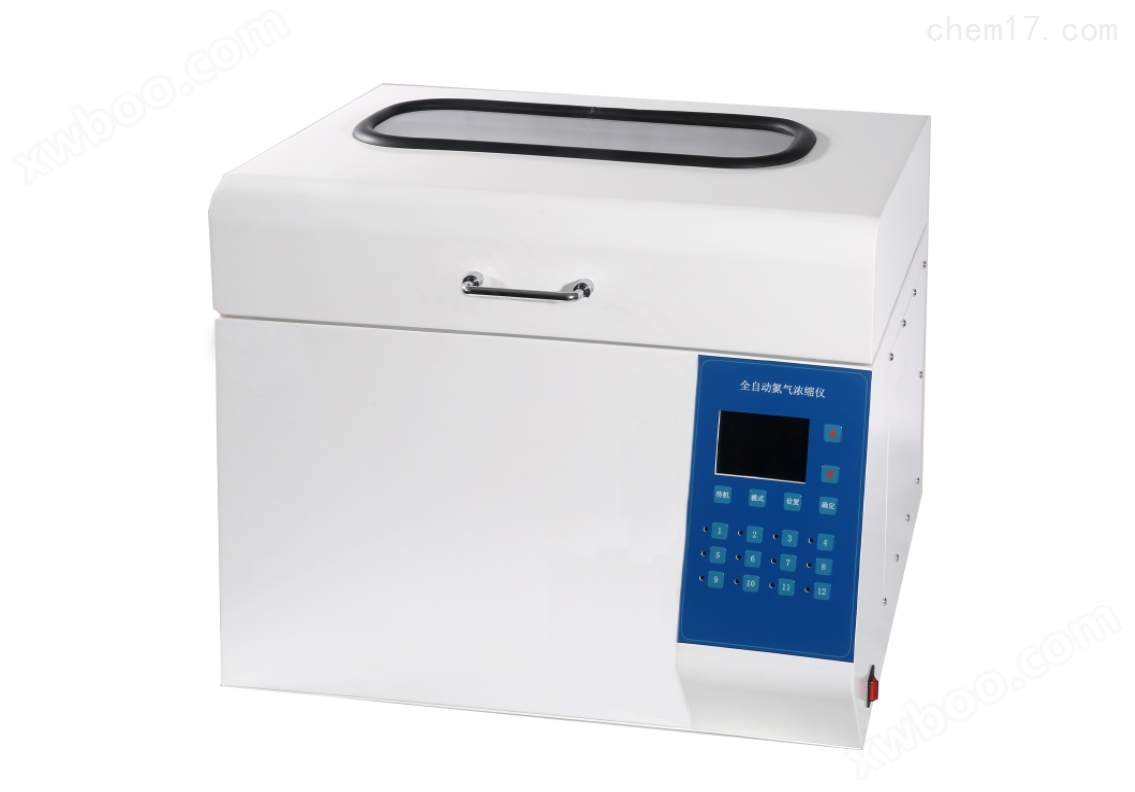
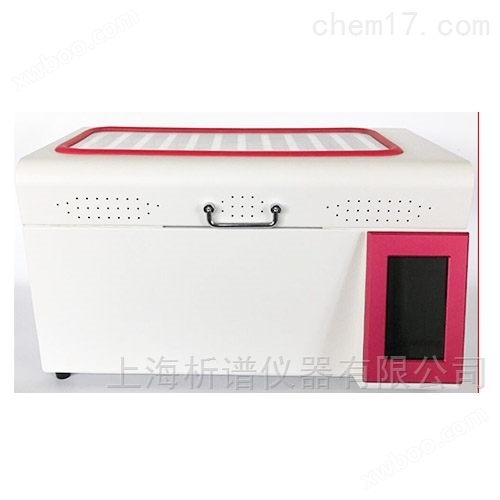
Working principle of dry nitrogen blowing instrument $r $n Dry nitrogen blowing instrument (12 bits) $r $n Dry nitrogen blowing instrument is mainly used for the concentration or preparation of large quantities of samples. Through microcomputer control technology, high-purity aluminum material is used as the heating medium to achieve more accurate temperature control and a wide temperature control range. Its working principle is to blow nitrogen into the surface of the heated sample, causing the solvent in the sample to evaporate and separate quickly, thereby achieving the goal of oxygen free concentration of the sample and keeping it purer.
Product Details
Working principle of dry nitrogen blower
Nitrogen blower is an instrument used in liquid phase, gas phase, and mass spectrometry analysis experiments to prepare concentrated samples. It mainly blows nitrogen gas into the surface of heated samples for sample concentration. It is time-saving, convenient, and easy to control, and is widely used in industries such as pesticide residue analysis, commodity inspection, food, environment, pharmaceuticals, and biological products. The nitrogen blower is mainly used for concentration or preparation of large quantities of samples (such as screening, analysis, liquid phase, and sample preparation in mass spectrometry analysis). Through microcomputer control technology, high-purity aluminum material is used as the heating medium to achieve more accurate temperature control and a wide temperature control range.
Nitrogen Blowdown Evaporator It is to quickly, continuously, and controllably blow nitrogen or air onto the surface of the heated sample, and set the heating temperature based on the transpiration rate and boiling point of the concentrated solvent, and then achieve the intention of anaerobic concentration of the sample, insisting on the purity of the sample and completing the rapid concentration of many samples. Using a nitrogen blower instead of a commonly used rotary transpiration meter for concentration can concentrate dozens of samples together, greatly reducing sample preparation time, and has the characteristics of time-saving, easy operation, and convenience.
Working principle of dry nitrogen blower
Usage Tips 1. After installing the nitrogen blower, the chassis is supported in a constant temperature water bath. Turn on the water bath power, set the water bath temperature, and the water bath begins to heat up.
2. Raise the nitrogen blower and place the samples that need to be evaporated and concentrated on the sample positioning racks, which are supported by trays. The height of the trays and positioning racks can be adjusted according to the size of the experimental sample tubes.
3. Open the needle valve of the flow meter, and nitrogen gas flows through the flow meter and gas pipeline to the distribution plate. After distribution, it is sent to the needle valves above various grades.
4. Then, by adjusting the needle valve tube, nitrogen gas is blown towards the liquid sample test tube through the needle valve tube and needle. The needle valve tube can be slid up and down by adjusting the locking nut, and the needle height can be adjusted to create ripples on the surface of the sample without splashing it.
5. Afterwards, place the nitrogen blower in a water bath until evaporation and concentration are complete.
At present, nitrogen blowers have replaced traditional rotary evaporators. Compared to traditional rotary evaporators, nitrogen blowers may cause sample loss during solvent boiling, while nitrogen blowers are accurate and sensitive during concentration to avoid sample loss. It can process multiple samples at once, highlighting its advantages in repeated experiments with multiple levels and factors. In the experiment, the operator does not need to maintain for a long time, which can save manpower.
High precision manufacturing process


Main features
1Each blowing needle is independent of each other, effectively avoiding cross contamination.
2. The height of the air chamber can be adjusted, and the standard needle length is 150mm.
3. The nitrogen blower is controlled by 12 independent flow control valves, which do not waste gas.
4. When concentrating toxic solvents, the entire system can be placed in a fume hood.
5. Built in over temperature protection device, automatic fault detection and alarm function.
6. LED display screen, temperature synchronous display, time decreasing display, easy and convenient operation.
Technical Specifications
model |
XDN100-1 |
temperature range |
Room temperature -180 ℃ |
timing range |
99h59min |
temperature control accuracy |
≤±0.5℃ |
display precision |
±0.1℃ |
Temperature uniformity @ 100 ℃ |
≤±0.5℃ |
Temperature uniformity @ 150 ℃ |
≤±1℃ |
Heating time (40-150 ℃) |
≤30min |
Large lifting stroke |
200mm |
Standard module |
1Block MK05 |
High gas pressure |
0.02MPA(Suitable for test tube diameter ≤ 16) 0.05MPA(Suitable for test tube diameters>16) |
Large gas flow rate |
15L/ min |
Needle length |
150mm(Suitable for test tube diameter ≥ Φ 10mm) 80mm(Applicable for test tube diameter<Φ 10mm) |
number of modules |
1a |
heating power |
200W |
fuse |
250V 3AΦ5*20 |
Overall dimensions |
280mm*240mm*500mm |
weight |
7KG |
Optional modules: | ||
model |
Test tube diameter |
number of test tubes |
MK01 |
10mm |
12 |
MK02 |
12mm |
12 |
MK03 |
13mm |
12 |
MK04 |
15mm |
12 |
MK05 |
16mm |
12 |
MK06 |
19mm |
12 |
MK07 |
20mm |
8 |
MK08 |
26mm |
8 |
MK09 |
1.5ml |
12 |
MK10 |
2.0ml |
12 |