-
E-mail
wfshengxin@163.com
-
Phone
18678087079
-
Address
Liujia, Yuhe Road, Yuqing Street, Kuiwen District, Weifang City
Product Categories
Weifang Shengxin Electronics Co., Ltd


UV ozone detector
NegotiableUpdate on 01/23
- Model
- Nature of the Manufacturer
- Producers
- Product Category
- Place of Origin
Overview
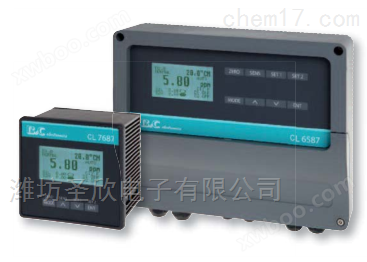
The ultraviolet ozone detector is mainly used for detecting ozone concentration at the outlet of the ozone generator. It uses ultraviolet lamps as the light source system and has a service life of over 20000 hours. The measurement data is stable and the accuracy is high. The ozone concentration detector is designed based on the Beer Lambert law, utilizing the characteristic absorption of ultraviolet light by ozone and the microprocessor control technology of *.
Product Details
UV ozone detector product features:
Measurement principle: According to the Beer Lambert law
Testing method: Dual path ultraviolet absorption method, with high measurement accuracy;
Light source system: Long life ultraviolet lamp tube (wavelength 253.7nm)
Light cell system: Separated light cell technology, leak free, high pressure resistance
Resistant to high flow sampling gas impact;
Intelligent compensation: built-in light source automatic compensation function;
Automatic zeroing: The equipment automatically zeros once every 3 hours to ensure the stability of the zero point and the accuracy of the detected concentration.
Data display: Devin 5.0-inch touch screen, easy for users to operate
Output function: 4-20mA current signal, RS485 communication
UV ozone detector product parameters:
Concentration unit: mg/L% (wt) g/NM3 (customizable measurement generator output, unit in kilograms)
Display resolution: 0.01
Accuracy: ± 3%
Output mode: Differential 4-20mA (linear) RS485
Input gas flow rate: 1.0L ± 0.2L/min
Input gas pressure:<0.1MPa
Power supply: AC 220V ± 10% 50Hz
Installation size: H: 350 L: 270 W: 130
Gas inlet and outlet pipe diameter: inner diameter 4mm, outer diameter 6mm PTFE tube.
The ultraviolet ozone detector mainly consists of a low-pressure ultraviolet lamp, a light wave filter, an incident ultraviolet reflector, an ozone absorption cell, a sample photoelectric sensor, a sampling photoelectric sensor, an output display, and circuit components. The standard ozone detector selects 10 test points for comparison of the already produced ozone detectors, and the error range is controlled within+1% to be qualified.
The ultraviolet photometry method uses a UV ozone detector for detection, and its principle is that ozone has a characteristic absorption of 254nm wavelength ultraviolet radiation. The indigo disulfonate sodium spectrophotometric method is detected by a UV absorption ozone analyzer, which utilizes ozone in the air to react equimolar with blue indigo disulfonate sodium in the absorption solution in the presence of phosphate buffer, resulting in fading and the formation of indigo red disulfonate sodium.
Ozone sensors include porous glass sensors, electrochemical ozone sensors, etc. Porous glass sensors use the fading reaction between indigo carmine and ozone to detect ozone concentration based on the principle that the logarithm of absorbance is inversely proportional to the concentration of ozone oxygen. The principle of electrochemical ozone sensors is the electrochemical reaction of ozone. In addition, there are ozone sensors developed based on other principles. Sensors usually have the characteristics of small size and low power consumption, and are more suitable for detecting ozone concentration in urban air monitoring points than ozone analyzers.
Advantages of UV ozone detector:
1. Using original oxygen generation detection equipment, the concentration can be continuously adjusted for oxygen output with minimal error, providing safe and reliable treatment for some diseases that require oxygen concentration.
2. It can output a wide range of concentrations, covering over 97% of the required oxygen concentrations for treating diseases.
3. Using a three oxygen generator, the service life can reach more than 10 years, ensuring a constant concentration and avoiding any unevenness.
4. No maintenance required, the instrument is equipped with a complete residual gas degradation system that automatically degrades and eliminates exhaust gas.
5. Multiple input interfaces, multiple gas intake interfaces, dual control modes (remote&near control), and intelligent gas intake alarm device ensure the instrument's expandability, intelligent alarm, and convenient and free operation.
Ozone lidar is based on the principle of differential absorption, detecting ozone concentration through the absorption characteristics of ozone, and can comparatively measure ozone distribution in situations where atmospheric molecules or aerosols are low. In order to improve measurement accuracy, forms such as double differential lidar have also been developed. Ozone lidar can not only detect the concentration of ozone, but also monitor the formation and diffusion of ozone pollution, and has good application prospects in ozone pollution control.