-
E-mail
sute@56412027.com
-
Phone
13818304481,13917842543
-
Address
No. 357, Lane 1080, Fuchang Road, Baoshan District, Shanghai
Product Categories
Shanghai Xuji Electric Co., Ltd
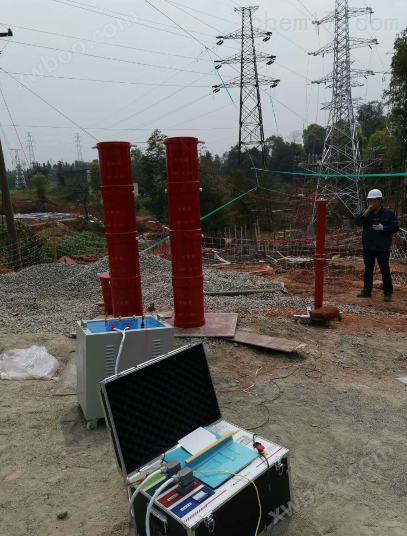
TPXZB cable withstand voltage series resonance test device
NegotiableUpdate on 01/21
- Model
- Nature of the Manufacturer
- Producers
- Product Category
- Place of Origin
Overview
The XUJIXZB series variable frequency series resonant device is widely used in industries such as power, metallurgy, petroleum, chemical, etc. It is suitable for high-capacity and high-voltage capacitive test samples, such as generators, transformers, etc GIS、 Handover and preventive tests for high-voltage cross-linked cables, transformers, bushings, etc.
Product Details
XUJIXZB Variable Frequency Series Resonant DeviceDetailed Introduction
This catalog is carefully selected by Shanghai Xuji Electric Co., Ltd. for you:
Variable frequency series resonant deviceconstitute
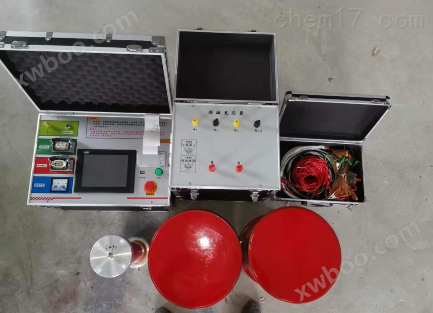
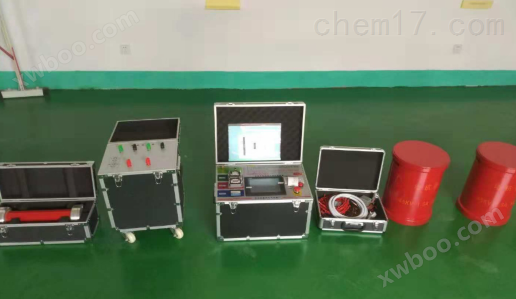
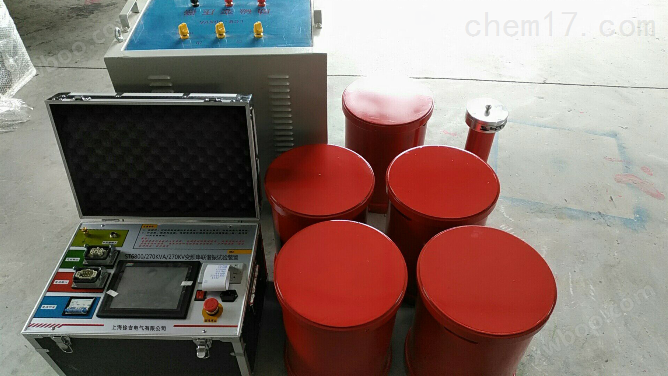
The complete testing system consists of a frequency modulation power supply host, a reactor, a voltage divider, an excitation transformer, connecting wires, and compensation capacitors (optional components). After being connected to the test object, it forms a resonant system for AC withstand voltage testing.
Host: It is a sine wave AC frequency modulation power supply with adjustable amplitude and frequency, providing excitation source for the resonant circuit, as well as voltage display, current display, timing, protection, alarm and other functions.
Reactor: It is a large inductive coil that forms a series resonant circuit with the test object (equivalent to a capacitor). Multiple reactors can be configured, and different series and parallel combinations can be used to achieve different inductance values to adapt to different test conditions.
Voltage divider: Internally divided by capacitors, the high voltage on the test sample is divided into low voltage for the host to measure and control.
Excitation transformer: isolates the host power supply from the resonant circuit power supply and increases the output voltage of the host.
Compensation capacitor: When the capacitance of the test sample is very small, if the power frequency required to achieve system resonance exceeds the specified test standard, a compensation capacitor can be connected in parallel to the test sample to meet the test requirements. This capacitor is called a compensation capacitor.
Product Introduction
XUJIXZB seriesVariable frequency series resonant deviceWidely used in industries such as power, metallurgy, petroleum, chemical, etc., suitable for high-capacity and high-voltage capacitive test samples, such as generators, transformers, etc GIS、 Handover and preventive tests for high-voltage cross-linked cables, transformers, bushings, etc. Our company has independently developed frequency conversion and voltage regulation software technology in the field of frequency conversion series resonance high voltage testing. In the domestic high voltage testing industry, this technology is used to design and manufacture a complete set of frequency conversion series parallel resonance testing devices using 16 bit fine frequency conversion, 10KHz carrier frequency, SPWM, and imported original IPM integrated modules, which comply with relevant regulations and requirements for high voltage testing.
Variable frequency series resonant deviceworking principle
The variable frequency series resonance test device applies the principle of series parallel resonance. By adjusting the output frequency of the variable frequency controller, the inductance L of the reactor in the circuit and the capacitance C of the test sample resonate, and the resonant voltage is the voltage applied to the test sample. The power supply is provided through the frequency modulation controller, and the test voltage is initially boosted by the excitation transformer to apply high voltage to the reactor L and the test sample CX. By changing the output frequency of the frequency modulation controller, the circuit is in series resonance state; The resonant frequency of the circuit depends on the capacitance CX of the test sample and the inductance L of the reactor. Adjust the output voltage of the variable frequency controller to achieve the required voltage value of the high voltage on the test sample.
Variable frequency series resonant deviceProduct Features
The large screen displays test data and test status, and has real-time operation step prompt function
Can flexibly adjust the experimental voltage, frequency range, and pressurization time
The test results can calculate the capacitance of the test sample
Equipped with computer communication interface for easy communication and management of experimental data
Small size, light weight, easy operation
High resolution, frequency resolution of 0.001HZ
High safety and reliability, the system has overcurrent, overvoltage, and discharge protection functions, which can effectively protect personal and equipment safety. The test results can be printed and upgraded with software
Variable frequency series resonant deviceComplete set composition
The complete set of equipment consists of a variable frequency voltage regulating power supply, excitation transformer, reactor, voltage divider, and compensation capacitor.
Variable frequency series resonant deviceMain technical performance
1. Power supply voltage: AC380V ± 10%, 50Hz;
2. Instrument power supply: 220V ± 10%, 50Hz;
3. Resonant output capacity: 90KVA;
4. Rated voltage of the instrument: 0-30KV;
5. Output frequency range: 25-300Hz;
6. Output voltage waveform: sine wave, waveform distortion rate<0.5%;
7. Frequency adjustment sensitivity: 0.1Hz, instability ≤ 0.05%;
8. System noise: ≤ 60db;
9. System measurement accuracy:<0.5 level;
10. Unstable output voltage:<0.5%;
11. Protection response time: 1us;
12. Inductance nonlinearity: ≤ 0.05%;;
13. Under full power output, the continuous working time is 60 minutes
14. Environmental temperature: -15 ℃ to+50 ℃;
15. Relative humidity: ≤ 90% RH;
16. Altitude: ≤ 2000 meters.

Similar Product Recommend