-
E-mail
1154374272@qq.com
-
Phone
13564046696
-
Address
No. 4-2-1, Unit 3, Building 4, Vanke Jinshang, Vanke 023 Creative World, No. 27, Arhat Valley, Jiulongpo District, Chongqing
Product Categories
Chongqing Solia Electrical Equipment Co., Ltd
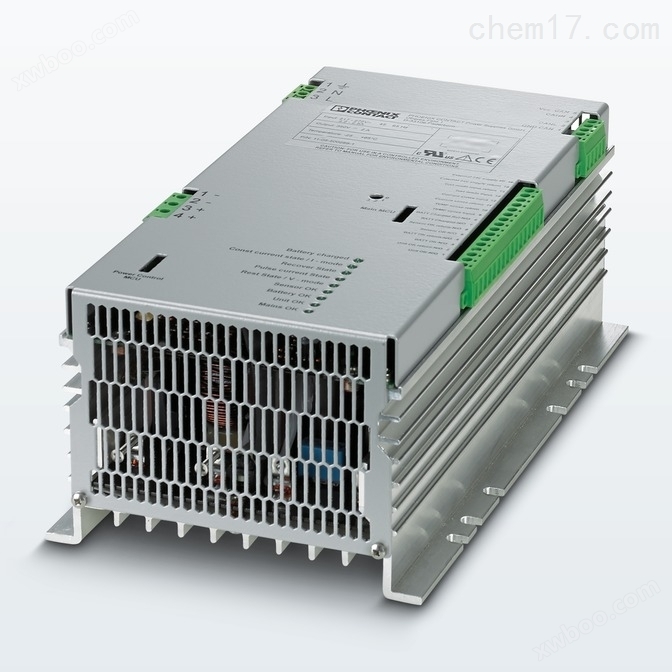


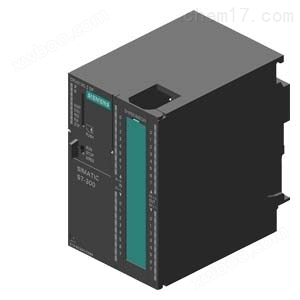
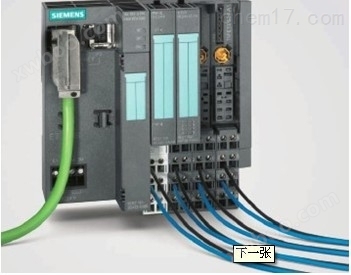
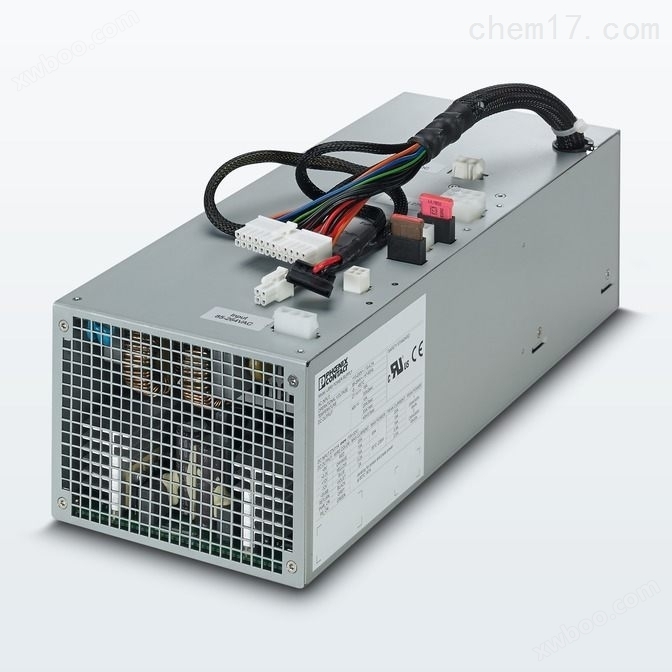
Siemens PLC module 6ES7528-0AA00-0AA0
NegotiableUpdate on 01/23
- Model
- Nature of the Manufacturer
- Producers
- Product Category
- Place of Origin
Overview
The acceleration and deceleration time of Siemens PLC module 6ES7528-0AA00-0AA0 $r $n can be calculated based on the load, but in debugging, a longer acceleration and deceleration time is often set based on the load and experience, and overcurrent and overvoltage alarms are observed by starting and stopping the motor; Then gradually shorten the acceleration and deceleration setting time, based on the principle of no alarm during operation, and repeat the operation several times to determine the optimal acceleration and deceleration time. What are the necessary parameters for frequency converter debugging.
Product Details
Siemens PLC module 6ES7528-0AA00-0AA0
Siemens PLC module 6ES7528-0AA00-0AA0
What is the meaning of control. Torque boosting, also known as torque compensation, is a method of increasing the low-frequency range f/V to compensate for the decrease in torque at low speeds caused by the resistance of the motor stator winding. When set to automatic, the voltage during acceleration can be automatically increased to compensate for the starting torque, allowing the motor to accelerate smoothly.

If connected by repeaters, the distance between stations can reach 9100m, but only up to 10 repeaters can be used, and it also occupies the number of nodes. Network construction of MPI: Using the configuration function in STEP7, each network node can be assigned an MPI address and a high address. The connection requires adding terminal resistors to the * * * nodes and the next node of the MPI network.
Production machinery with frequent starting braking and requiring a large starting braking torque, such as bridge cranes, mine hoists, air compressors, irreversible rolling mills, etc., should use wound asynchronous motors. In situations where there is no requirement for speed regulation and constant speed or improvement of power factor is required, synchronous motors should be used, such as medium to large capacity water pumps, air compressors, elevators, and grinding machines. For production machinery that requires a speed range of at least: and requires continuous, stable, and smooth speed regulation, it is advisable to use separately excited DC motors or squirrel cage asynchronous motors or synchronous motors with variable frequency speed regulation, such as large precision machine tools, gantry planers, rolling mills, elevators, etc. Require production machinery with large starting torque and soft mechanical characteristics to use series or compound excited DC motors, such as electric locomotives, heavy-duty cranes, etc.

PLC uses MPI to achieve communication, which can be solved in three ways. Global packet communication method, unconfigured connection communication method, and configured connection communication method. Implement global packet communication method: During the PLC hardware configuration process, the sending and receiving areas between the PLC stations that require communication do not require any program processing and are only suitable for communication between S7-300/400.