-
E-mail
13505337264@163.com
-
Phone
13505337264
-
Address
Beiyi Road, Zichuan Economic Development Zone, Zibo
Product Categories
- plate heat exchanger
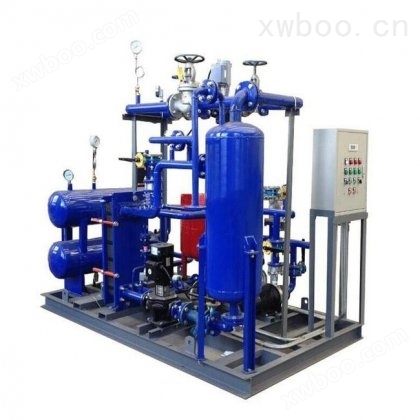
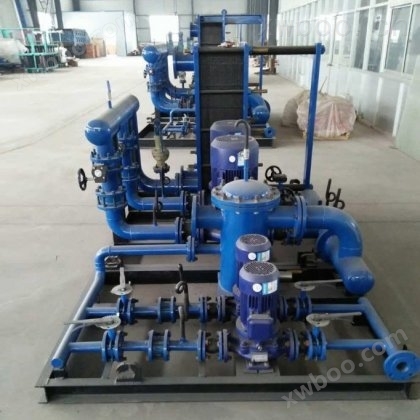
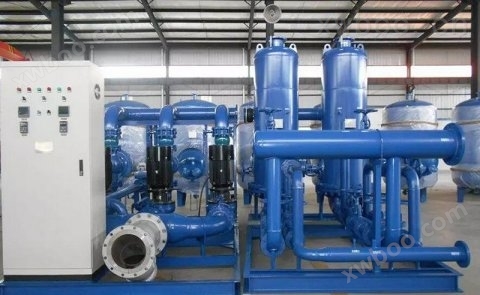
- heat exchanger unit
- BR0.7 type plate heat exchanger
- BR0.10 type plate heat exchanger
- BR0.23 type plate heat exchanger
- MBR0.4 type layout heat exchanger
- BR0.55 type plate heat exchanger
- BR0.5 type plate heat exchanger
- New copper alloy plate heat exchanger
- Fully welded plate heat exchanger
Zibo Xinlida Heat Exchange Equipment Co., Ltd
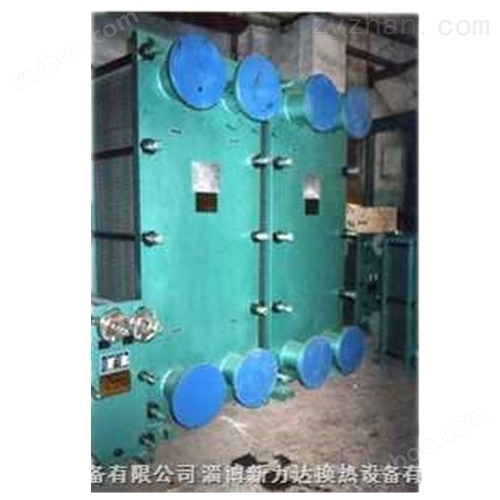
Shandong BR0.5 Plate Heat Exchanger
NegotiableUpdate on 02/09
- Model
- Nature of the Manufacturer
- Producers
- Product Category
- Place of Origin
Overview
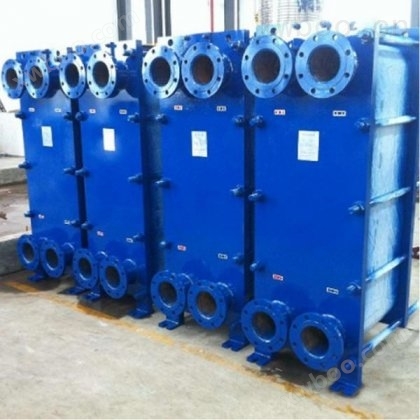
The Shandong BR0.5 plate heat exchanger frame type plate heat exchanger only needs to loosen the clamping bolts to loosen the plate bundle, remove the plates for mechanical cleaning, which is very convenient for heat exchange processes that require frequent cleaning of equipment.
Product Details
Shandong BR0.5 Plate Heat ExchangerIntroduction
Plate heat exchanger is a new type of high-efficiency heat exchanger composed of a series of metal sheets with certain corrugated shapes stacked together. Thin rectangular channels are formed between various plates for heat exchange through half plates. Compared with conventional shell and tube heat exchangers, its heat transfer coefficient is much higher under the same flow resistance and pump power consumption, and there is a trend to replace shell and tube heat exchangers within the applicable range.
There are two main types of plate heat exchangers: frame type (detachable) and brazed type. The plate forms mainly include herringbone corrugated plate, horizontal flat corrugated plate, and nodular plate.
Shandong BR0.5 Plate Heat Exchangerbasic structure
Plate heat exchangers are mainly composed of two parts: frames and plates.
Thin plates made of various materials are pressed into various shapes of ripples using different forms of grinding tools, and corner holes are opened at the four corners of the plate for the flow channel of the medium. Seal the edges and corner holes of the board with rubber gaskets.
The framework consists of fixed clamping plates, movable clamping plates, upper and lower guide rods, and clamping bolts.
A plate heat exchanger is formed by stacking plates between a fixed clamping plate and a movable clamping plate, and then clamping them with clamping bolts.
Characteristics of Plate Heat Exchanger and Shell and Tube Heat Exchanger Comparison
a. The high heat transfer coefficient is due to the complex flow channels formed by the inversion of different corrugated plates, which cause the fluid to rotate in three dimensions in the flow channels between the corrugated plates. Turbulence can be generated at lower Reynolds numbers (generally Re=50~200), resulting in a high heat transfer coefficient, which is generally considered to be 3~5 times that of the shell and tube type.
b. In a shell and tube heat exchanger, the logarithmic mean temperature difference is large and the end temperature difference is small. The two fluids flow separately in the tube side and shell side, resulting in cross flow flow overall. The logarithmic mean temperature difference correction coefficient is small, while plate heat exchangers are mostly parallel or counter current flow modes, with a correction coefficient usually around 0.95. In addition, the flow of cold and hot fluids in plate heat exchangers is parallel to the heat exchange surface and there is no bypass flow. Therefore, the end temperature difference of plate heat exchangers is small, and water heat transfer can be less than 1 ℃, while shell and tube heat exchangers generally have a correction coefficient of 5 ℃
c. Plate heat exchangers have a compact structure with a small footprint. The heat transfer area per unit volume is 2-5 times that of shell and tube heat exchangers, and unlike shell and tube heat exchangers, there is no need to reserve a maintenance area for extracting the tube bundle. Therefore, to achieve the same heat transfer, plate heat exchangers occupy approximately 1/5 to 1/10 of the footprint of shell and tube heat exchangers.
d. Easy to change the heat exchange area or process combination, as long as a few plates are added or removed, the goal of increasing or decreasing the heat exchange area can be achieved; Changing the arrangement of plates or replacing a few plates can achieve the required process combination and adapt to new heat exchange conditions, while the heat transfer area of shell and tube heat exchangers is almost impossible to increase.
e. The plate thickness of lightweight plate heat exchangers is only 0.4~0.8mm, while the thickness of the heat exchange tubes of shell and tube heat exchangers is 2.0~2.5mm. The shell of shell and tube heat exchangers is much heavier than the frame of plate heat exchangers, and plate heat exchangers are generally only about 1/5 of the weight of shell and tube heat exchangers.
f. The price of plate heat exchangers is about 40% to 60% lower than that of shell and tube heat exchangers, using the same materials and with the same heat exchange area.
g. The heat transfer plate of the plate heat exchanger is made by stamping, which has a high degree of standardization and can be mass-produced. The shell and tube heat exchanger is generally handmade.
h. Easy to clean frame plate heat exchangers. Simply loosen the clamping bolts to loosen the plate bundle and remove the plates for mechanical cleaning, which is very convenient for heat exchange processes that require frequent cleaning of equipment.
i. The plate heat exchanger with low heat loss only exposes the outer shell of the heat transfer plate to the atmosphere, so the heat dissipation loss can be ignored and no insulation measures are required. And shell and tube heat exchangers have high heat loss and require insulation layers.
j. The smaller capacity is 10% to 20% of that of shell and tube heat exchangers.
k. The pressure loss per unit length is greater due to the smaller gap between the heat transfer surfaces and the unevenness on the heat transfer surfaces, resulting in greater pressure loss than traditional smooth tubes.
l. Not easy to scale due to sufficient internal turbulence, its scaling coefficient is only 1/3~1/10 of that of shell and tube heat exchangers
m. The working pressure should not be too high, and the medium temperature should not be too high, which may cause leakage. Plate heat exchangers should be sealed with gaskets, and the working pressure should generally not exceed 2.5 MPa. The medium temperature should be below 250 ℃, otherwise leakage may occur.
n. Easy to clog due to the narrow channels between the plates, usually only 2-5mm. When the heat exchange medium contains larger particles or fibrous substances, it is easy to clog the channels between the plates.