-
E-mail
1771707726@qq.com
-
Phone
18031730272
-
Address
No. 186, Daguozhuang North Industrial Zone, Xian County, Cangzhou City
Product Categories
Pengyi Construction Instrument Factory, Xian County, Hebei Province
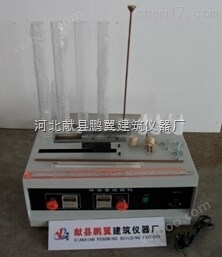
SD-2 electric sand equivalent tester comes with a two-year warranty
NegotiableUpdate on 01/23
- Model
- Nature of the Manufacturer
- Producers
- Product Category
- Place of Origin
Overview
The SD-2 electric sand equivalent measuring instrument has a two-year warranty. This instrument operates in a dual tube mode and can automatically oscillate two samples in parallel simultaneously. It is easy to operate, has good oscillation effects, and high work efficiency. It can be widely used in various highway construction units, scientific research departments, colleges and universities, and other departments. This instrument is suitable for natural sand, artificial sand, and stone chips used in asphalt mixtures and cement concrete, with aggregate Z having a particle size not exceeding 4.75mm (circular sieve 5mm). It is used to determine the content of cohesive soil or impurities in fine aggregates to evaluate the cleanliness of the aggregates
Product Details
SD-2 electric sand equivalent tester comes with a two-year warranty
Technical Specifications:
1. Test tube amplitude: 203 ± 1.0mm
2. Oscillation cycle: 180 times/min ± 2 times/min
3. Working power supply: 220V ± 10%, 50Hz
4. Rated power: 130W
5. Counterweight piston: 1kg ± 5g
6. Plastic test tube: inner diameter 32 ± 0.25mm, height 420 ± 0.25mm
7. Rinse tube: outer diameter 6mm ± 0.5mm, inner diameter 4mm ± 0.2mm
8. Environmental temperature: ≤ 35 ℃
9. Relative humidity: ≤ 85%
10. Dimensions: 564 × 320 × 360 (mm)
11. Net weight: 20 ± 1kg
SD-2 electric sand equivalent tester comes with a two-year warranty Usage:
1. Connect the power, and both the counter and timer will light up simultaneously.
2. Assemble the test tube, tighten the fixing screws, press the start button, and the instrument will start automatic mechanical oscillation. 90 times is the working process, and the instrument will automatically stop.
3. Press the timer button to start timing, set to 10 minutes and 20 minutes.
Experimental Procedure:
1. Add the flushing solution into the test cylinder using a flushing tube until the 100mm mark below Zui is reached (approximately 80mL of experimental flushing solution is required)
2. Carefully pour a wet sample equivalent to 120g ± 1g of dry material weight into an upright test tube using a funnel.
3. Repeatedly tap the lower part of the test tube with your palm to remove any bubbles and moisten the sample as soon as possible, then let it sit for 10 minutes.
4. After the sample has been stationary for 10 minutes ± 1 minute, plug the test cylinder with a rubber stopper and place it horizontally by hand, or fix the test cylinder horizontally on the oscillating machine.
5. Activate the mechanical oscillator and oscillate 90 times within 30 seconds ± 1 second. Then remove the test tube and place it vertically back on the test bench, unscrew the rubber stopper.
6. Insert the flushing tube into the test tube, rinse the aggregate attached to the wall of the test tube with flushing solution, and then quickly insert the flushing tube into the bottom of the test tube, continuously rotating the flushing tube to make the soil particles and impurities attached to the surface of the aggregate float up.
7. Slowly and uniformly pull out the flushing tube upwards, until the liquid level is drawn out and kept at the 380mm mark. Cut off the liquid flow of the flushing tube, keep the liquid level at the 380mm mark, and then start the stopwatch and let it stand for 20 minutes ± 15 seconds without disturbance.
8. After standing still for 20 minutes, measure the height of the liquid surface from the bottom of the test tube to the flocculent condensate with a ruler.
9. Slowly insert the counterweight piston into the test cylinder until it touches the sediment, and immediately tighten the fixing screw on the sleeve. Remove the piston and insert a ruler into the opening of the sleeve. Measure the height from the top of the sleeve to the ground of the piston accurately to 1mm. At the same time, record the temperature inside the test cylinder accurately to 1 ℃.
10. Perform parallel tests on two samples according to the above steps.
Xian County Pengyi Construction Instrument Factory is a professional manufacturer, researcher, and seller of testing instruments and equipment for the highway, railway, transportation, and construction industries. Pengyi Instrument "focuses on providing commonly used highway inspection instruments, construction instruments, and derivative products to meet the needs of quality supervision, scientific research institutions, universities, and various industry enterprises. The main products include more than 300 types of testing instruments and equipment in multiple series, such as geotechnical, aggregate, asphalt, concrete, road engineering, cement, waterproof materials, etc., of which more than 100 products are self-produced. The product has excellent material selection and reliable quality, making it an ideal choice for laboratory instruments.
Similar Product Recommend