-
E-mail
whhuixin@163.com
-
Phone
13376310595
-
Address
No. 47 Laoshan Road, Weihai City (188 meters west of Weihai Science and Technology Museum)
Product Categories
Weihai Huixin Chemical Machinery Co., Ltd
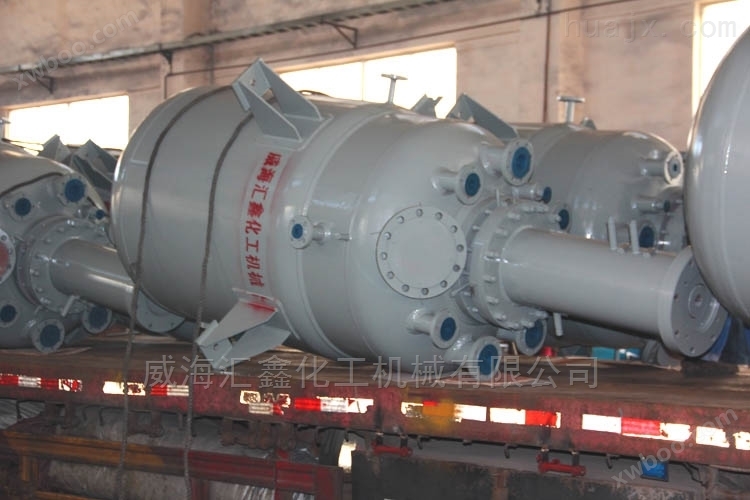


Resin chemical synthesis kettle
NegotiableUpdate on 01/10
- Model
- Nature of the Manufacturer
- Producers
- Product Category
- Place of Origin
Overview
Resin chemical synthesis reactors are widely used in petroleum, chemical, rubber, pesticide, dye, medicine, and food industries. They are pressure vessels used to complete processes such as vulcanization, nitration, hydrogenation, alkylation, polymerization, and condensation, such as reactors, reaction pots, decomposition pots, polymerization pots, etc; Materials generally include carbon manganese steel, stainless steel, zirconium, nickel based (Hastelloy, Monel, Inconel) alloys, and other composite materials.
Product Details
Resin chemical synthesis kettleWidely used in petroleum, chemical, rubber, pesticide, dye, medicine, food, pressure vessels for completing processes such as vulcanization, nitration, hydrogenation, alkylation, polymerization, condensation, etc., such as reactors, reaction pots, decomposition pots, polymerization kettles, etc; Materials generally include carbon manganese steel, stainless steel, zirconium, nickel based (Hastelloy, Monel, Inconel) alloys, and other composite materials.
|
serial number
|
name |
Technical Specifications |
1 |
effective volume |
1000-50000L |
2 |
material |
The main materials used for the reactor body are 0Cr18Ni9 (304), 00Cr17Ni14Mo2 (316L), and 1Cr18Ni9Ti (321). Titanium (TA2), nickel, tantalum, zirconium, Hastelloy, PTFE spraying inside the reactor, and nickel lining (Ni6) can be made according to different medium requirements |
3 |
design pressure |
-0.1~16MPa |
4 |
design temperature |
350℃ |
5 |
stirring speed |
0~450rpm (revolutions per minute) |
6 |
Motor power |
7.5~18.5KW |
7 |
heating power |
36~72KW |
8 |
Motor form |
The motor is a regular AC motor, but explosion-proof motors can also be used according to user requirements. |
9 |
Heating method |
Electric heating, electromagnetic heating, far-infrared heating, thermal oil heating, steam cycle heating |
10 |
Conventional kettle lid opening form |
The gas phase port is equipped with a needle valve, the liquid phase port is equipped with a flange ball valve and a bottom pipe inserted into the kettle, the solid feeding port is equipped with a blind plate, the temperature measurement and control port is equipped with a platinum resistor, the pressure gauge safety blasting port is equipped with a pressure gauge and safety explosion-proof device, and the inlet and outlet of the cooling coil in the kettle are equipped with flanges. |
11 |
mixing form |
Paddle or anchor type, the mixing form can also be determined according to the actual situation and user requirements. |
12 |
Mixing shaft: |
Adopting self-lubricating wear-resistant shaft sleeve, suitable for mixing various media. |
13 |
Sealing method |
Magnetic seal, mechanical seal, packing seal. |
14 |
出料方式 |
Upper discharge, lower discharge |
15 |
control instrument |
Equipped with an automatic temperature regulator, the temperature control accuracy is ± 1℃It has frequency conversion speed regulation function, adjustable heating power, and can achieve automatic temperature control. |
16 |
Other configurations |
If the user has special requirements for the kettle cover, kettle body opening, internal structure, pressure, stirring blades, and other auxiliary devices (such as condensation reflux device, constant pressure feeding tank, receiving device, condenser, etc.), they can be processed and manufactured according to the user's requirements. |
Resin chemical synthesis kettleThe key component magnetic coupling transmission is a transmission device that uses permanent magnet materials for coupling transmission. It changes the dynamic sealing structure of traditional mechanical seals and packing seals, which uses shaft sleeves or packing seals to a static sealing structure. The medium in the reaction vessel is located in the sealing chamber composed of the vessel body and the sealing cover body, which solves the insurmountable leakage problem caused by dynamic sealing of packing seals and mechanical seals, and any leakage and pollution of the reaction medium.
Similar Product Recommend


